
When Should You Consult an Anxiety Disorder Specialist Hyderabad?
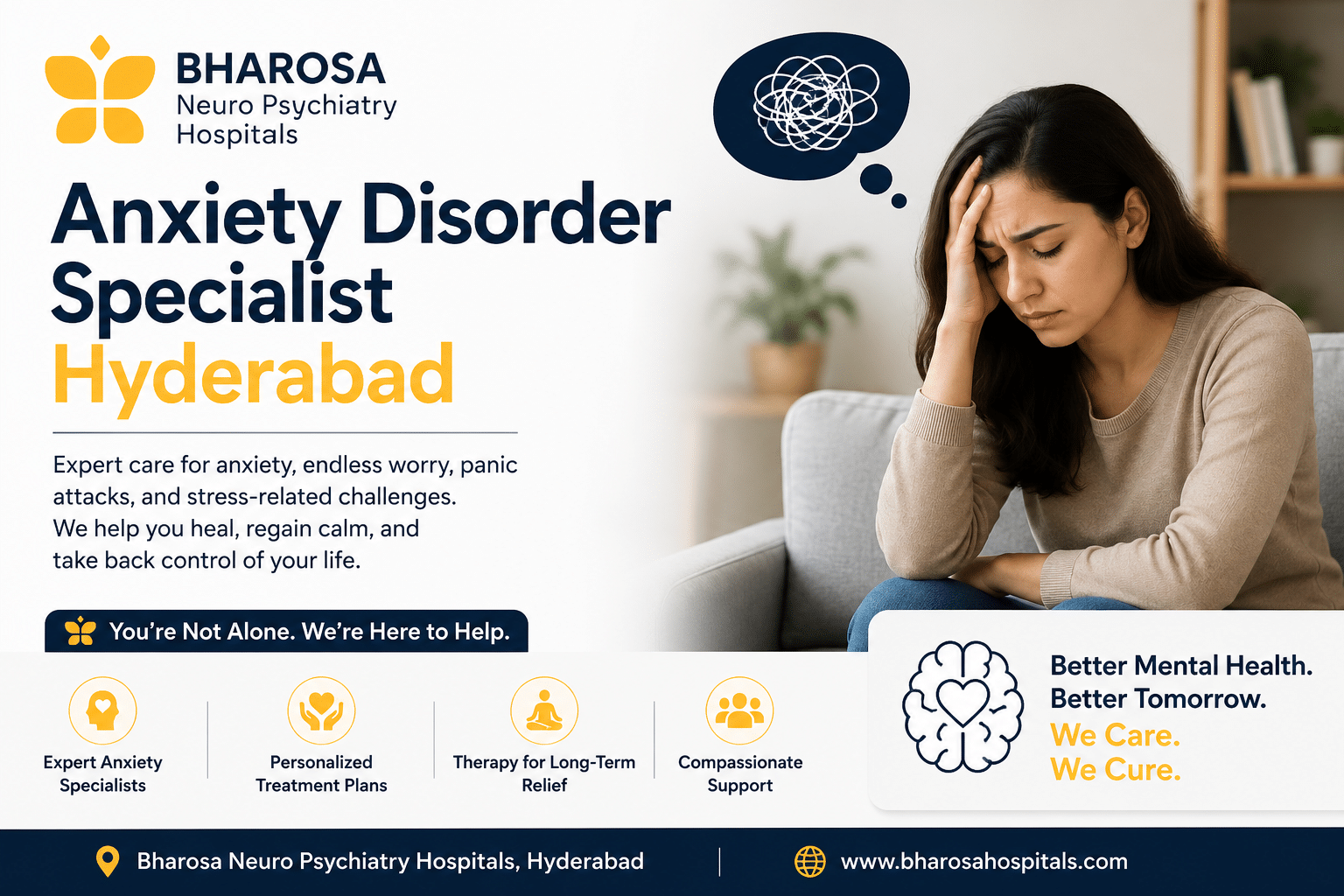
Anxiety is part of being human — and in a city like Hyderabad, with its relentless pace, professional pressure, and constant connectivity, a degree of anxiety is almost universal. But there is a categorical difference between the normal anxiety of a high-stakes presentation and the clinical anxiety of a disorder that colours every moment of every day, disrupts sleep, sabotages relationships, and prevents the person from living the life they want to live.
Knowing when normal anxiety has become a clinical disorder — and when to consult an Anxiety Disorder Specialist Hyderabad — is one of the most important mental health decisions you will ever make. At Bharosa Neuro Psychiatry Hospital, our anxiety specialists help patients reclaim their lives from conditions that have often gone unrecognised and untreated for years.
Understanding the Line Between Normal Anxiety and Disorder
Normal anxiety is proportionate, time-limited, and functional — it motivates preparation, sharpens performance, and signals real threats. An Anxiety Disorder Specialist Hyderabad diagnoses a disorder when anxiety becomes disproportionate to actual threat, persists long after the triggering stressor has passed, is experienced as uncontrollable, and significantly impairs daily functioning. If anxiety has become the background of your life rather than a response to specific situations, it is a disorder — and it is entirely treatable.
Signal 1: Your Anxiety Is Constant, Not Situational
Anxiety that is always present — regardless of whether there is an objective reason for it — is the defining feature of Generalised Anxiety Disorder (GAD). If you find yourself worrying persistently about health, finances, relationships, work, and the future simultaneously, and if the worry feels impossible to switch off or control, this is not a personality trait — it is a neurological pattern that an anxiety disorder specialist can treat effectively.
Signal 2: You Are Experiencing Panic Attacks
Panic attacks are sudden, overwhelming episodes of intense fear accompanied by physical symptoms — heart pounding, chest tightness, shortness of breath, dizziness, numbness, and a terrifying sense of impending doom or unreality. They peak within minutes and are among the most frightening experiences a person can have. If you have experienced one or more panic attacks, consulting an Anxiety Disorder Specialist Hyderabad is urgent — because panic disorder is highly treatable when addressed promptly, and untreated panic disorder often leads to progressive avoidance that severely restricts daily life.
Signal 3: You Are Avoiding More and More
Avoidance is anxiety's most effective short-term strategy and most destructive long-term consequence. When anxiety about specific situations, places, or people leads to avoidance, the temporary relief of avoidance reinforces the anxiety — and the avoided zone gradually expands. If you have found yourself declining social invitations, avoiding certain roads, refusing to use public transport, avoiding medical appointments, or restructuring your life around what you can and cannot tolerate, avoidance has become a clinical problem requiring specialist intervention.
Signal 4: Your Body Is Paying the Price
Anxiety is not just a psychological experience — it has profound physical consequences. Chronic anxiety activates the sympathetic nervous system persistently, leading to elevated cortisol levels, cardiovascular strain, immune suppression, muscle tension, and gut dysregulation. Patients who consult an Anxiety Disorder Specialist Hyderabad frequently arrive with a history of unexplained physical complaints — chronic headaches, irritable bowel syndrome, frequent infections, chest pain that cardiac investigations have not explained, and persistent muscle aches. When physical symptoms have no identified medical cause, anxiety disorders should always be investigated.
Signal 5: Sleep Is Consistently Disrupted by Worry
The relationship between anxiety and sleep is bidirectional and reinforcing: anxiety disrupts sleep, and sleep deprivation intensifies anxiety. If you regularly lie awake with racing thoughts, wake in the middle of the night with worry, or face mornings already dreading the day ahead, this sleep–anxiety cycle has become clinical in nature and will not resolve without professional intervention.
Signal 6: Anxiety Is Affecting Your Work or Relationships
When anxiety is consistently impairing your ability to perform at work — causing avoidance of meetings, difficulty concentrating, procrastination driven by fear of failure, or conflict with colleagues — or affecting the quality of your personal relationships — causing irritability, social withdrawal, or dependence on reassurance — it has crossed the functional threshold that signals the need for an anxiety disorder specialist Hyderabad consultation.
Signal 7: You Are Using Alcohol or Substances to Manage Anxiety
Self-medication of anxiety with alcohol, cannabis, or prescribed sedatives is one of the most common — and most dangerous — patterns seen at Bharosa Hospitals. Substances provide temporary anxiety relief but worsen the underlying anxiety disorder over time and create a secondary addiction. If you are using any substance primarily to manage anxious feelings, this is an urgent signal for professional assessment and integrated dual diagnosis treatment.
What Happens When You Consult an Anxiety Specialist at Bharosa Hospitals
Your first appointment with an Anxiety Disorder Specialist Hyderabad at Bharosa Hospitals will involve a comprehensive assessment of your anxiety symptoms, their history, their impact, and any contributing factors. A personalised treatment plan will be developed — typically combining Cognitive Behavioural Therapy (the gold standard for anxiety disorders), medication management where indicated, and lifestyle interventions proven to reduce anxiety. Relief is genuinely achievable — often within weeks of beginning treatment.
Frequently Asked Questions
Q: How do I know if I have an anxiety disorder or am just a naturally anxious person?
A: If your anxiety is consistently affecting your ability to function — at work, in relationships, or in daily life — and is experienced as uncontrollable and disproportionate to actual threat, it is likely a clinical disorder rather than a personality trait. An anxiety disorder specialist at Bharosa Hospitals can provide a definitive assessment.
Q: What is the most effective treatment for anxiety disorders?
A: Cognitive Behavioural Therapy (CBT) combined with medication management where indicated is the gold standard treatment for most anxiety disorders. Bharosa Hospitals also offers Exposure and Response Prevention (ERP) for OCD-related anxiety, Acceptance and Commitment Therapy (ACT), and Mindfulness-Based Cognitive Therapy (MBCT) — tailored to each patient's specific anxiety profile.
Q: Are anti-anxiety medications safe and non-addictive?
A: SSRIs and SNRIs — the first-line medications for anxiety disorders — are non-addictive and safe for long-term use under specialist supervision. Some short-term anxiolytics carry dependence risk, which is why Bharosa's anxiety disorder specialists prescribe and monitor all medications carefully, using them judiciously and reviewing them regularly.
Q: Can anxiety disorders cause physical health problems?
A: Yes. Chronic untreated anxiety has well-documented physical health consequences including elevated cardiovascular risk, immune suppression, gastrointestinal disorders, and chronic pain conditions. Treating the underlying anxiety disorder typically leads to improvement in associated physical symptoms as well.
Q: Does Bharosa Hospitals offer anxiety treatment for children and adolescents?
A: Yes. Childhood and adolescent anxiety disorders — including school refusal, separation anxiety, social anxiety, and GAD — are treated by Bharosa Hospitals' Child Psychiatry Department using age-appropriate CBT, family therapy, and carefully considered medication where necessary.