When Memory Loss Is More Than Aging: Understanding Dementia
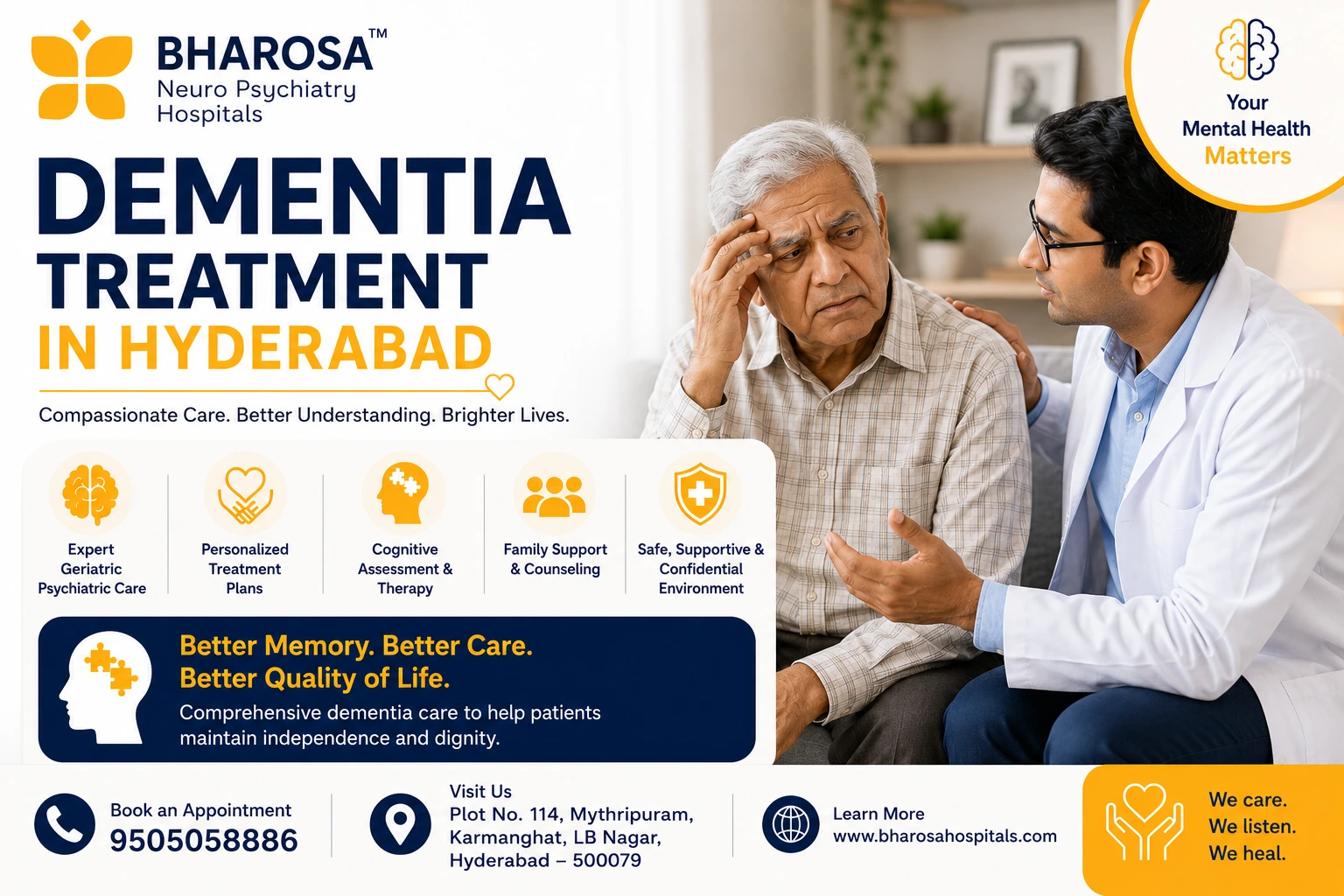
"She keeps forgetting where she puts her glasses." "He asked me the same question five times today." Many families first dismiss these signs as normal ageing — until the symptoms become impossible to ignore. Memory loss is one of the most feared aspects of growing old, but not all memory problems are simply the result of age. Dementia is a specific clinical syndrome that requires accurate diagnosis and expert management. Bharosa Hospitals is a leading provider of Dementia Treatment in Hyderabad, offering comprehensive geriatric psychiatric care with compassion and clinical excellence.
Normal Aging vs. Dementia: Knowing the Difference
It is normal to occasionally forget a name and remember it later, misplace items, or take longer to recall information as we age. Dementia is fundamentally different — it represents a progressive decline in cognitive function severe enough to interfere with daily life. The critical distinctions:
- Normal aging: Occasionally forgetting a name but recalling it later. Dementia: Forgetting the names of close family members repeatedly
- Normal aging: Temporarily losing track of the date. Dementia: Getting lost in familiar surroundings or forgetting the year
- Normal aging: Making an occasional poor decision. Dementia: Consistent poor judgment, financial mismanagement, or vulnerability to scams
- Normal aging: Sometimes needing help with technology. Dementia: Inability to follow familiar recipes, manage finances, or complete basic daily tasks
- Normal aging: Feeling occasionally sad or moody. Dementia: Significant personality changes, paranoia, hallucinations, or severe apathy
What Is Dementia?
Dementia is not a single disease but an umbrella term for a group of symptoms caused by various brain disorders that impair memory, thinking, behaviour, and the ability to perform everyday tasks. The most common types include:
- Alzheimer's Disease: Accounts for 60–70% of dementia cases; characterised by amyloid plaques and tau tangles in the brain
- Vascular Dementia: Caused by reduced blood flow to the brain, often following strokes or small vessel disease
- Lewy Body Dementia: Associated with abnormal protein deposits; features fluctuating attention, visual hallucinations, and movement problems
- Frontotemporal Dementia: Primarily affects personality, behaviour, and language rather than memory in early stages
Warning Signs That Require Dementia Treatment in Hyderabad
If you notice the following signs in an elderly parent, spouse, or relative, please seek professional evaluation at a qualified Dementia Treatment in Hyderabad centre without delay:
- Repeatedly asking the same questions within a short time span
- Getting disoriented in familiar places or at familiar times of day
- Significant difficulty with language — forgetting common words, using wrong words
- Poor judgment and decision-making, especially with money
- Withdrawal from social activities, hobbies, and relationships
- Dramatic personality or mood changes — increased suspicion, anxiety, or aggression
- Difficulty with routine daily tasks — cooking, dressing, managing finances
The earlier dementia is diagnosed, the more effectively its progression can be managed.
How Bharosa Hospitals Approaches Dementia Treatment
Bharosa Hospitals' Geriatric Mental Health Department provides the most comprehensive Dementia Treatment in Hyderabad, combining medical management with psychological support and family education:
Comprehensive Geriatric Psychiatric Assessment
Our specialists conduct detailed cognitive assessments (including standardised tools like MMSE and MoCA), neurological history review, and collateral history from family members to accurately diagnose dementia type and stage.
Medical Management
While there is currently no cure for most dementia types, medications — including cholinesterase inhibitors (donepezil, rivastigmine) and memantine — can significantly slow progression and improve quality of life. Behavioural and psychological symptoms such as agitation, depression, and psychosis associated with dementia are also carefully managed.
Cognitive Stimulation Therapy
Structured cognitive activities — memory exercises, word games, familiar music, and reminiscence therapy — help maintain cognitive function longer and improve mood and quality of life.
Family Education and Caregiver Support
Dementia care is as much about supporting the family as it is about treating the patient. Bharosa's family sessions teach caregivers how to communicate effectively with a person with dementia, manage behavioural symptoms without distress, create a safe home environment, and prevent caregiver burnout.
Safety and Environmental Planning
As dementia progresses, home safety becomes critical. Bharosa's team provides practical guidance on environmental modifications — from removing hazards to establishing safe daily routines — that maintain independence and reduce the risk of accidents.
Compassionate, Dignity-Centred Care
At Bharosa Hospitals, Dementia Treatment in Hyderabad is grounded in a fundamental belief: that every person with dementia, regardless of the stage of their illness, deserves to be treated with dignity, respect, and kindness. The team communicates with patients directly, maintains their sense of identity and history, and involves them in care decisions to the greatest extent possible.
Conclusion
Memory loss that goes beyond normal ageing is not something to attribute to "just getting old" or to face alone. Early diagnosis and expert management make a real difference to the quality and duration of a fulfilling life. If you are concerned about an elderly loved one showing signs of cognitive decline, reach out to the Dementia Treatment in Hyderabad specialists at Bharosa Hospitals today. Call +91 9505058886 or visit www.bharosahospitals.com. Compassionate, expert care is closer than you think.
Hospital Address
Bharosa Hospitals – Address & Contact
Plot No. 114, Mythripuram, Karmanghat, Opposite TKR College Comman (TKR Kamaan), Main Road, LB Nagar / Karmanghat, Hyderabad – 500079, Telangana. Phone: +91 9505058886 | WhatsApp: +91 9505058886 | Email: contact@bharosahospitals.com | Website: www.bharosahospitals.com
FAQs
Q: What is the difference between Alzheimer's disease and dementia?
A: Dementia is an umbrella term for a group of symptoms affecting memory, thinking, and daily functioning. Alzheimer's disease is the most common cause of dementia, accounting for 60–70% of cases. All Alzheimer's is dementia, but not all dementia is Alzheimer's.
Q: At what age should I be concerned about memory loss?
A: Significant memory loss that interferes with daily functioning is not a normal part of ageing at any age. However, dementia is more prevalent over 65. If you notice consistent, progressive changes in memory or cognition — at any age — please consult a specialist.
Q: Can dementia be cured?
A: Currently, most types of dementia (including Alzheimer's) cannot be cured. However, treatments can significantly slow progression, manage symptoms, and greatly improve quality of life for both patients and families. Early intervention offers the best outcomes.
Q: What Dementia Treatment in Hyderabad services does Bharosa offer?
A: Bharosa offers comprehensive geriatric psychiatric assessments, medication management, cognitive stimulation therapy, family counselling and caregiver support, and safety planning for patients at all stages of dementia.
Q: How can family members best support a loved one with dementia?
A: Key strategies include maintaining consistent daily routines, communicating simply and patiently, creating a safe home environment, engaging the person in familiar and enjoyable activities, and attending Bharosa's family education sessions to learn evidence-based caregiving skills.
Q: Is there a specific diet or lifestyle change that helps with dementia?
A: While no diet cures dementia, the Mediterranean and MIND diets are associated with lower risk and slower progression. Regular physical activity, social engagement, mental stimulation, and good cardiovascular health management (blood pressure, diabetes, cholesterol) also contribute to brain health.