
How Structured Rehabilitation Helps Build a Substance-Free Life
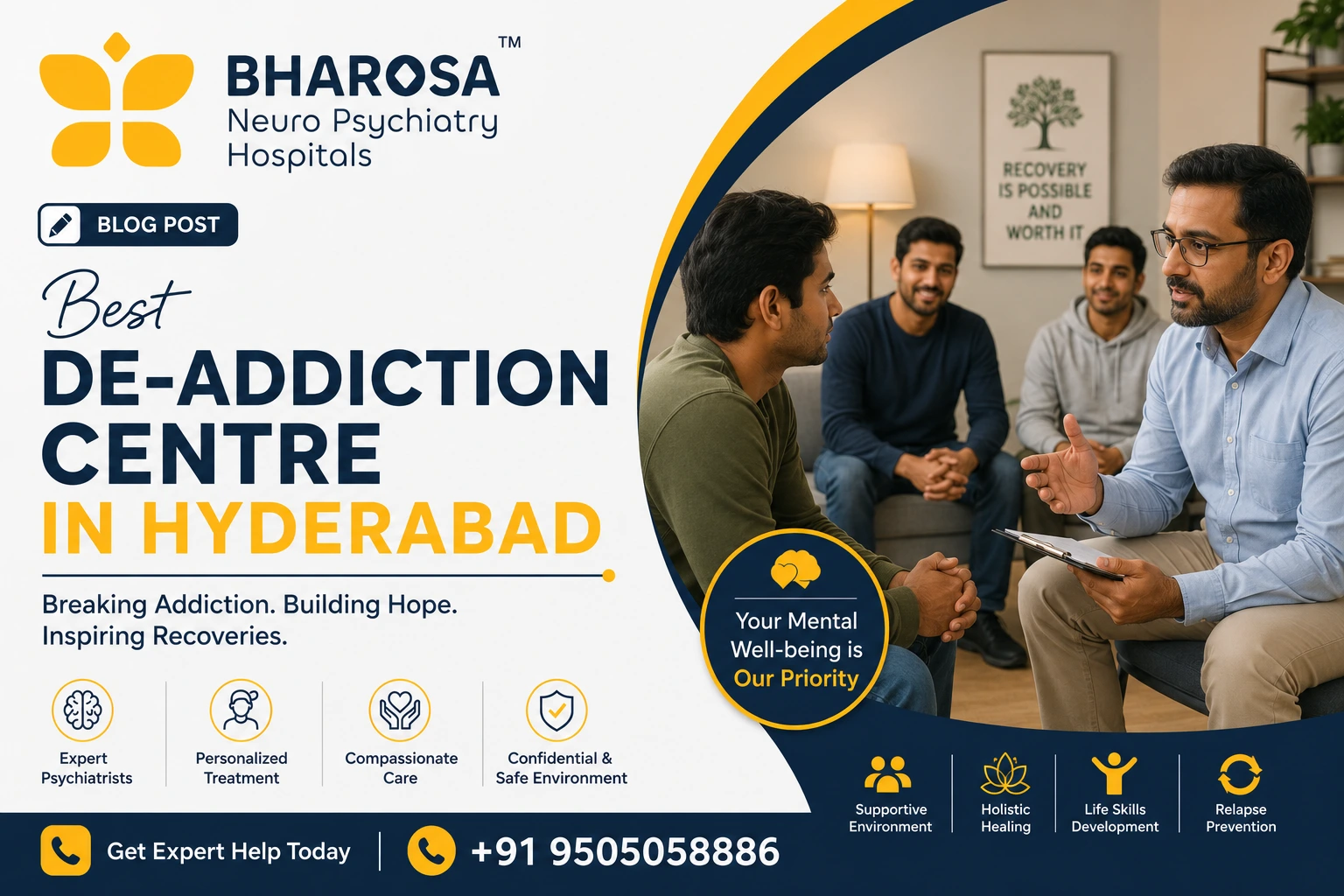
Recovery from addiction is not simply a matter of willpower. If it were, the countless individuals who have tried and failed to quit alcohol or drugs by sheer determination alone would have succeeded. Addiction is a chronic brain disease that rewires the neural circuits governing reward, motivation, memory, and self-control — and undoing those changes requires far more than resolve. It requires structured, professional, medically supervised rehabilitation at a trusted De-Addiction Centre in Hyderabad like Bharosa Neuro Psychiatry Hospital.
The word 'structured' is key. Structure is not just a preference in addiction recovery — it is a neurological necessity. The addicted brain has, over months or years, organised itself entirely around the substance: when to use, how to obtain it, what situations trigger craving, and how to cope with discomfort through use. Rebuilding a substance-free life requires systematically replacing every element of that destructive structure with a new, healthy one. This is precisely what Bharosa's rehabilitation program is designed to do.
Why Structure Is the Foundation of Successful Addiction Recovery
The Addicted Brain Craves Predictability
Addiction thrives in unstructured environments. Boredom, idle time, unpredictable routines, and unmanaged stress are among the most powerful relapse triggers. The addicted brain — trained to seek the dopamine surge of substance use whenever discomfort arises — will reach for its familiar solution the moment structure breaks down.
Structured rehabilitation replaces this destructive predictability with a positive, health-promoting daily framework. When every hour of the day has purposeful content — therapy sessions, meals, exercise, group activities, rest — the addicted brain is deprived of the unstructured windows through which cravings typically break through.
New Neural Pathways Require Consistent, Repeated Activation
Neuroplasticity — the brain's ability to form new neural pathways — is the biological foundation of recovery. But neuroplasticity is not passive; it requires active, consistent repetition of new behaviours for new circuits to strengthen. A structured rehabilitation program provides exactly this: the same healthy behaviours, repeated daily, month after month, until they become the brain's new default — replacing the addiction-driven patterns that structure once served.
What Structured Rehabilitation Looks Like at Bharosa's De-Addiction Centre in Hyderabad
At Bharosa — one of Hyderabad's most trusted De-Addiction Centre in Hyderabad — structured rehabilitation is a carefully designed, phase-by-phase process that addresses every dimension of recovery:
Phase 1: Medical Stabilisation and Safe Detoxification
Structured recovery begins before therapy. The body must first be safely cleared of the substance under strict medical supervision. At Bharosa, medically supervised detoxification ensures that withdrawal — which can be dangerous or even life-threatening with alcohol and opioids — is managed safely, humanely, and with maximum comfort.
A structured medical detox protocol eliminates the dangerous phenomenon of 'cold turkey' — unsupervised, sudden cessation that causes severe physical and psychological distress and dramatically increases the risk of medical emergency. With Bharosa's team monitoring every vital sign, the first days of recovery are as safe and comfortable as possible.
Phase 2: Structured Daily Therapeutic Routine
The cornerstone of Bharosa's rehabilitation program is a highly structured daily schedule — crafted to engage the recovering brain purposefully from waking to sleeping. A typical day in our residential rehabilitation program includes:
- Morning: Wake routine, personal hygiene, morning assembly, and mindfulness or meditation session
- Mid-Morning: Individual therapy session (CBT, motivational interviewing, EMDR, or addiction counselling as appropriate)
- Late Morning: Group therapy or psychoeducation session — learning about addiction neuroscience, relapse prevention, and communication skills
- Afternoon: Structured activity — art therapy, music therapy, vocational skills, or recreational therapy
- Late Afternoon: Physical activity — yoga, walking, or supervised exercise designed to stimulate natural dopamine and endorphin production
- Evening: Family counselling session (scheduled), peer support group, or life skills workshop
- Night: Wind-down routine, sleep hygiene practices, and medical review if needed
This structure eliminates the idle, unstructured time in which cravings take root, provides multiple positive dopamine-stimulating experiences throughout the day, and steadily rebuilds the routine of a healthy, purposeful life.
Phase 3: Psychological Healing Through Evidence-Based Therapies
Substance abuse is never just about the substance. Beneath every addiction lies a landscape of psychological pain — trauma, unresolved grief, relationship wounds, identity confusion, co-occurring depression or anxiety. Structured rehabilitation addresses this deeper landscape through:
- Cognitive Behavioural Therapy (CBT): Identifying and restructuring the thought patterns that trigger and maintain substance use
- Motivational Enhancement Therapy (MET): Strengthening internal motivation for change and resolving ambivalence about recovery
- EMDR: Processing underlying trauma that drives self-medication through substance use
- Dual Diagnosis Treatment: Simultaneously treating co-occurring psychiatric conditions — depression, anxiety, PTSD, and bipolar disorder — that often underlie and perpetuate addiction
- Relapse Prevention Therapy: Building a personalised toolkit of coping strategies, trigger identification, and crisis plans
Phase 4: Family Reconstruction and Involvement
No element of structured rehabilitation at Bharosa's De-Addiction Centre in Hyderabad is more important than family reconstruction. Addiction devastates family systems — creating cycles of enabling, co-dependency, mistrust, communication breakdown, and shared trauma. Families do not heal automatically when the patient sobers up; they require their own therapeutic work.
Bharosa's structured family program includes psychoeducation about addiction as a brain disease, communication skills training, boundary-setting workshops, identification and elimination of enabling behaviours, and joint family therapy sessions with the patient to begin rebuilding trust, honesty, and healthy relational dynamics.
Phase 5: Life Skills and Vocational Rehabilitation
Long-term recovery requires more than sobriety — it requires a life worth living. Many patients in addiction treatment have neglected their education, lost their employment, and allowed their skills to atrophy. Structured rehabilitation addresses this through life skills training — cooking, financial management, time management, social interaction — and vocational rehabilitation that helps patients identify realistic career goals and begin building toward them.
A patient who leaves rehabilitation with a purpose, a routine, a skill, and a goal is far more resilient against relapse than one who leaves with nothing but the absence of substances.
Phase 6: Structured Aftercare and Relapse Prevention
The transition from the structured, supported rehabilitation environment back to independent daily life is one of the highest-risk periods of addiction recovery. Without a structured transition plan, this gap is where relapse most commonly occurs.
Bharosa's aftercare program provides a structured bridge between residential rehabilitation and full independent living — including scheduled follow-up appointments, continued outpatient therapy, alumni peer support groups, family check-ins, and a clearly defined relapse response plan that patients and families know how to activate immediately if needed.
The Bharosa 100-Day Structured Rehabilitation Framework
Bharosa's De-Addiction Centre in Hyderabad is guided by the scientifically developed 100-Day Program — the optimal timeline for the brain to heal neuroplastically, for medications to reach full therapeutic effect, and for new behaviours to become established habits. Research shows this framework reduces relapse risk by up to 80% compared to shorter programs — making it the most effective investment in long-term recovery available in Hyderabad.
Conclusion
Structured rehabilitation is not imprisonment — it is liberation. It is the deliberate, systematic process of rebuilding a human life from the inside out: restoring brain health, healing psychological wounds, reconstructing family bonds, and creating the routines and purposes that make a substance-free life not just possible, but genuinely fulfilling. Bharosa Neuro Psychiatry Hospital's De-Addiction Centre in Hyderabad is dedicated to guiding every patient through this transformation with expert care, compassionate support, and unwavering commitment to their long-term recovery. Your substance-free future begins with one call.
Call Now: +91 9505058886
Frequently Asked Questions (FAQs)
Q: Why is structured rehabilitation more effective than simply stopping substance use at home?
A: Attempting to stop substance use without professional support fails for the vast majority of people because it does not address the neurobiological, psychological, family, and lifestyle dimensions of addiction. Structured rehabilitation at Bharosa's De-Addiction Centre in Hyderabad provides medically safe detox, evidence-based therapy, family reconstruction, life skills rebuilding, and relapse prevention — addressing every layer of the addiction simultaneously.
Q: How long does the structured rehabilitation program at Bharosa last?
A: Bharosa's signature 100-Day Program is the recommended framework for most addiction treatment cases. Duration is personalised based on the type and severity of addiction, co-occurring mental health conditions, overall health, and individual progress. Our psychiatrists provide a personalised treatment timeline after the initial assessment.
Q: Can someone with both addiction and a mental health condition (dual diagnosis) be treated at Bharosa?
A: Yes. Bharosa specialises in dual diagnosis treatment — the simultaneous management of addiction and co-existing psychiatric conditions such as depression, anxiety, bipolar disorder, PTSD, and schizophrenia. Treating both conditions simultaneously is essential; addressing only one while leaving the other untreated significantly increases relapse risk.
Q: How does family involvement work at Bharosa's De-Addiction Centre in Hyderabad?
A: Family involvement is a structured, integral component of rehabilitation at Bharosa — not an optional add-on. Dedicated family therapy sessions, psychoeducation workshops, communication skills training, and boundary-setting guidance help families understand addiction, heal relationship damage, eliminate enabling behaviours, and become effective long-term supporters of the patient's recovery.
Q: What happens after completing rehabilitation at Bharosa?
A: Completing residential rehabilitation is not the end of the journey — it is the beginning. Bharosa provides a comprehensive aftercare program including scheduled follow-up consultations, continued outpatient therapy, alumni peer support groups, family check-ins, and a personal relapse prevention plan. Patients leave with a structured transition plan that protects their recovery in the critical post-discharge period.
Q: How can I arrange admission to Bharosa's De-Addiction Centre in Hyderabad?
A: Call or WhatsApp +91 9505058886 at any time — our team is available 24/7. You can also visit our centre at Plot No. 114, Mythripuram, Karmanghat, Opposite TKR College Comman, LB Nagar, Hyderabad – 500079. Our counsellors will guide you through the confidential assessment and admission process with compassion and complete discretion.
Hospital Address & Contact
Bharosa Neuro Psychiatry Hospital & Rehabilitation Center
Plot No. 114, Mythripuram, Karmanghat, Opposite TKR College Comman (TKR Kamaan),Main Road, LB Nagar / Karmanghat, Hyderabad – 500079, Telangana, India
Phone +91 9505058886
Available: 24 Hours | 7 Days a Week | Emergency & Walk-in Accepted