
Schizophrenia Hospital Hyderabad: Early Symptoms You Must Never Ignore
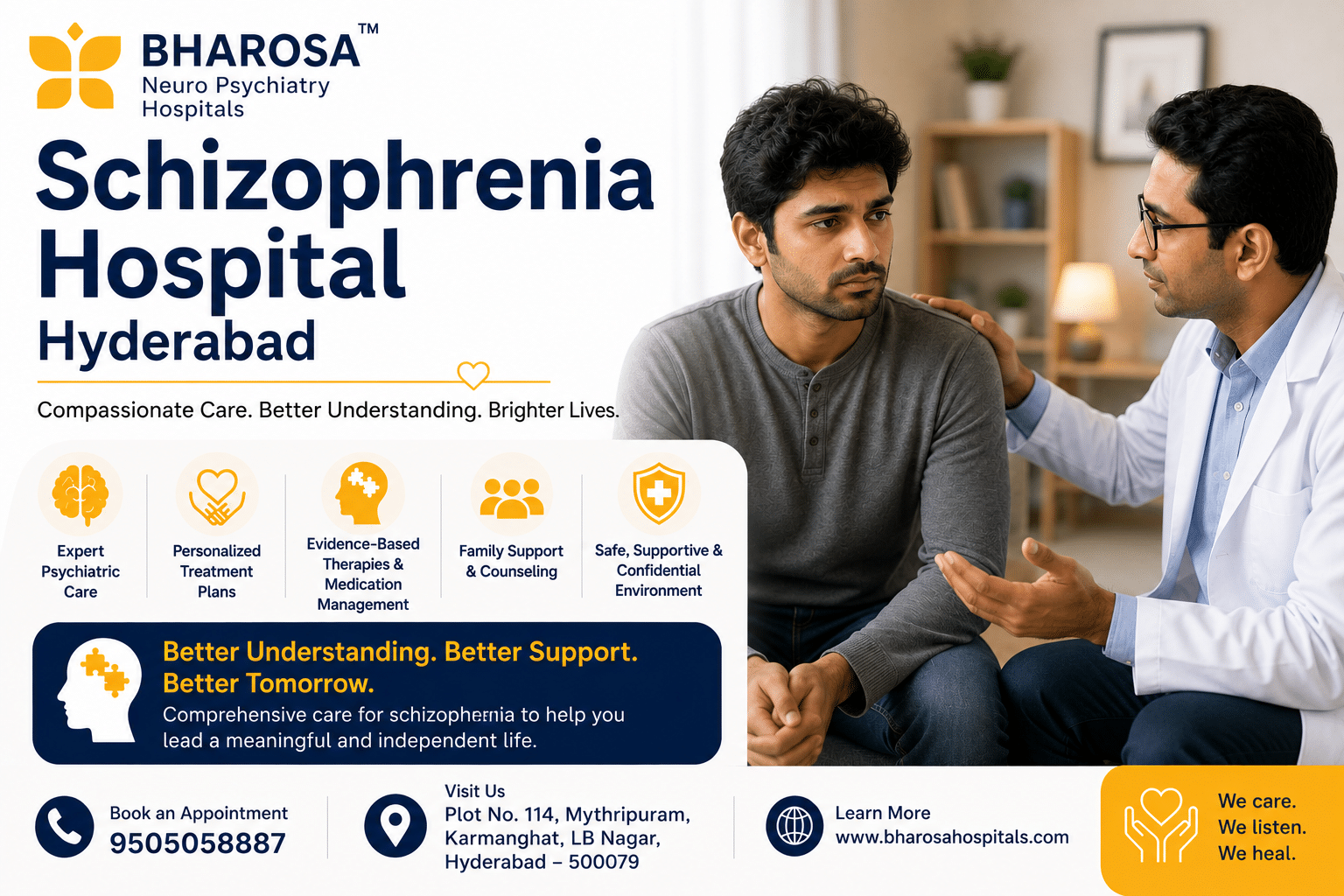
Schizophrenia is one of the most misunderstood and stigmatised mental health conditions in the world. Popular culture often misrepresents it as 'split personality' or dangerous behaviour — neither of which accurately describes the condition. The reality is that schizophrenia is a serious but treatable neuropsychiatric disorder, and the earlier professional intervention begins, the better the long-term outcome. As the most trusted Schizophrenia Hospital Hyderabad, Bharosa Neuro Psychiatry Hospital is committed to early detection, accurate diagnosis, and comprehensive treatment.
What Is Schizophrenia?
Schizophrenia is a chronic, complex psychiatric disorder that affects how a person thinks, feels, and perceives reality. It typically emerges in late adolescence or early adulthood — males between 15 and 25, females somewhat later. As a leading Schizophrenia Hospital Hyderabad, Bharosa treats the full spectrum of schizophrenia presentations — from the first episode of psychosis to treatment-resistant schizophrenia requiring advanced interventions.
The Critical Period: Why Early Symptoms Matter
Psychiatry research has established a 'critical period' concept in schizophrenia: the first 2 to 5 years after symptom onset represent the highest-impact window for treatment. Intensive, appropriate intervention during this period can dramatically alter the long-term course of the illness — preserving cognitive function, maintaining social relationships, enabling continued education and employment, and reducing the total burden of illness over a lifetime. Yet in India, the average delay from first symptom to first treatment remains over two years.
The Prodromal Phase: Warning Signs Before Full Psychosis
One of the most valuable skills our schizophrenia hospital Hyderabad team shares is recognising the prodromal phase — the early warning period that often precedes a full psychotic break by months or even years. Prodromal symptoms include:
- Gradual social withdrawal and loss of interest in previously enjoyed activities
- Declining academic or work performance without clear reason
- Unusual or magical thinking — believing in special powers or perceiving hidden meanings
- Increasing suspiciousness or paranoia — feeling watched or followed
- Perceptual disturbances — seeing shadows, hearing muffled sounds, experiencing sensory oddities
- Disorganised or illogical speech that is hard to follow
- Neglect of personal hygiene and self-care
- Sleep disturbances — dramatic changes in sleep patterns
Positive Symptoms of Schizophrenia
Positive symptoms are experiences that are added to a person's normal functioning — things present that should not be. These include hallucinations (most commonly hearing voices that others cannot hear), delusions (fixed false beliefs such as believing one is being persecuted, monitored, or has special powers), and disorganised thinking and speech that makes communication difficult to follow.
Negative Symptoms of Schizophrenia
Negative symptoms represent a reduction or absence of normal functions and are often more challenging to recognise and treat. They include flat affect (reduced emotional expression), alogia (poverty of speech), avolition (inability to initiate or persist in goal-directed activities), anhedonia (inability to experience pleasure), and social withdrawal. Negative symptoms are frequently mistaken for depression or laziness by families who are not aware of the diagnosis.
Treatment at Bharosa — The Leading Schizophrenia Hospital Hyderabad
As the foremost Schizophrenia Hospital Hyderabad offers, Bharosa provides a comprehensive, evidence-based treatment programme including:
- Antipsychotic medication management — first and second generation, carefully titrated
- Long-acting injectable antipsychotics (LAIs) for patients with medication adherence challenges
- Cognitive remediation therapy to improve attention, memory, and executive function
- Social skills training to rebuild interpersonal functioning
- Family psychoeducation — essential for home-based relapse prevention
- Vocational rehabilitation — supporting return to education and employment
- Crisis management and inpatient care during acute psychotic episodes
Frequently Asked Questions
Q: Is schizophrenia hereditary? What is the risk if a parent has schizophrenia?
A: Schizophrenia has a significant genetic component. If one parent has schizophrenia, the lifetime risk for a child is approximately 10-15%, compared to about 1% in the general population. However, genetics alone does not determine outcome — environmental factors, early intervention, and treatment quality all play significant roles.
Q: Can a person with schizophrenia live independently?
A: Many people with schizophrenia, with appropriate treatment and support, live independently, maintain relationships, hold jobs, and lead fulfilling lives — particularly when treatment is initiated early. Bharosa Hospitals' rehabilitation programme specifically supports the development of independent living skills.
Q: Are antipsychotic medications safe for long-term use?
A: Modern antipsychotic medications are generally safe for long-term use under specialist supervision. Our psychiatrists at Bharosa Hospitals regularly monitor for side effects and adjust medications as needed to balance efficacy with tolerability.
Q: My family member refuses to accept that they have schizophrenia. What can we do?
A: Lack of insight (anosognosia) is a common feature of schizophrenia itself — the illness impairs the person's ability to recognise they are unwell. Bharosa Hospitals' family counselling programme helps families navigate this compassionately and safely, including guidance on initiating care when a person cannot consent.
Q: How soon after noticing symptoms should we contact a schizophrenia hospital?
A: As soon as possible. Do not wait for symptoms to worsen or for a full psychotic crisis. The earlier assessment begins, the better the outcome. Contact Bharosa Hospitals at +91 95050 58887 to arrange an urgent evaluation.
Bharosa Neuro Psychiatry Hospital & Rehabilitation Center
Plot No. 114, Mythripuram, Karmanghat, LB Nagar, Hyderabad – 500079
+91 95050 58887 | www.bharosahospitals.com