
Recovery Journey After Schizophrenia Diagnosis | Bharosa Hospitals
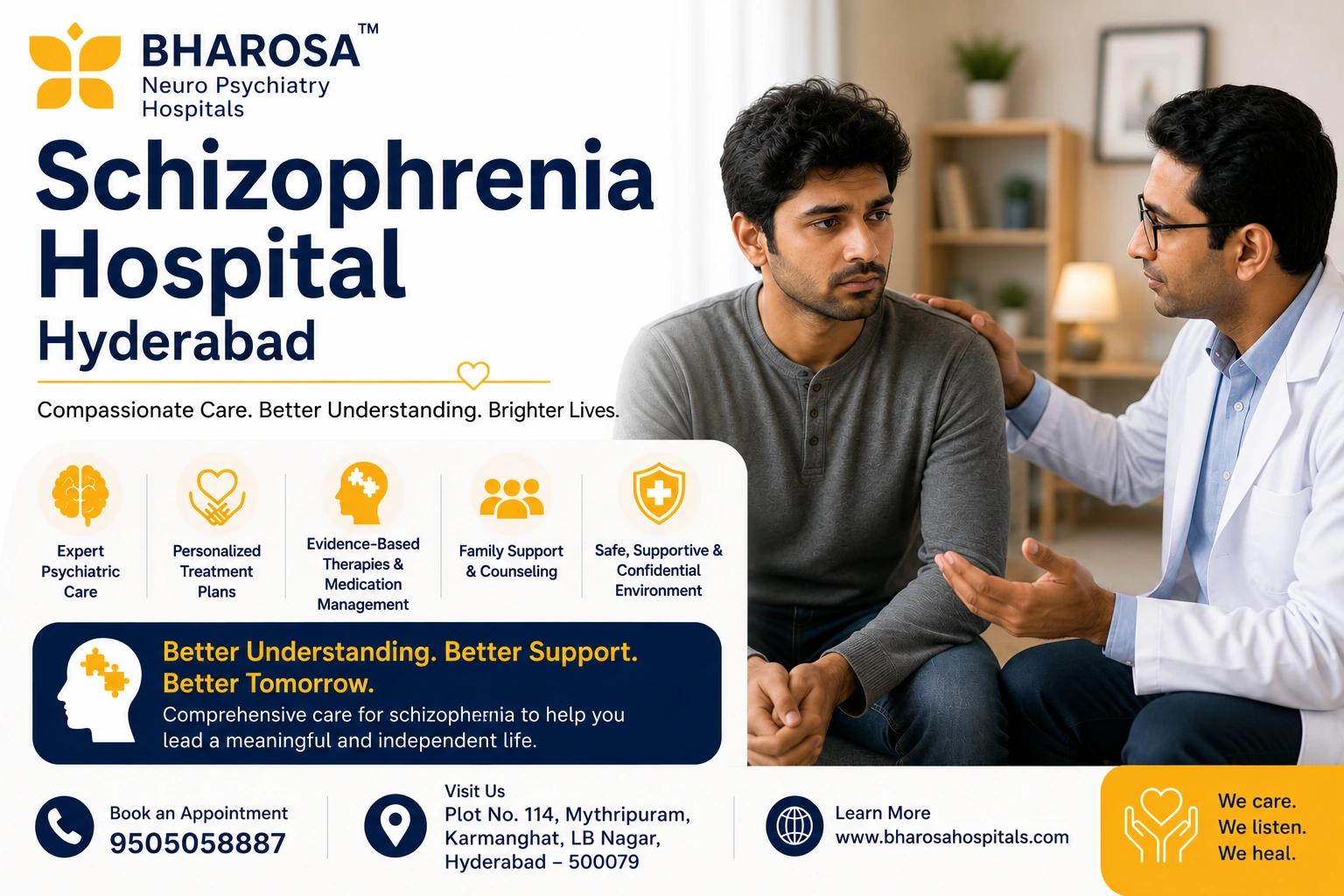
Receiving a diagnosis of schizophrenia can feel devastating — for the patient, and for those who love them. The words carry enormous weight, often accompanied by fear, confusion, stigma, and a profound sense of uncertainty about what lies ahead. But here is what the world's best psychiatric research and clinical experience consistently show: recovery from schizophrenia is possible. With the right treatment, social support, and a hospital that genuinely cares, many patients with schizophrenia achieve lasting stability, meaningful relationships, and independent functioning. As the leading Schizophrenia Hospital Hyderabad families and patients trust, Bharosa Neuro Psychiatry Hospital walks this journey with every patient — from the first crisis to long-term recovery.
1. What Is Schizophrenia? Clearing the Confusion
Schizophrenia is a serious, chronic psychiatric disorder characterised by disturbances in thinking, perception, emotions, and behaviour. It is not, despite widespread misconceptions, a split personality disorder — that is a common and harmful myth. Schizophrenia is a neurological condition involving dysregulation of dopamine and other neurotransmitters in the brain, leading to symptoms that are broadly categorised as:
- Positive symptoms: Hallucinations (most commonly auditory — hearing voices), delusions (fixed, false beliefs), disorganised thinking and speech, and bizarre or disorganised behaviour
- Negative symptoms: Reduced emotional expression, social withdrawal, decreased motivation and spontaneous speech, and difficulty experiencing pleasure
- Cognitive symptoms: Impaired working memory, difficulty with executive function, and reduced processing speed
Schizophrenia typically emerges in late adolescence or early adulthood, and the earlier it is identified and treated, the better the long-term prognosis.
2. The First Steps After Diagnosis: What to Expect
Crisis Stabilisation
For many patients, the journey to a Schizophrenia Hospital Hyderabad begins during a psychotic crisis — a period of acute symptoms that may include frightening hallucinations, paranoid delusions, aggressive or self-harming behaviour, or complete withdrawal from reality. At Bharosa Hospitals, the first priority is always patient safety and rapid stabilisation through compassionate, medically supervised crisis care.
Psychiatric Assessment and Diagnosis
A thorough psychiatric evaluation by a senior psychiatrist establishes the diagnosis, rules out other conditions that can mimic schizophrenia (such as bipolar disorder with psychotic features, substance-induced psychosis, or neurological conditions), and assesses the patient's overall medical and psychiatric status.
Antipsychotic Medication Initiation
Antipsychotic medication is the cornerstone of schizophrenia treatment. At Bharosa, the psychiatry team carefully selects the most appropriate antipsychotic based on the patient's symptom profile, potential side effects, and overall health status. Medication is initiated at carefully titrated doses and monitored closely throughout treatment.
3. The Recovery Journey: A Realistic and Hopeful Picture
Recovery from schizophrenia is not a linear path. There will be periods of significant progress and periods of challenge. Understanding this from the outset helps patients and families navigate setbacks without losing hope. The recovery journey typically involves several overlapping phases:
Phase 1: Acute Treatment (Weeks 1–6)
The focus here is symptom reduction and stabilisation. Antipsychotic medications begin working within days to weeks, reducing the intensity of hallucinations, delusions, and disorganised thinking. The patient begins to re-engage with reality and with the clinical team.
Phase 2: Rehabilitation (Months 2–6)
As the Schizophrenia Hospital Hyderabad leader in long-term rehabilitation, Bharosa's programme includes structured cognitive rehabilitation to address memory and executive function, social skills training to rebuild confidence in interpersonal interactions, occupational therapy to relearn daily living skills, and psychoeducation to help patients understand their condition and take an active role in managing it.
Phase 3: Reintegration and Maintenance (Months 6 onwards)
The long-term phase focuses on sustained recovery — supporting the patient in returning to education or employment, maintaining relationships, and managing their condition with increasing independence. Regular outpatient follow-up, maintenance medication, and peer support groups are central to this phase.
4. Family's Role in Schizophrenia Recovery
Research consistently shows that the single most significant predictor of long-term outcome in schizophrenia — beyond medication — is the quality of social support the patient receives. Families who engage in psychoeducation, reduce high levels of expressed emotion (criticism and over-involvement), and maintain a calm, structured home environment dramatically improve their loved one's prognosis.
Bharosa Hospitals provides dedicated family therapy sessions, caregiver education workshops, and ongoing support for families navigating the complex and emotionally demanding journey of supporting a loved one with schizophrenia.
5. Advanced Treatments Available at Bharosa
- Clozapine therapy for treatment-resistant schizophrenia, with appropriate haematological monitoring
- Electroconvulsive Therapy (ECT) for severe cases with catatonia or treatment resistance
- Long-acting injectable (LAI) antipsychotics to support adherence and reduce relapse risk
- Cognitive Remediation Therapy (CRT) targeting cognitive symptoms that impact daily functioning
- Art and Music Therapy to support emotional expression and social connection
Frequently Asked Questions
Q1. Can people with schizophrenia live normal lives?
Yes — many people with schizophrenia achieve significant functional recovery with sustained treatment. Employment, relationships, independent living, and meaningful contribution to society are all realistic goals, particularly when treatment begins early and is maintained consistently.
Q2. Is schizophrenia caused by bad parenting or trauma?
No. Schizophrenia is primarily a neurobiological condition influenced by genetic, neurological, and environmental factors. While significant stress or trauma can contribute to triggering episodes in vulnerable individuals, poor parenting is not a cause. This misconception causes tremendous harm to families and must be rejected.
Q3. How long does schizophrenia treatment last?
Schizophrenia is generally a lifelong condition requiring long-term medication management. However, many patients achieve prolonged periods of symptom stability — particularly those with strong medication adherence, social support, and regular follow-up. Acute residential treatment at Bharosa typically lasts 2 to 6 months depending on severity.
Q4. What if my loved one refuses to accept the diagnosis or take medication?
Lack of insight (anosognosia) — the inability to recognise one's own illness — is a core feature of schizophrenia affecting up to 50% of patients. The Bharosa clinical team has extensive experience in building therapeutic alliance with patients who initially refuse treatment, and works collaboratively with families to navigate this challenge.
Q5. How is Bharosa Hospitals different from other facilities for schizophrenia?
Bharosa is a psychiatry-led, NABH-accredited centre with 110+ beds, 10+ MD psychiatrists, and comprehensive residential rehabilitation capabilities. Our Schizophrenia Hospital Hyderabad team combines medication precision with cognitive rehabilitation, family therapy, and long-term aftercare — producing outcomes that generic facilities cannot match.
Hospital Address
Bharosa Neuro Psychiatry Hospital & Rehabilitation Center
Address: Plot No. 114, Mythripuram, Karmanghat, Opposite TKR College Common (TKR Kamaan), Main Road, LB Nagar / Karmanghat, Hyderabad – 500079, Telangana
+91 95050 58886
Available 24/7 — walk in, call, or book online for appointments and crisis support.