
Panic Attacks vs Anxiety Disorders: Understanding the Difference
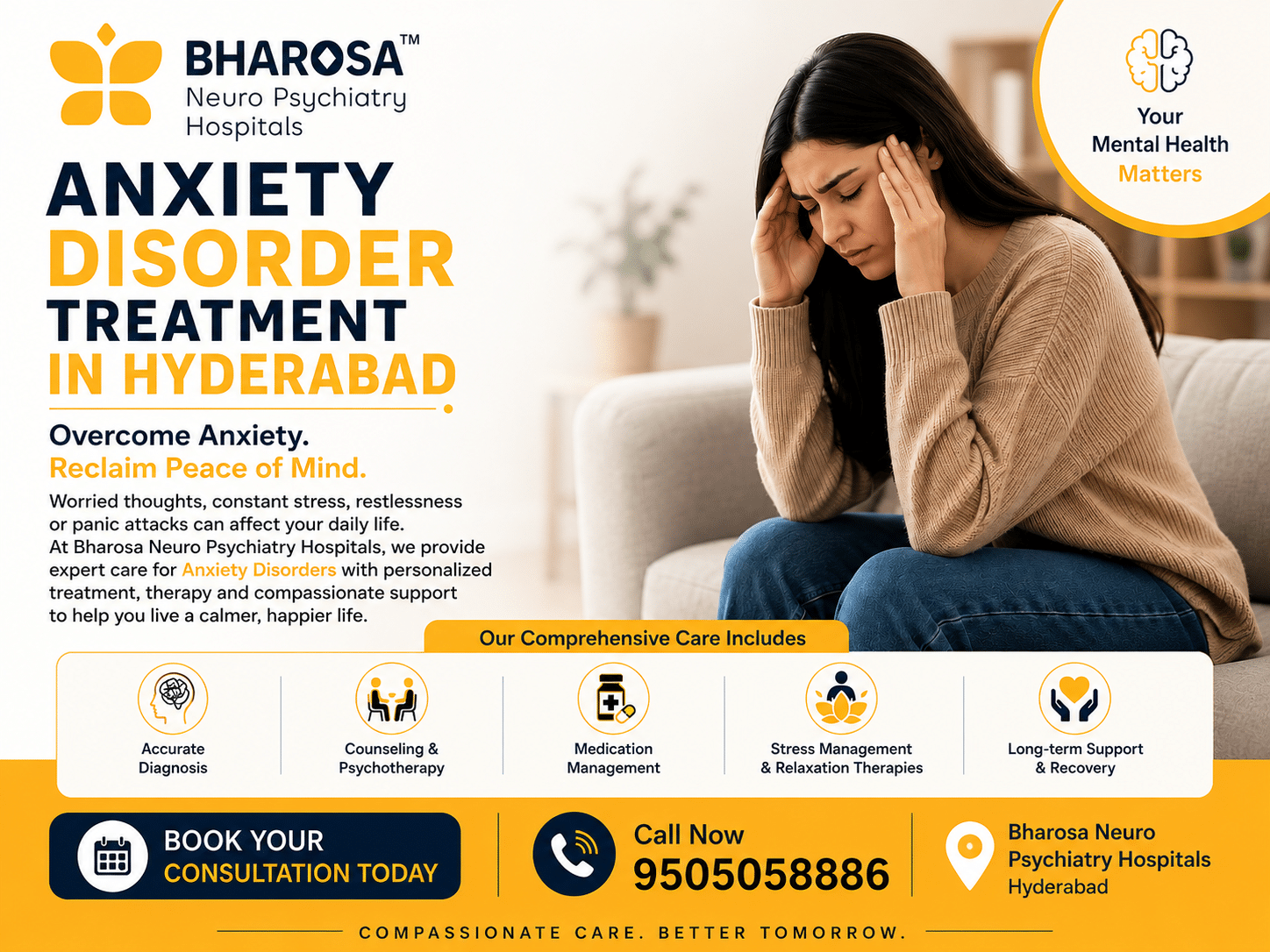
Few experiences in medicine are as acutely distressing as a panic attack — and few distinctions are as clinically important, yet as widely confused, as the difference between a panic attack and an anxiety disorder. These two terms are frequently used interchangeably in casual conversation, but they describe fundamentally different phenomena — with different neurobiological mechanisms, different clinical courses, and different optimal treatments. Understanding this distinction is essential for anyone seeking accurate care from an Anxiety Disorder Specialist Hyderabad.
At Bharosa Neuro Psychiatry Hospital, our Anxiety Disorder Specialist Hyderabad team provides precise diagnosis and expert treatment for the full spectrum of anxiety presentations — from isolated panic attacks to complex, multi-year anxiety disorders. This blog provides the clinical clarity that allows patients and families to understand what they are experiencing and seek the most appropriate professional support.
What Is a Panic Attack?
A panic attack is a discrete, time-limited episode of intense fear or discomfort that reaches peak intensity within minutes. It is characterised by a specific cluster of physical and psychological symptoms that occur simultaneously and without warning:
- Racing or pounding heart (palpitations)
- Chest tightness or pain
- Shortness of breath or feeling of smothering
- Dizziness, light-headedness, or fainting
- Trembling or shaking
- Sweating
- Nausea or abdominal distress
- Numbness or tingling in the extremities
- Chills or hot flushes
- A sense of unreality or detachment from oneself (depersonalisation/derealisation)
- Fear of losing control or 'going crazy'
- Fear of dying
Panic attacks are not dangerous — despite feeling potentially life-threatening, they do not cause cardiac events, strokes, or death. They typically peak within 10 minutes and resolve within 20 to 30 minutes. However, their intensity is such that patients frequently present to emergency departments believing they are experiencing a heart attack — and may require reassurance and clinical evaluation before the panic origin is confirmed. An Anxiety Disorder Specialist Hyderabad is the appropriate clinician to conduct this evaluation and advise on management.
What Is an Anxiety Disorder?
An anxiety disorder is a chronic, persistent condition in which anxiety — as a neurobiological and psychological state — causes significant and sustained distress and functional impairment. Unlike a discrete panic attack, an anxiety disorder is not episodic and time-limited; it is a condition that colours daily experience across weeks, months, or years. An Anxiety Disorder Specialist Hyderabad distinguishes between several clinically distinct anxiety disorders:
- Generalised Anxiety Disorder (GAD) — chronic, uncontrollable worry across multiple life domains
- Panic Disorder — recurrent, unexpected panic attacks accompanied by persistent worry about future attacks and avoidance
- Social Anxiety Disorder — intense fear of social situations and negative evaluation by others
- Specific Phobias — intense, disproportionate fear of specific objects or situations
- Agoraphobia — avoidance of situations where panic or embarrassment might occur
- Health Anxiety — persistent, excessive fear of having a serious illness
- Separation Anxiety Disorder — excessive distress about separation from attachment figures
The Critical Distinction: Panic Attacks Within Anxiety Disorders
This is where the most important clinical nuance lies: panic attacks can occur within the context of anxiety disorders — but they can also occur outside of any anxiety disorder, in the context of other psychiatric conditions (depression, PTSD), medical conditions, or as isolated, situational events with no underlying disorder. Panic Disorder — one of the anxiety disorders treated by our Anxiety Disorder Specialist Hyderabad team — is specifically defined not by the panic attacks themselves, but by what follows them: persistent worry about having further attacks, worry about the implications of the attacks, and behavioural changes (avoidance) driven by the attacks. In other words, a person who has a panic attack and recovers without ongoing worry or avoidance does not necessarily have Panic Disorder. A person whose life is reorganised around avoiding situations associated with potential panic attacks — who avoids public transport, crowded places, or unfamiliar environments — likely does.
How Are Panic Attacks Treated?
Isolated panic attacks without underlying anxiety disorder may be managed with psychoeducation, breathing and grounding techniques, and brief psychological intervention. When panic attacks occur within the context of Panic Disorder or another anxiety disorder, treatment must address both the acute symptom management and the underlying condition. At Bharosa Hospitals, our Anxiety Disorder Specialist Hyderabad uses interoceptive exposure therapy — deliberately inducing the physical sensations of panic in a safe, controlled environment — to break the fear-of-fear cycle that perpetuates Panic Disorder. CBT is used to address the catastrophic interpretations of bodily sensations that drive panic. SSRI and SNRI medications are prescribed where indicated to reduce the frequency and intensity of attacks.
How Are Anxiety Disorders Treated?
Anxiety disorder treatment at Bharosa Hospitals — delivered by a specialist Anxiety Disorder Specialist Hyderabad team — is disorder-specific. GAD is treated with CBT targeting worry cycles and intolerance of uncertainty, alongside SSRIs or SNRIs and buspirone where pharmacotherapy is indicated. Social Anxiety Disorder is treated with CBT and graduated exposure to social situations. Specific Phobias respond to systematic desensitisation. Agoraphobia requires combined Panic Disorder and avoidance treatment. For all anxiety disorders, the core therapeutic goal is to restore the patient's ability to function fully in situations that anxiety has caused them to avoid.
When to Seek an Anxiety Disorder Specialist
You should contact an Anxiety Disorder Specialist Hyderabad if: you have experienced more than one panic attack and are worried about having more; anxiety is consistently preventing you from doing things you want or need to do; physical symptoms of anxiety are present most days; you are using alcohol or other substances to manage anxiety; or anxiety has been present for more than 4 to 6 weeks without significant natural improvement. Bharosa Hospitals' anxiety specialist team is available for both in-person and online consultations — call +91 95050 58887 to book your assessment.
Frequently Asked Questions
Q: Can a panic attack happen without an anxiety disorder?
A: Yes. Situational panic attacks — triggered by a specific stressor, substance, or medical condition — can occur without an underlying anxiety disorder. The key diagnostic question is whether persistent worry about future attacks or significant avoidance behaviour follows the attack. An anxiety disorder specialist at Bharosa Hospitals can assess this accurately.
Q: Are panic attacks more common in women than men?
A: Panic Disorder and most anxiety disorders are approximately twice as common in women as in men. However, men with anxiety disorders are less likely to seek treatment, partly due to social stigma around expressing fear or vulnerability. Bharosa Hospitals provides gender-sensitive assessment and treatment for anxiety across all genders.
Q: Can panic attacks be managed without medication?
A: Yes. For many patients with Panic Disorder, CBT — particularly interoceptive exposure — is effective without medication. For patients with more severe or frequent panic attacks, or significant comorbid anxiety, SSRI medication alongside CBT produces faster and more complete outcomes. Your anxiety disorder specialist at Bharosa Hospitals will advise on the most appropriate approach.
Q: How is it possible to have both a panic disorder and another anxiety disorder simultaneously?
A: Comorbid anxiety disorders are common — Panic Disorder frequently co-occurs with Agoraphobia, Social Anxiety Disorder, and GAD. Bharosa Hospitals' comprehensive assessment identifies all co-occurring anxiety conditions and develops an integrated treatment plan that addresses each simultaneously.
Q: How long does treatment for panic attacks or anxiety disorders take at Bharosa Hospitals?
A: Most patients with Panic Disorder or other anxiety disorders see significant improvement within 12 to 20 sessions of CBT. Medication, where prescribed, typically produces improvements within 4 to 8 weeks. Full recovery or sustained remission is usually achieved within 3 to 6 months of consistent treatment.
Visit Bharosa Hospitals
Bharosa Neuro Psychiatry Hospital & Rehabilitation Center
Plot No. 114, Mythripuram, Karmanghat, LB Nagar, Hyderabad – 500079
Opp. TKR College, Main Road, LB Nagar / Karmanghat, Hyderabad
+91 95050 58887 | www.bharosahospitals.com