
Best OCD & Anxiety Treatment in Hyderabad — Bharosa Neuro Psychiatry Hospital
Anxiety disorders and Obsessive-Compulsive Disorder (OCD) are among the most common yet profoundly misunderstood mental health conditions in India. Millions of people across Hyderabad and Telangana silently endure relentless worry, intrusive thoughts, compulsive rituals, and debilitating panic attacks — often for years — before seeking professional help. The stigma surrounding psychiatric care, combined with widespread misinformation about these conditions, means that countless individuals suffer in silence when effective, evidence-based treatment is available.
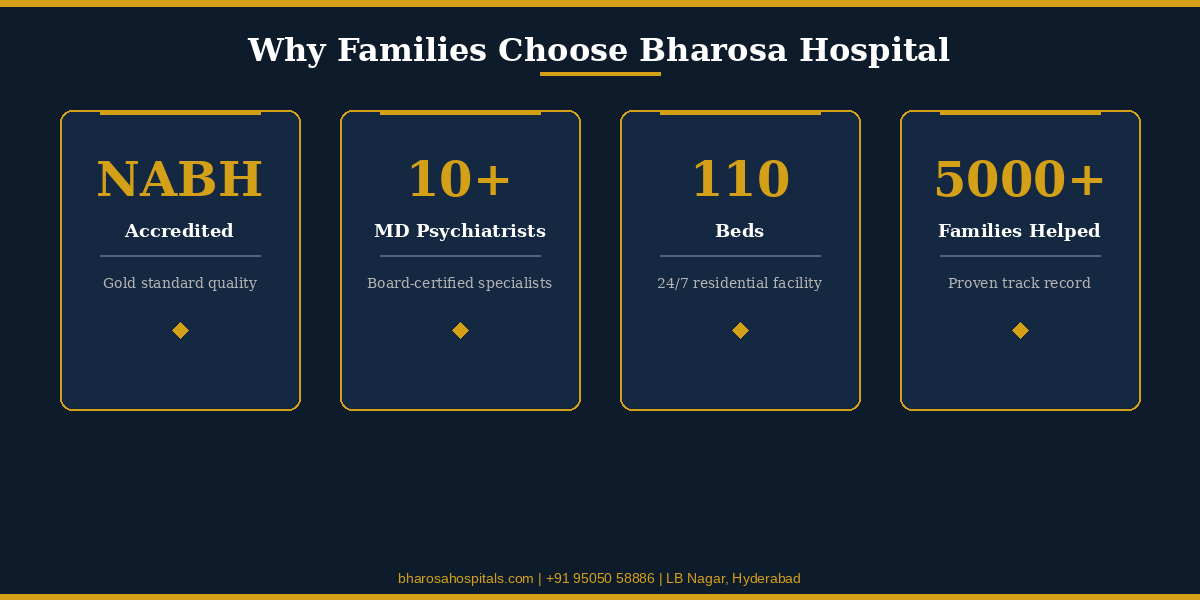
At Bharosa Neuro Psychiatry Hospital, we understand the courage it takes to seek help. Led by Dr. Uday Kiran (MBBS, MD Psychiatry, Osmania Medical College) and a team of more than ten board-certified MD psychiatrists, we provide comprehensive, compassionate, and scientifically grounded treatment for the full spectrum of anxiety disorders and OCD. Our NABH-accredited, 110-bed facility in LB Nagar, Hyderabad, has helped over 5,000 families reclaim their lives from mental illness — and we are ready to help yours.
Understanding Anxiety Disorders: More Than Just Worry
Everyone experiences anxiety at some point — before an exam, a job interview, or a major life decision. But clinical anxiety disorders are fundamentally different from everyday nervousness. They involve persistent, excessive fear or worry that is disproportionate to the actual situation, interferes with daily functioning, and does not simply go away with willpower or positive thinking.
Anxiety disorders are neurobiological conditions involving dysregulation of neurotransmitters such as serotonin, norepinephrine, and gamma-aminobutyric acid (GABA), alongside hyperactivity in brain regions like the amygdala. They are real medical conditions — not weaknesses, not character flaws, and certainly not something you can simply "snap out of."
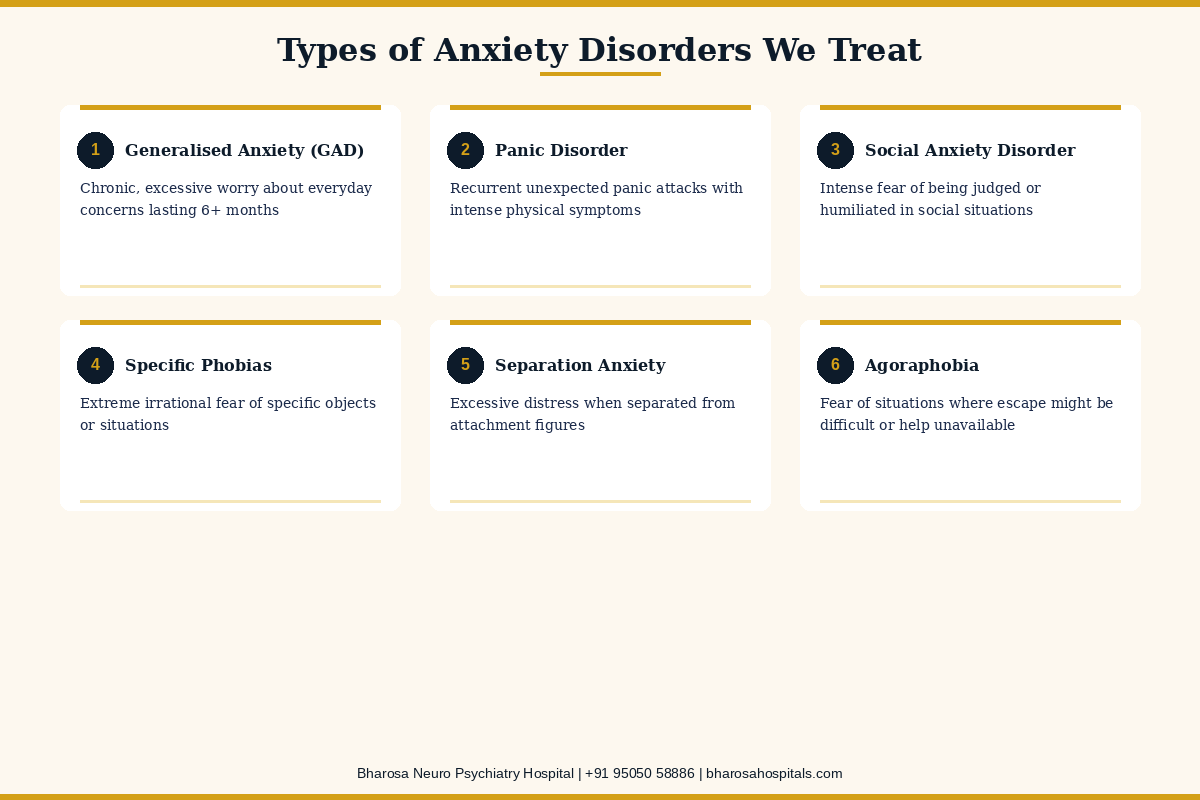
Types of Anxiety Disorders We Treat
Generalised Anxiety Disorder (GAD): Characterised by chronic, excessive worry about a wide range of everyday concerns — health, finances, family, work — that persists for six months or longer. Physical symptoms include muscle tension, fatigue, restlessness, irritability, and disturbed sleep.
Panic Disorder: Involves recurrent, unexpected panic attacks — sudden surges of intense fear accompanied by heart palpitations, chest pain, shortness of breath, dizziness, and a terrifying sense that you are dying or losing control. Many patients first present at cardiac emergency departments, convinced they are having a heart attack.
Social Anxiety Disorder: An intense, persistent fear of being judged, embarrassed, or humiliated in social situations. This goes far beyond shyness — it can prevent individuals from attending college, holding jobs, or maintaining relationships.
Specific Phobias: Extreme, irrational fear triggered by particular objects or situations — flying, heights, enclosed spaces, needles, animals. The avoidance behaviour that develops around these phobias can progressively restrict a person’s life.
Separation Anxiety Disorder: While commonly associated with children, this condition also affects adults, causing excessive distress when separated from attachment figures or familiar environments.
Agoraphobia: Fear of situations where escape might be difficult or help unavailable during a panic attack, often leading to avoidance of public transport, open spaces, enclosed spaces, crowds, or leaving home entirely.
Understanding OCD: When Thoughts Become Traps
Obsessive-Compulsive Disorder is one of the most debilitating psychiatric conditions — and one of the most commonly trivialised. Saying "I’m so OCD" about preferring a tidy desk profoundly misrepresents a condition that can consume hours of a person’s day, destroy relationships, end careers, and drive individuals to the edge of despair.
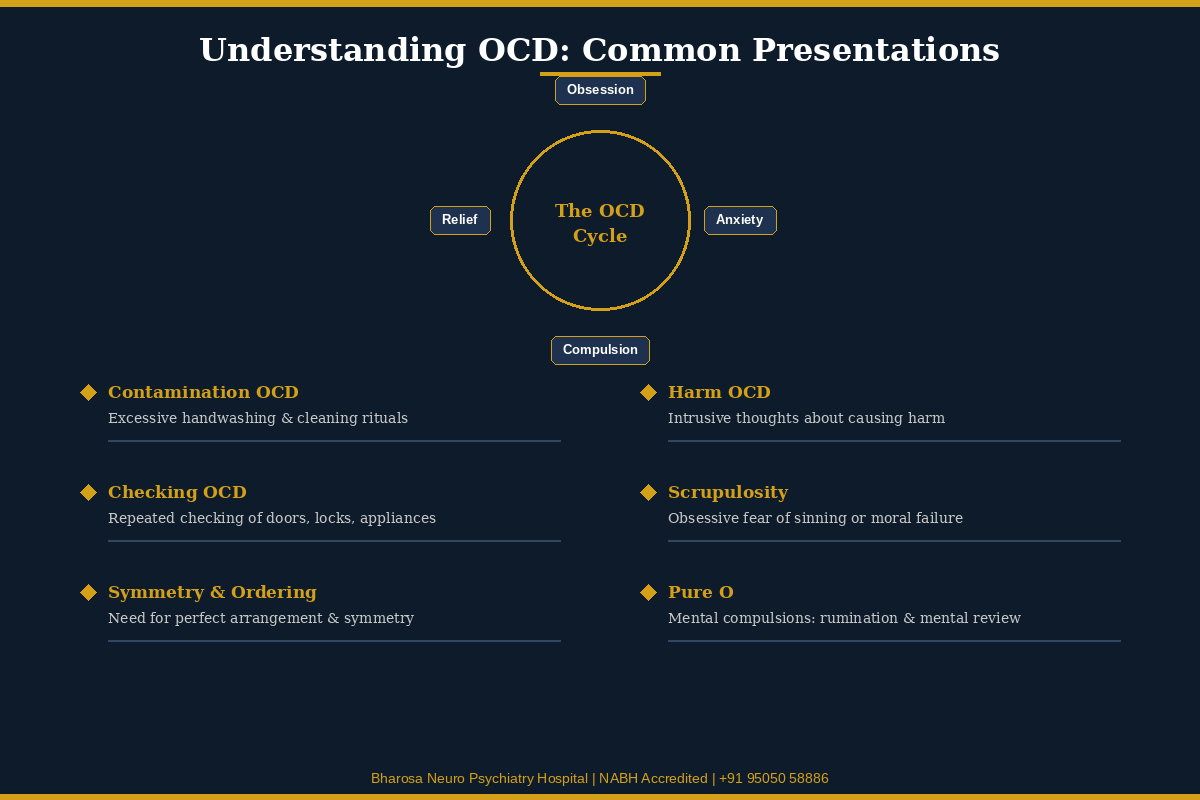
OCD involves two core components. Obsessions are unwanted, intrusive thoughts, images, or urges that cause intense anxiety or distress. Compulsions are repetitive behaviours or mental acts performed to neutralise the anxiety caused by obsessions. The relief is always temporary, and the cycle escalates over time.
Common OCD Presentations
Contamination OCD: Obsessive fear of germs, dirt, or contamination leading to excessive handwashing, cleaning rituals, and avoidance of public places or physical contact.
Checking OCD: Persistent doubt leading to repeated checking of doors, locks, stoves, electrical appliances, or re-reading documents dozens of times.
Symmetry and Ordering: An overwhelming need for things to be arranged perfectly, symmetrically, or in a particular order, with intense distress when this is disrupted.
Harm OCD: Intrusive, horrifying thoughts about causing harm to loved ones — despite having absolutely no desire or intention to do so. This form of OCD causes immense guilt and shame.
Religious or Moral OCD (Scrupulosity): Obsessive fear of sinning, blasphemy, or moral failure, leading to excessive prayer, confession, or mental review of one’s actions.
Pure O (Primarily Obsessional OCD): Where compulsions are largely mental — constant rumination, mental reviewing, and silent reassurance-seeking — making the condition invisible to others but no less devastating.
Why Choose Bharosa Hospital for Anxiety & OCD Treatment in Hyderabad?
Choosing the right treatment centre for anxiety and OCD is one of the most important decisions you will make for yourself or your loved one. At Bharosa Neuro Psychiatry Hospital, we combine clinical excellence with genuine compassion, creating an environment where healing is not just possible — it is expected.
NABH-Accredited Excellence
Our hospital holds NABH accreditation — the gold standard for healthcare quality in India. This means every aspect of your care, from initial assessment to discharge planning, meets rigorous national standards for safety, clinical protocols, infection control, and patient rights.
Team of 10+ MD Psychiatrists
Unlike clinics run by a single practitioner, Bharosa Hospital offers access to a multidisciplinary team of more than ten board-certified MD psychiatrists, each bringing specialised expertise in different areas of mental health. Our team of MD psychiatrists collaborates on complex cases, ensuring you receive the most comprehensive diagnostic evaluation and treatment plan available in Hyderabad.
110-Bed Residential Facility
For patients with severe anxiety or treatment-resistant OCD who require intensive, round-the-clock care, our 110-bed inpatient facility provides a structured, therapeutic environment. Located in the heart of LB Nagar, our facility offers comfortable private and semi-private rooms, nutritious meals, recreational areas, and 24/7 nursing supervision — all within a calm, healing atmosphere.
Evidence-Based Treatment Protocols
We do not rely on outdated methods or one-size-fits-all approaches. Every treatment plan at Bharosa is built on the latest peer-reviewed research and tailored to the individual patient’s diagnosis, severity, personal history, and treatment goals.
5,000+ Families Helped
With over 5,000 families who have trusted Bharosa with their recovery journey, our track record speaks for itself. We measure our success not just in symptom reduction, but in restored relationships, resumed careers, and lives fully lived.
Our Treatment Approach: How We Treat Anxiety & OCD
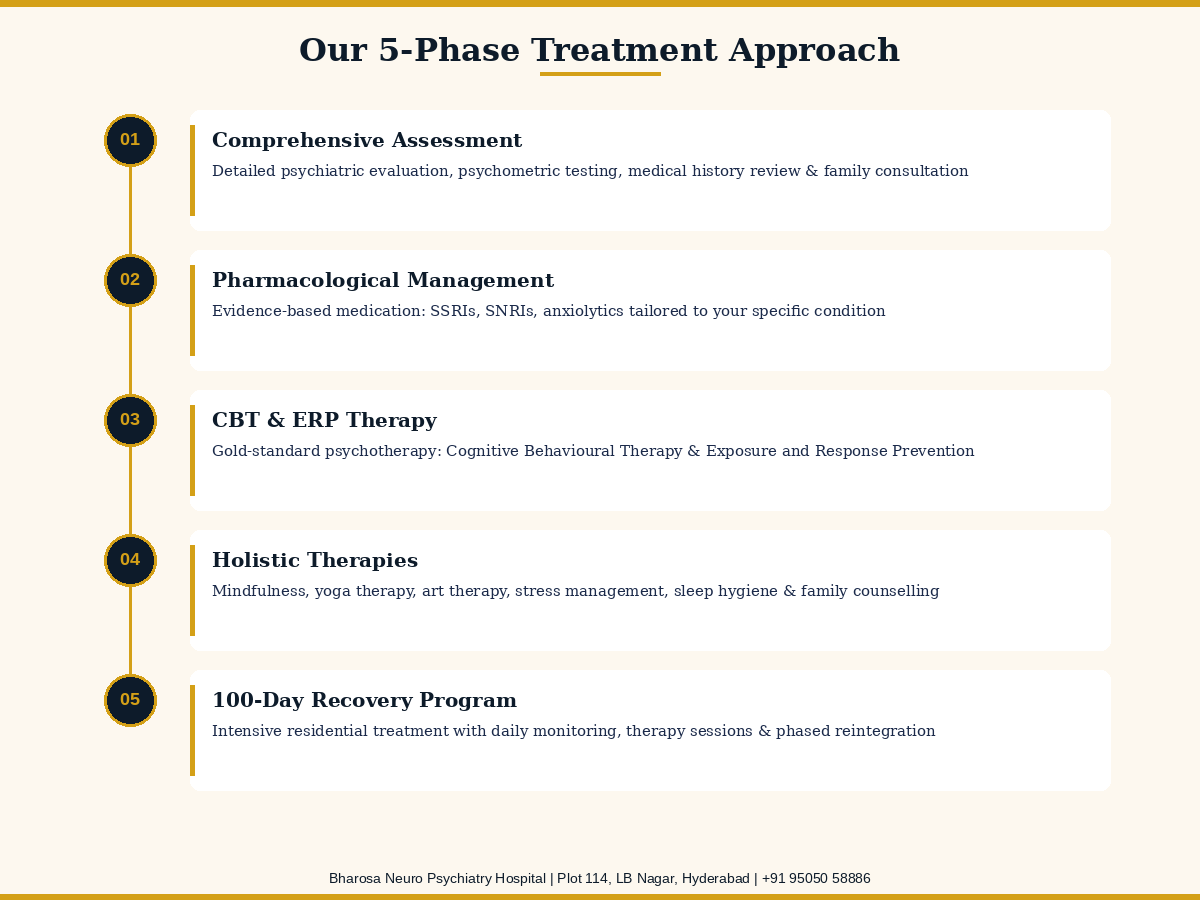
At Bharosa Hospital, treatment for anxiety and OCD follows a structured, phased approach that addresses both the biological and psychological dimensions of these conditions. Our methodology integrates pharmacological intervention with gold-standard psychotherapy, delivered by specialists who understand the unique challenges these disorders present.
Phase 1: Comprehensive Psychiatric Assessment
Every patient journey at Bharosa begins with a thorough diagnostic evaluation conducted by a senior MD psychiatrist. This includes a detailed clinical interview, standardised psychometric assessments (such as the Yale-Brown Obsessive Compulsive Scale for OCD or the Hamilton Anxiety Rating Scale), a review of medical history and comorbid conditions, and collateral information from family members. Accurate diagnosis is the foundation of effective treatment — and we invest the time necessary to get it right.
Phase 2: Pharmacological Management
When medication is indicated, our psychiatrists prescribe evidence-based pharmacotherapy tailored to your specific condition. For anxiety disorders, this may include selective serotonin reuptake inhibitors (SSRIs), serotonin-norepinephrine reuptake inhibitors (SNRIs), or short-term anxiolytics for acute symptom relief. For OCD, higher-dose SSRI therapy is typically the first-line pharmacological approach, with augmentation strategies available for treatment-resistant cases. All medication decisions are made collaboratively with the patient, with careful monitoring for efficacy and side effects.
Phase 3: Cognitive Behavioural Therapy (CBT) & Exposure and Response Prevention (ERP)
Cognitive Behavioural Therapy is the gold standard psychotherapy for anxiety disorders, helping patients identify and restructure the distorted thought patterns that fuel excessive worry and fear. For OCD specifically, Exposure and Response Prevention (ERP) — a specialised form of CBT — is the most effective psychological treatment available. ERP involves gradually and systematically exposing patients to the situations, thoughts, or images that trigger their obsessions, while helping them resist performing their usual compulsive responses. Over time, this process breaks the obsession-compulsion cycle and significantly reduces OCD symptoms. Our clinical psychologists are trained in these evidence-based protocols and deliver therapy in both individual and group settings.
Phase 4: Holistic & Supportive Therapies
Recovery from anxiety and OCD extends beyond medication and talk therapy. At Bharosa, we integrate a holistic recovery approach that includes mindfulness and relaxation training, yoga therapy, art and music therapy, stress management workshops, sleep hygiene education, and family counselling and support. These complementary therapies enhance the primary treatment and equip patients with lifelong skills for managing stress and maintaining mental wellness.
Phase 5: Our Signature 100-Day Recovery Program
For patients requiring intensive, structured intervention, our 100-Day Recovery Program provides a comprehensive residential treatment experience. This flagship programme combines daily psychiatric monitoring, intensive individual and group therapy sessions, skill-building workshops, family involvement sessions, and a carefully phased reintegration plan. The 100-Day model has been refined through years of clinical experience and has proven transformative for patients with severe, chronic, or treatment-resistant anxiety and OCD.
Recognising the Signs: When to Seek Professional Help
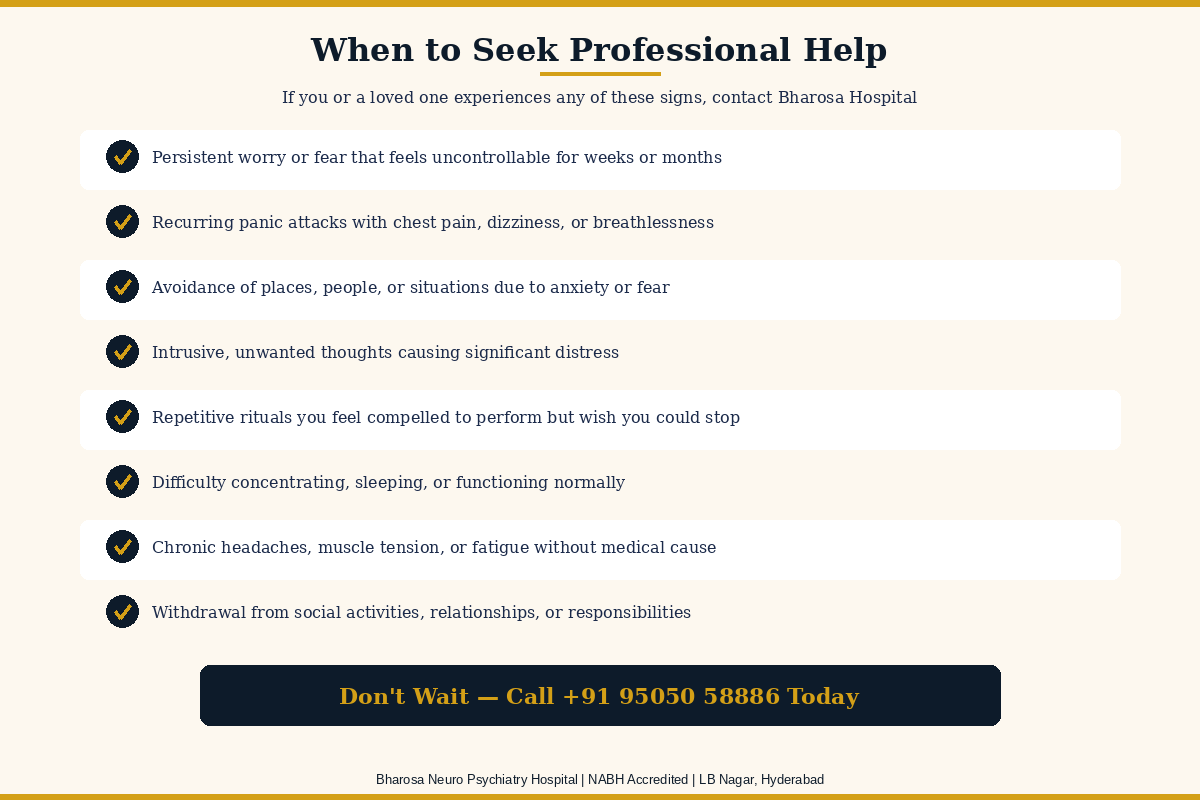
Many people with anxiety disorders or OCD delay seeking help for months or even years, often because they believe their symptoms are "normal" stress or a personal failing. We encourage you to reach out to Bharosa Hospital if you or a loved one experience any of the following:
- Persistent worry or fear that feels uncontrollable and lasts for weeks or months
- Recurring panic attacks with physical symptoms such as chest pain, dizziness, or breathlessness
- Avoidance of places, people, or situations due to anxiety or fear
- Intrusive, unwanted thoughts that cause significant distress
- Repetitive behaviours or rituals you feel compelled to perform but wish you could stop
- Difficulty concentrating, sleeping, or functioning at work, school, or home
- Physical symptoms like chronic headaches, muscle tension, digestive problems, or fatigue without a clear medical cause
- Withdrawal from social activities, relationships, or responsibilities
If any of these resonate with you, please know that what you are experiencing is a treatable medical condition — and that recovery is absolutely possible with the right professional support.
What Makes Bharosa Different: Our Patient-First Philosophy
At Bharosa Neuro Psychiatry Hospital, we believe that effective psychiatric treatment must honour the whole person — not just the diagnosis. From the moment you walk through our doors, you will experience a culture of respect, empathy, and unwavering commitment to your wellbeing.
Dr. Uday Kiran, our founder, established Bharosa on a simple but powerful principle: every person struggling with mental illness deserves world-class care delivered with genuine compassion. This philosophy guides everything we do — from how we design our treatment programmes to how our staff interact with every patient and family member who enters our facility.
We do not rush assessments. We do not prescribe without listening. We do not discharge before you are ready. We walk with you through every step of recovery, and we celebrate every milestone — because at Bharosa, your healing is our purpose.
Frequently Asked Questions About Anxiety & OCD Treatment
Can anxiety disorders be completely cured?
With appropriate evidence-based treatment combining medication and psychotherapy, the majority of patients with anxiety disorders achieve significant symptom reduction and many experience complete remission. Early intervention improves outcomes considerably. At Bharosa, our structured treatment protocols are designed to help patients not just manage but overcome anxiety disorders.
How long does OCD treatment take?
The duration of OCD treatment varies depending on severity and individual response. Most patients begin to notice improvement within eight to twelve weeks of starting a combination of medication and ERP therapy. For more severe or complex cases, our 100-Day Recovery Program provides an intensive, immersive treatment experience that has produced transformative results.
Is medication necessary for anxiety and OCD?
Medication is not always required for mild cases, where psychotherapy alone may be sufficient. However, for moderate to severe anxiety disorders and most cases of OCD, a combination of medication and therapy produces the best outcomes. Our psychiatrists carefully evaluate each case individually and always discuss the rationale, benefits, and potential side effects of any recommended medication with the patient.
Do you offer outpatient treatment for anxiety and OCD?
Yes. While our 110-bed residential facility is available for patients requiring intensive inpatient care, we also offer comprehensive outpatient services including psychiatric consultations, individual therapy, group therapy, and medication management. Many patients with anxiety disorders and OCD are treated effectively on an outpatient basis.
What should I expect during my first visit?
Your first visit to Bharosa will involve a detailed consultation with a senior MD psychiatrist, typically lasting 45 to 60 minutes. The doctor will review your symptoms, medical history, and personal concerns in a completely confidential setting. You will leave with a clear understanding of your diagnosis and a personalised treatment plan. Family members are welcome and encouraged to participate in the initial assessment.
Is OCD a lifelong condition?
While OCD can be a chronic condition, it is highly treatable. Many patients achieve long-term remission with appropriate treatment and develop effective strategies for managing any future symptoms. The skills learned through ERP therapy, in particular, provide lasting tools for breaking the OCD cycle whenever intrusive thoughts arise.
CALL NOW: +91 95050 58886 | Walk-ins Welcome at LB Nagar, Hyderabad
Location & Contact: Bharosa Neuro Psychiatry Hospital
Plot No. 114, Mythripuram, Karmanghat, LB Nagar, Hyderabad, Telangana 500079
Phone: +91 95050 58886
Website: www.bharosahospitals.com
Hours: 24/7 Emergency & Admission Services | OPD: 9:00 AM – 8:00 PM
Conveniently located in LB Nagar with easy access from Dilsukhnagar, Kothapet, Nagole, Hayathnagar, Vanasthalipuram, Saroornagar, and the broader Hyderabad metropolitan area. Free parking available.

Delaying treatment can extend suffering, but taking action now can bring relief and clarity.
Mental health struggles do not define you, and you don’t have to face them alone. If you notice any early signs of mental health disorders in yourself or a family member, take the first step today.