
How Professional Depression Treatment in Hyderabad Improves Quality of Life
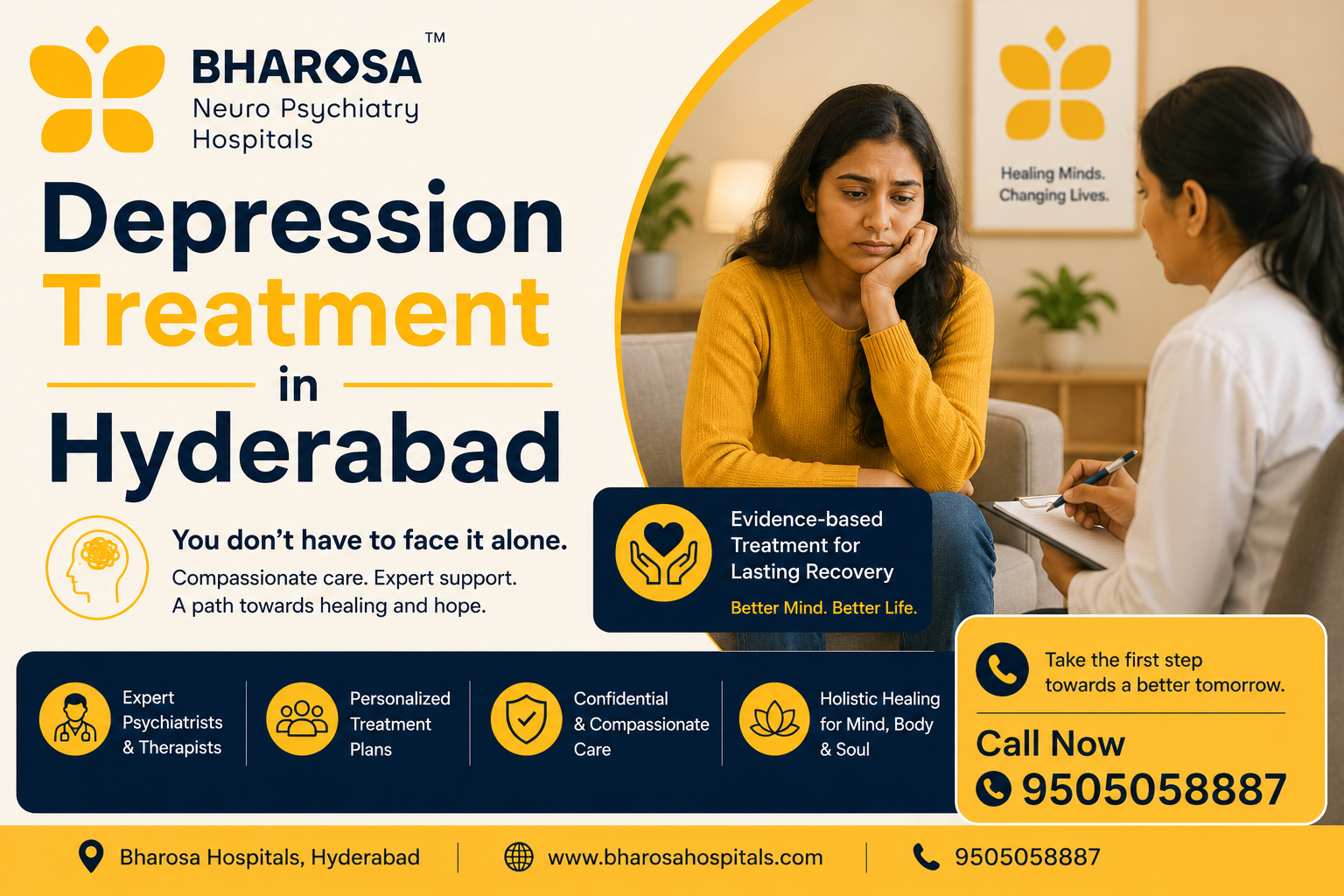
Depression is not simply a mood problem — it is a life-diminishing condition. It contracts the world: shrinking ambitions, draining energy, silencing joy, and straining every relationship a person values. Left untreated, depression does not stay in one domain — it spreads, gradually colonising work performance, physical health, family dynamics, self-worth, and ultimately the person's fundamental sense of what is possible for them.
The single most powerful argument for seeking professional Depression Treatment in Hyderabad is not the reduction of symptoms — it is the restoration of quality of life across all its dimensions. At Bharosa Neuro Psychiatry Hospital, this is precisely what our depression treatment programme is designed to achieve: not just relief from low mood, but the return of a life worth living.
Dimension 1: Restoring Energy and Physical Functioning
One of the earliest and most debilitating effects of depression is profound, disproportionate fatigue — a heaviness that pervades every activity and makes the most ordinary tasks feel monumental. Professional Depression Treatment in Hyderabad at Bharosa Hospitals directly addresses this physiological dimension through evidence-based antidepressant medication that restores neurochemical balance, structured sleep intervention that addresses the sleep architecture disruption central to depressive fatigue, and supervised physical activity programming that activates the neurobiological mechanisms — including endorphin release, BDNF upregulation, and circadian rhythm normalisation — that counteract depressive fatigue.
Patients consistently describe the first improvement in energy as a turning point — the moment when recovery becomes tangible rather than theoretical.
Dimension 2: Rebuilding Cognitive Performance
Depression impairs cognition in ways that profoundly damage professional and academic functioning: concentration narrows, memory falters, processing slows, and decision-making becomes laboured. These cognitive deficits are not laziness or incompetence — they are direct neurobiological consequences of depression's impact on the hippocampus and prefrontal cortex. Depression Treatment in Hyderabad at Bharosa Hospitals addresses cognitive impairment through both pharmacological treatment and Cognitive Behavioural Therapy (CBT) — which, beyond restructuring negative thought patterns, actually improves the quality of thinking itself. Patients regularly report that their ability to concentrate, plan, and make decisions returns progressively through the first two to three months of treatment.
Dimension 3: Reclaiming Relationships
Depression isolates. The withdrawal, irritability, emotional blunting, loss of pleasure in shared activities, and reduced capacity for empathy that characterise moderate to severe depression gradually damage the relationships that matter most. Professional Depression Treatment in Hyderabad at Bharosa Hospitals addresses the relational dimension of depression through Interpersonal Therapy (IPT) — specifically designed to repair the relationship patterns that depression damages — as well as family therapy sessions that educate partners and family members about the neurobiological nature of depression and equip them to support recovery without taking the condition personally. As depression lifts, patients find that relationships — so strained during the illness — begin to breathe again.
Dimension 4: Restoring Professional and Academic Functioning
The occupational cost of untreated depression is substantial: absenteeism, presenteeism (being present but unable to perform), declining career trajectory, strained workplace relationships, and in severe cases, job loss. Depression treatment in Hyderabad at Bharosa Hospitals includes occupational functioning as an explicit treatment outcome — not an afterthought. Our psychiatrists and therapists assess the occupational impact of depression from the first consultation and build functional restoration into the treatment plan. For patients who have taken medical leave, Bharosa provides return-to-work guidance that is realistic, gradual, and clinically supported.
Dimension 5: Rebuilding Self-Worth and Personal Identity
Depression attacks the self — relentlessly generating narratives of worthlessness, inadequacy, failure, and hopelessness. These cognitive distortions are not insights; they are symptoms. CBT delivered at Bharosa Hospitals systematically dismantles the negative cognitive triad — negative self, negative world, negative future — replacing distortion with realistic, compassionate self-assessment. As this cognitive restructuring progresses across weeks and months of treatment, patients experience what many describe as a fundamental shift in how they relate to themselves: from a harsh, relentless critic to a realistic, self-aware individual with genuine self-respect.
Dimension 6: Preventing Relapse and Protecting Future Quality of Life
A critical dimension of quality of life improvement through professional Depression Treatment in Hyderabad is the protection of the future. Depression has a significant recurrence risk — each episode increases the probability of subsequent episodes. Bharosa Hospitals' treatment programme includes Mindfulness-Based Cognitive Therapy (MBCT) — the most robustly evidence-based relapse prevention intervention in psychiatry, shown to reduce recurrence risk by up to 44% in patients with recurrent depression. By addressing not just the current episode but the vulnerability to future episodes, treatment delivers a quality of life improvement that extends across years and decades, not just the immediate treatment period.
The Bharosa Hospitals Approach: Why Integration Matters
The reason Depression Treatment in Hyderabad at Bharosa Hospitals produces the quality of life improvements described above is the integration of multiple evidence-based interventions addressing every dimension of the condition simultaneously. Medication restores neurochemical balance while CBT restructures cognition while IPT repairs relationships while sleep intervention normalises physiology while physical activity rebuilds energy while family therapy heals the home environment. No single intervention achieves all of this. The integration of all of them does.
Frequently Asked Questions
Q: How soon after starting treatment can I expect to see quality of life improvements?
A: Most patients begin noticing improvements in energy, sleep, and mood within 4 to 8 weeks of starting combined therapy and medication. Cognitive improvements and relationship repair typically take longer — often 2 to 4 months. The full quality of life restoration described in this blog is typically achieved within 3 to 6 months of consistent, comprehensive treatment.
Q: Does depression treatment mean I need to take medication permanently?
A: Not necessarily. For a first depressive episode of mild to moderate severity, medication may be prescribed for 6 to 12 months before being carefully tapered. For recurrent or severe depression, longer-term maintenance may be recommended. Your psychiatrist at Bharosa Hospitals will discuss the appropriate duration based on your individual clinical picture.
Q: Can I work during depression treatment, or will I need to take leave?
A: This depends on the severity of depression and the demands of your work. Many patients with mild to moderate depression continue working during outpatient treatment, with some schedule adjustments. Those with severe depression requiring residential care will typically need medical leave. Bharosa Hospitals can provide clinical documentation to support leave requirements where needed.
Q: Does Bharosa Hospitals treat depression that has not responded to treatment elsewhere?
A: Yes. Treatment-resistant depression — defined as inadequate response to two or more adequate medication trials — is a clinical specialisation at Bharosa Hospitals. Alternative medication approaches, augmentation strategies, and specialist therapies are available for patients who have not achieved adequate response elsewhere.
Q: Is online depression treatment available at Bharosa Hospitals?
A: Yes. Bharosa Hospitals offers online psychiatric consultation and psychotherapy sessions for patients who are unable to attend in person. Contact +91 95050 58887 or visit www.bharosahospitals.com to arrange an online appointment.