
Everything You Need to Know About Ketamine Therapy in Hyderabad | Bharosa Hospitals
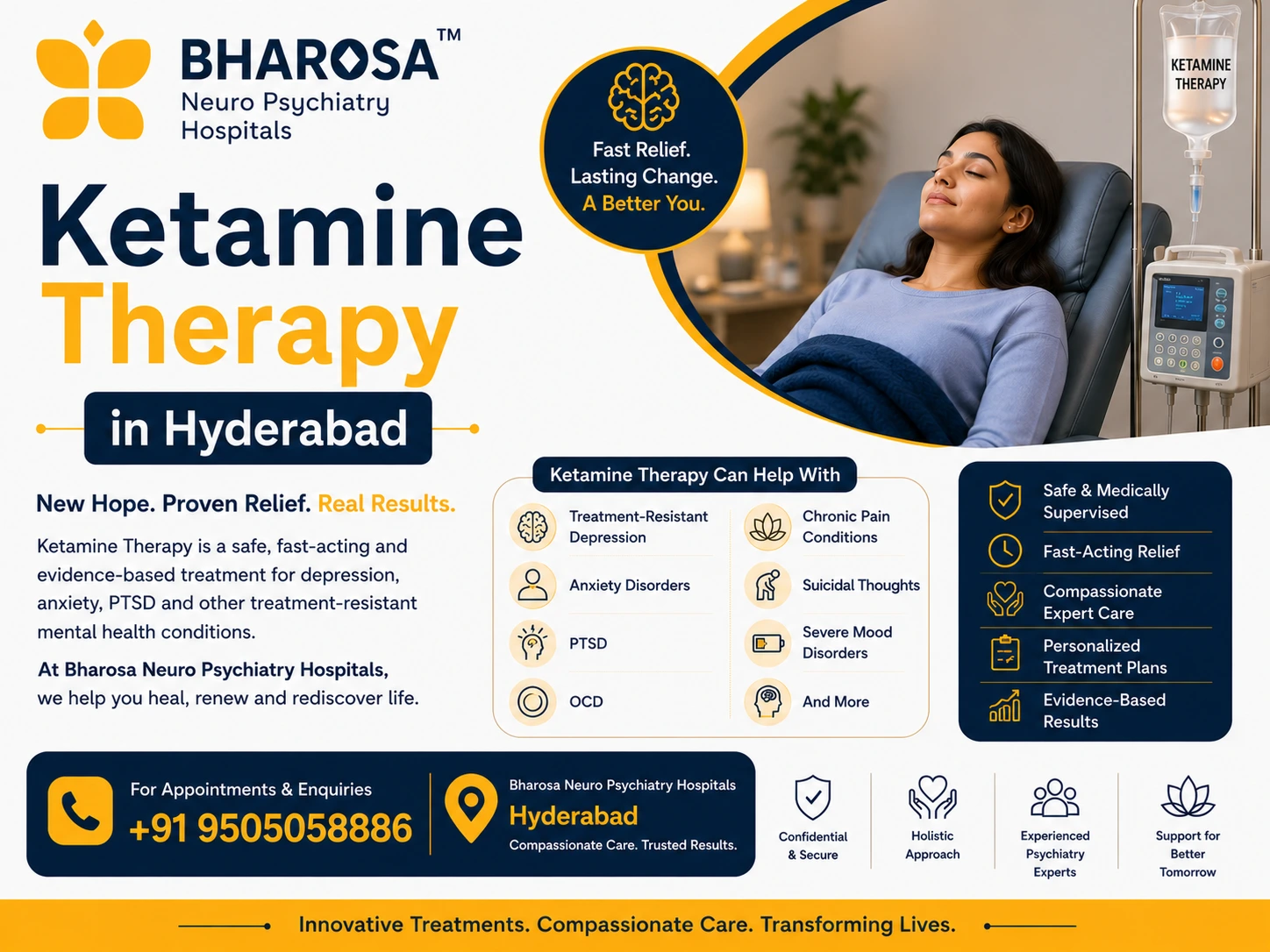
When depression does not lift despite months or years of medication, therapy, and even other advanced interventions, patients and families understandably start searching for what comes next. Over the past decade, Ketamine Therapy in Hyderabad has emerged as one of the most talked-about options in psychiatry, known for producing rapid relief in patients with severe, treatment-resistant depression and acute suicidal thinking, in some cases within hours rather than weeks.
What Is Ketamine Therapy?
Ketamine is a medication that has been used safely in anaesthesia for decades. At carefully controlled, low sub-anaesthetic doses, and under strict medical supervision, it has been found to act on the brain's glutamate system, a different pathway from traditional antidepressants, which primarily target serotonin and norepinephrine. This different mechanism is part of why ketamine can help some patients who have not responded to standard antidepressant medications.
In a psychiatric setting, ketamine is administered as a slow intravenous infusion, or in some formulations as a nasal spray, in a monitored clinical environment. It is never self-administered or used recreationally in this context; every session takes place under the direct supervision of trained psychiatric and medical staff.
Who Is a Candidate for Ketamine Therapy in Hyderabad?
Ketamine therapy is generally considered for patients who meet specific clinical criteria, following a thorough psychiatric assessment. Typical candidates include:
- Patients with treatment-resistant depression who have not responded to at least two adequate trials of standard antidepressants.
- Individuals experiencing acute suicidal thoughts, where the speed of ketamine's effect can provide critical short-term relief while longer-term treatment is arranged.
- Patients with certain treatment-resistant anxiety disorders, under specialist evaluation.
- People who need a bridge of rapid symptom relief while waiting for other treatments, such as medication adjustments or rTMS, to take full effect.
Ketamine therapy is not appropriate for everyone. Patients with certain heart conditions, uncontrolled high blood pressure, a history of psychosis, or substance misuse concerns require careful evaluation, and in some cases, this treatment may not be recommended. This is why a detailed medical and psychiatric screening always precedes treatment.
What Happens During a Session?
A typical ketamine therapy session follows a structured, closely monitored process:
- Vital signs, including blood pressure, heart rate, and oxygen levels, are checked before the session begins.
- The medication is administered slowly, usually over 40 minutes to an hour, while the patient rests comfortably in a quiet, monitored room.
- Medical staff remain present throughout to monitor for any physical or psychological reactions.
- After the infusion, patients are observed during a short recovery period until they are stable and alert.
- Patients are advised not to drive and to arrange transport home, since some grogginess or altered perception can occur for a few hours after the session.
A treatment course typically involves multiple sessions over two to three weeks, followed by periodic maintenance sessions if the initial response is positive, based on the psychiatrist's ongoing assessment.
What Does Ketamine Therapy Feel Like?
During the infusion, some patients report a sense of dissociation, described as feeling detached from their body or surroundings, along with mild changes in perception. These effects are temporary and typically resolve within an hour or two after the session ends. Because these experiences can feel unusual, the presence of trained clinical staff throughout the session is essential, both for physical safety and psychological reassurance.
How Fast Does It Work, and How Long Does Relief Last?
One of the most distinctive features of ketamine therapy is the speed of response. While traditional antidepressants can take four to six weeks to show full benefit, many patients notice a reduction in depressive symptoms, and importantly, in suicidal thinking, within hours to a few days of their first session.
However, this rapid relief is often not permanent on its own. This is why ketamine therapy at Bharosa Hospitals is never offered as a standalone quick fix. It is integrated into a broader, ongoing treatment plan, including continued medication management, psychotherapy, and regular psychiatric follow-up, to help sustain and build on the initial improvement.
Safety Considerations
Ketamine therapy is generally well tolerated when administered correctly in a controlled clinical setting. Reported side effects can include a temporary rise in blood pressure and heart rate during the infusion, mild nausea, dizziness, or the dissociative sensations described earlier. Because of this, continuous monitoring during the session is non-negotiable, and the treatment is only offered following a comprehensive medical work-up to rule out contraindications.
Unlike recreational or unsupervised use, clinical ketamine therapy uses precisely measured, low doses administered under professional supervision, which significantly reduces the risks associated with the substance.
The Bharosa Hospitals Approach to Ketamine Therapy
At Bharosa Neuro Psychiatry Hospital, ketamine therapy is positioned as part of a wider, medically supervised care pathway for patients with severe or treatment-resistant depression and related conditions. Every patient begins with a detailed psychiatric evaluation, physical examination, and relevant investigations to confirm suitability for the treatment.
Sessions take place in a calm, monitored clinical environment with trained medical staff present throughout. As with all advanced treatments offered at the hospital, ketamine therapy is combined with ongoing counselling, family involvement, and structured follow-up care, reflecting the hospital's broader philosophy of treating the whole person rather than a single symptom or episode.
Is Ketamine Therapy Right for You?
If depression has persisted despite multiple treatment attempts, or if you or a loved one is in crisis and needs faster relief while a longer-term plan is put in place, it is worth discussing ketamine therapy with a qualified psychiatric team. A careful evaluation will help determine whether this treatment, or another approach such as rTMS or ECT, is the most appropriate next step for your specific situation.
Frequently Asked Questions
Q: Is ketamine therapy addictive when used for depression?
A: When administered in controlled, low, sub-anaesthetic doses under medical supervision for depression, the structured clinical protocol is designed to minimise misuse risk. This is very different from unsupervised recreational use, and treatment is always monitored closely by the psychiatric team.
Q: How quickly does ketamine therapy work?
A: Many patients notice improvement in mood and suicidal thoughts within hours to a few days, which is considerably faster than most traditional antidepressants.
Q: Will I be awake during the session?
A: Yes. Ketamine therapy for depression uses low doses that do not induce general anaesthesia. Patients remain conscious, though they may experience temporary altered perception or a dissociative feeling during the infusion.
Q: Can ketamine therapy replace my antidepressant medication?
A: Not usually. It is most often used alongside ongoing psychiatric care and medication management rather than as a complete replacement, since the goal is to build lasting stability, not just short-term relief.
Q: Who should not undergo ketamine therapy?
A: Patients with certain heart conditions, uncontrolled blood pressure, a history of psychosis, or active substance misuse concerns require careful evaluation, and treatment may not be recommended for everyone. A full medical and psychiatric screening is required before starting.
Hospital Address & Contact
Bharosa Neuro Psychiatry Hospital & Rehabilitation Center
Plot No. 114, Mythripuram, Karmanghat, Opposite TKR College Comman (TKR Kamaan), Main Road, LB Nagar / Karmanghat, Hyderabad – 500079, Telangana
Phone / WhatsApp: +91 95050 58886