Inside a De-Addiction Centre in Hyderabad: What Happens During Recovery?
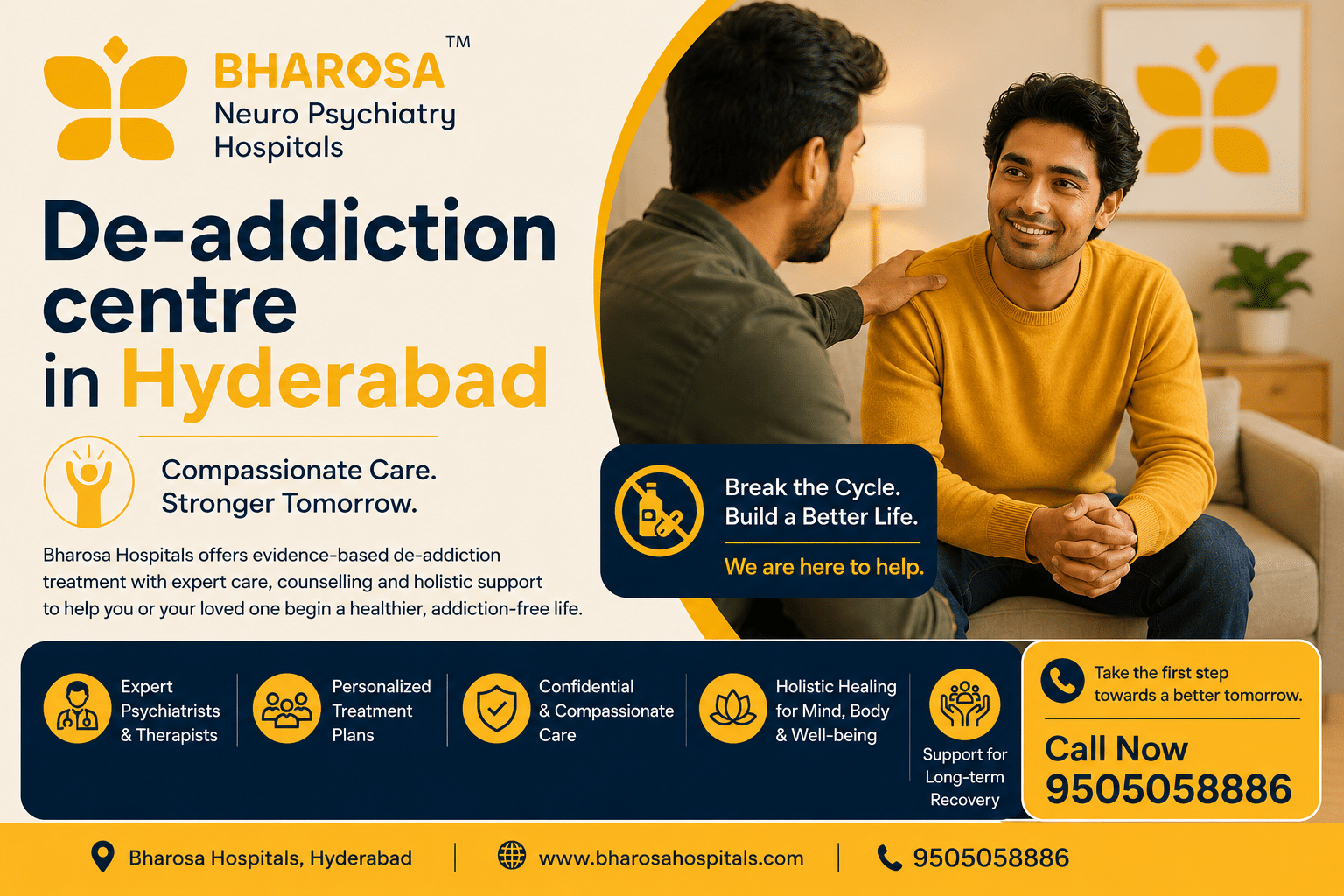
The decision to seek treatment at a De-addiction Centre Hyderabad is rarely made with complete information. Most patients and families carry images shaped by dramatic portrayals in films, hearsay, or a general fear of the unknown — all of which make an already difficult decision even harder. The reality of what actually happens inside a professional de-addiction centre is, for the vast majority of patients, far more humane, structured, and genuinely healing than these images suggest.
At Bharosa Neuro Psychiatry Hospital, we believe in transparency. This blog provides an honest, detailed account of what happens during recovery at our De-addiction Centre Hyderabad— from the first day of admission through the final preparation for discharge.
On Arrival: Admission and Initial Assessment
When a patient arrives at Bharosa De-addiction Centre in Hyderabad the first experience is deliberately calming. Reception staff have been trained to receive patients and families with warmth, without judgment, and with complete discretion. The admission process involves completing relevant forms, a brief orientation to the facility and the programme, and an immediate clinical assessment by the duty physician and nursing team. Within 24 hours of admission, a comprehensive psychiatric assessment is conducted by the treating psychiatrist, covering the full scope of the patient's substance use, physical health, psychiatric history, and personal context. This assessment forms the foundation of the personalised treatment plan.
Days 1–14:
The first phase of recovery at Bharosa's De-addiction Centre in Hyderabad is medically supervised detoxification. Patients are monitored continuously, with vital signs checked regularly and withdrawal symptoms managed with appropriate pharmacological support. This phase is physically uncomfortable for many patients — that is both normal and expected — but it is never dangerous at Bharosa Hospitals because medical supervision is present around the clock. Nurses check on patients through the night. The treating psychiatrist reviews every patient daily. Medications are adjusted in real time based on clinical response.
During this phase, patients also receive nutritional support — addressing the dietary deficiencies that typically accompany sustained substance use — and introductory psychological support that begins preparing them for the therapeutic work to come. The environment is quiet, supportive, and designed to allow physical healing.
Days 15–30:
As the acute detox phase concludes and patients begin to feel physically more stable, the focus at Bharosa's De-addiction Centre in Hyderabadshifts to psychiatric stabilisation. Any co-occurring psychiatric conditions identified during the initial assessment are formally diagnosed and treatment initiated. Psychiatric medications, where indicated, are carefully titrated. Individual counselling sessions begin — initially exploratory and relationship-building, establishing the therapeutic alliance that will support the more intensive work ahead. Patients are introduced to the group therapy format and begin participating in introductory group sessions. The daily routine becomes more structured and purposeful.
Days 31–70:
The heart of recovery at Bharosa's De-addiction Centre in Hyderabad is the 40-day intensive therapeutic phase. The daily schedule during this phase is structured, purposeful, and therapeutically rich.
Mornings begin with mindfulness practice or structured physical activity — establishing the circadian rhythm and neurobiological foundation that supports mood stability and clear thinking. Individual therapy sessions — using CBT, DBT, EMDR, or Motivational Enhancement Therapy depending on the patient's needs — explore the emotional drivers of substance use, develop coping skills, and address underlying trauma or psychiatric conditions. Group therapy sessions in the afternoon provide the powerful medicine of peer experience — shared stories, mutual accountability, and the normalising recognition that recovery is achievable.
Creative therapies — art and music therapy — offer emotional expression and processing through modalities that verbal therapy cannot always access. Skills workshops address specific recovery competencies: relapse prevention, emotional regulation, communication skills, stress management, and financial planning for post-discharge life. Family therapy sessions bring family members into the process — working through the relational damage that addiction has caused and preparing both patient and family for the homecoming.
Days 71–100:
The final phase of Bharosa's De-addiction Centre in Hyderabad programme is dedicated to preparing the patient for the transition from the residential environment back to daily life. This is not an abrupt discharge — it is a carefully managed reintegration. Patients begin taking on more personal responsibility within the programme structure. Practical life skills are addressed: managing a daily routine in sobriety, navigating social situations, handling workplace re-entry, and managing financial responsibilities. Vocational guidance is provided for patients whose careers have been disrupted by addiction.
Most importantly, a comprehensive aftercare plan is developed collaboratively with each patient — covering scheduled outpatient appointments, continued therapy options, a personalised relapse prevention plan with specific trigger identification and response protocols, and emergency contact procedures for moments of acute craving or crisis.
After Discharge: The Ongoing Relationship
Completing residential treatment at Bharosa's De-addiction Centre in Hyderabaddoes not end the care relationship. Post-discharge follow-up — regular outpatient appointments, continued individual or group therapy, family support, and open access to the clinical team for post-discharge concerns — ensures that recovery continues to be supported in the critical months following discharge.
Frequently Asked Questions
Q: Is the de-addiction centre at Bharosa Hospitals co-educational or segregated?
A: Bharosa Hospitals manages admissions with sensitivity to gender and patient comfort. Please contact +91 95050 58887 to discuss specific accommodation and programme arrangements that best meet your family's needs and circumstances.
Q: What do patients do during free time in the de-addiction centre?
A: Structured free time at Bharosa Hospitals includes recreational activities, physical activity, reading, informal peer socialisation, and opportunities for personal reflection. The environment is designed to help patients discover positive, meaningful activities that can fill the space previously occupied by substance use — an important practical component of relapse prevention.
Q: Can patients attend religious observances during their stay at the de-addiction centre?
A: Yes. Bharosa Hospitals respects and accommodates patients' religious practices within the programme structure. Religious observance — prayers, dietary requirements, and cultural practices — are respected and facilitated wherever clinically compatible with the treatment programme.
Q: How is patient safety maintained inside the de-addiction centre?
A: Bharosa Hospitals maintains a safe clinical environment through 24/7 nursing coverage, qualified medical staff available around the clock, regular clinical reviews, a carefully managed residential setting, and clear protocols for all clinical emergencies. Patient safety is the absolute priority throughout the programme.
Q: Can I see the de-addiction centre before deciding to admit a family member?
A: Yes. Bharosa Hospitals welcomes families to visit the facility, see the residential environment, and speak with the clinical team before making an admission decision. Please call +91 95050 58887 to arrange a pre-admission visit at a convenient time.
Visit Bharosa Hospitals
Bharosa Neuro Psychiatry Hospital & Rehabilitation Center
Plot No. 114, Mythripuram, Karmanghat, LB Nagar, Hyderabad – 500079
Opp. TKR College, Main Road, LB Nagar / Karmanghat, Hyderabad
+91 95050 58887 | www.bharosahospitals.com