
Is ECT Treatment in Hyderabad Safe? Myths vs Facts | Bharosa Hospitals
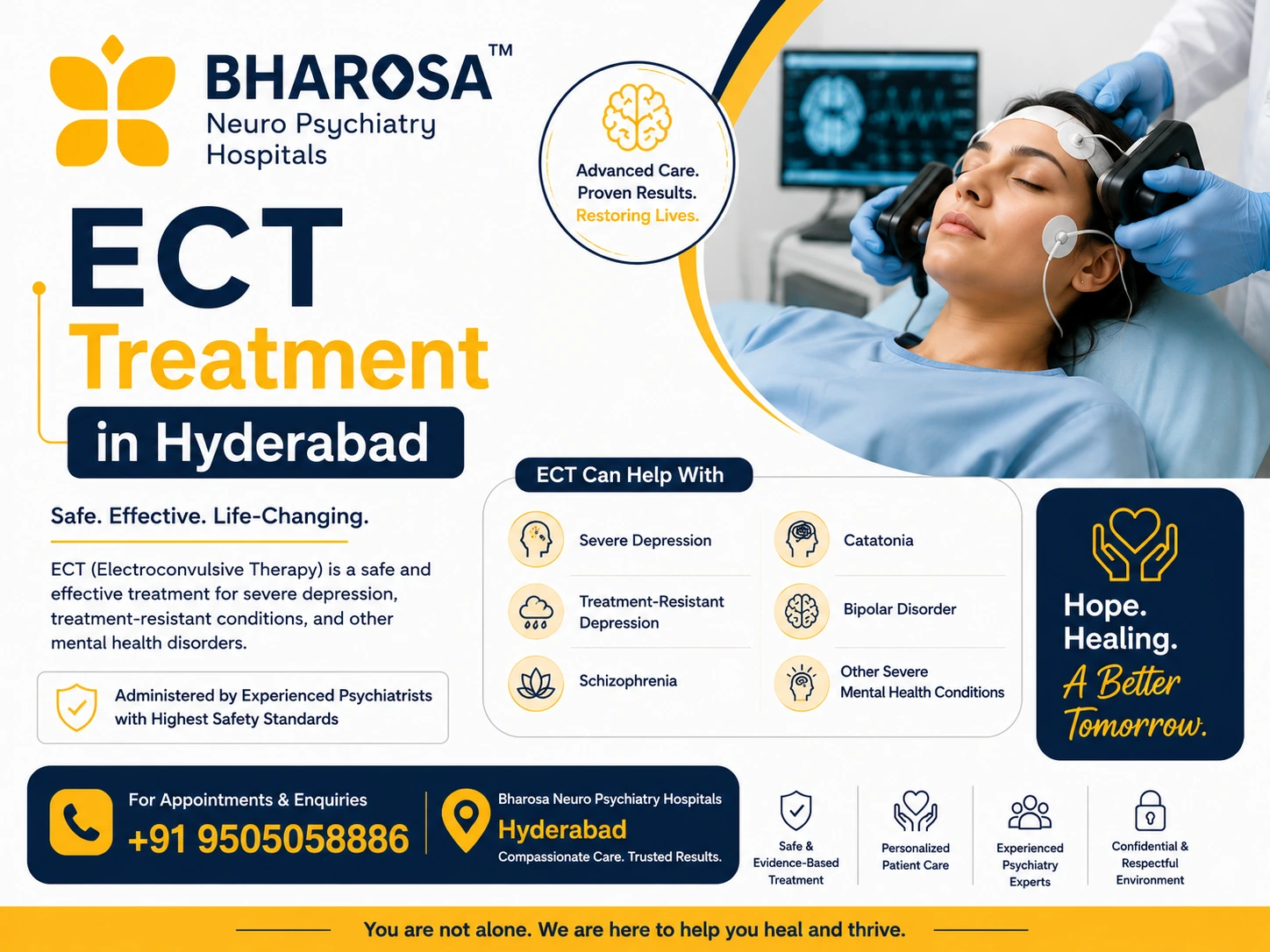
Few psychiatric treatments carry as much misunderstanding as Electroconvulsive Therapy, commonly known as ECT. Decades-old films and outdated portrayals have left many patients and families afraid of a procedure that, in its modern form, is safe, closely monitored, and often life-saving for severe psychiatric conditions. If you or a loved one has been advised ECT Treatment in Hyderabad, it's natural to have questions and concerns. This blog separates common myths from clinical facts, so you can make an informed decision alongside your treating psychiatrist at Bharosa Neuro Psychiatry Hospitals.
What Modern ECT Actually Involves
Today's ECT Treatment in Hyderabad bears little resemblance to outdated depictions. The procedure is performed under general anaesthesia with a muscle relaxant, so the patient is asleep and does not experience convulsions or pain. A carefully calibrated electrical stimulus is delivered to the brain for a few seconds, inducing a brief, controlled seizure while the patient remains fully unconscious and monitored throughout.
The entire session, from anaesthesia to recovery, typically takes under an hour, and most patients are able to go home the same day after a short observation period.
Myth 1: ECT Is Painful and Traumatic
Fact: Because ECT is administered under general anaesthesia, patients feel nothing during the procedure itself. Any discomfort afterward is usually limited to mild headache, muscle soreness, or temporary grogginess, similar to recovering from any brief anaesthetic procedure.
Myth 2: ECT Causes Permanent Memory Loss
Fact: Some patients experience short-term memory difficulties around the time of treatment, particularly for events close to the treatment period. For most patients, this resolves within weeks of completing the course. Our team monitors cognitive function throughout ECT Treatment in Hyderabad and adjusts the treatment protocol if memory concerns arise, minimising long-term impact.
Myth 3: ECT Is a Last Resort Used Only on 'Severe' Cases
Fact: While ECT is often recommended for treatment-resistant depression, severe suicidal risk, or conditions where medications haven't worked or can't be used safely (such as during pregnancy), it is not a punitive last resort. In many cases, it is chosen because it works faster and more reliably than medication for specific, severe presentations, offering relief when patients and families need it most urgently.
Myth 4: ECT Is Unregulated or Unsafe in India
Fact: ECT in India is governed by the Mental Healthcare Act, 2017, which mandates informed consent, restricts its use in minors except under strict conditions, and prohibits unmodified ECT (without anaesthesia) entirely. At Bharosa Hospitals, ECT Treatment in Hyderabad is administered only by qualified psychiatrists and anaesthesiologists, following full pre-procedure evaluation, informed consent, and continuous monitoring.
Who Is a Candidate for ECT?
- Patients with severe depression who have not responded to multiple medication trials
- Individuals experiencing acute suicidal risk requiring rapid symptom relief
- Patients with severe psychotic depression or catatonia
- Pregnant patients where medication risks outweigh the benefits
- Elderly patients who cannot tolerate the side effects of multiple medications
What the Bharosa Hospitals Team Ensures
Every patient considered for ECT Treatment in Hyderabad undergoes a thorough physical and psychiatric evaluation, including anaesthesia fitness assessment. Families are counselled in detail about the procedure, expected benefits, and possible side effects before consent is taken. Throughout the course of treatment, our psychiatrists track progress and cognitive side effects closely, adjusting frequency or stopping treatment if needed.
Visit Us
If you or a loved one are looking for expert help with ect treatment in hyderabad, the team at Bharosa Neuro Psychiatry Hospitals is here for you.
Bharosa Neuro Psychiatry Hospitals
Plot No. 114, Mythripuram, Karmanghat, LB Nagar, Hyderabad –
Frequently Asked Questions
Q1. How many ECT sessions are usually needed?
Most patients require six to twelve sessions, typically given two to three times a week, though the exact number depends on individual response and is reviewed continuously by the treating psychiatrist.
Q2. Is ECT only used for depression?
No. While depression is the most common indication, ECT Treatment in Hyderabad is also used for severe bipolar disorder, catatonia, and certain treatment-resistant psychotic conditions.
Q3. Will I be awake during the procedure?
No. ECT is performed under short-acting general anaesthesia, so you are asleep and feel nothing during the procedure.
Q4. Is ECT legal and regulated in India?
Yes. ECT is regulated under the Mental Healthcare Act, 2017, which requires informed consent and prohibits ECT without anaesthesia entirely.
Q5. Can ECT be combined with medication or therapy?
Yes. ECT is often used alongside medication and psychotherapy as part of a comprehensive treatment plan, particularly to sustain improvement after the ECT course is complete.