
ECT Treatment in Hyderabad for Severe Depression: A Complete Patient Guide | Bharosa Hospitals
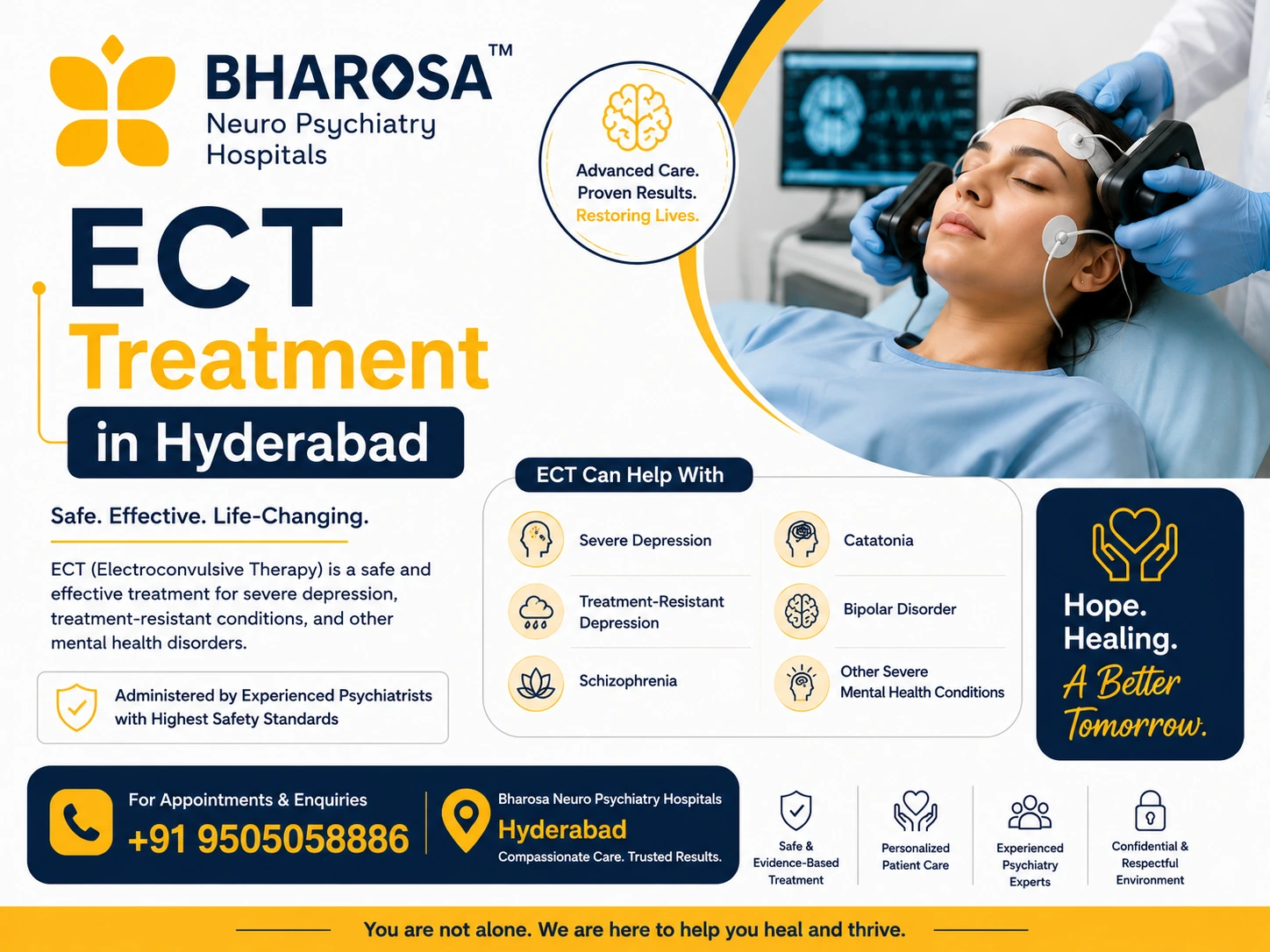
Severe depression does not always respond to medication and talk therapy alone. For a small but important group of patients, especially those with life-threatening symptoms, psychotic depression, or illness that has resisted multiple antidepressant trials, Electroconvulsive Therapy remains one of the most effective and well-researched psychiatric treatments available today. If you or a family member is exploring
ECT Treatment in Hyderabad, this guide walks you through what the procedure involves, who it is meant for, and what to expect before, during, and after treatment at a specialised facility like Bharosa Neuro Psychiatry Hospital.
What Is ECT and Why Is It Still Used?
Electroconvulsive Therapy, commonly known as ECT, is a medical procedure in which a brief, controlled electrical stimulus is delivered to the brain while the patient is under general anaesthesia. This stimulus triggers a short, controlled seizure that helps reset abnormal brain chemistry linked to severe mood disorders. Despite outdated portrayals in popular media, modern ECT is performed under strict medical supervision, with continuous monitoring of heart rate, oxygen levels, and brain activity throughout the session.
Decades of clinical research have shown that ECT produces a rapid and significant improvement in mood, energy, and thought patterns for patients who have not responded to other forms of care. It is recognised by major psychiatric bodies worldwide as a safe, evidence-based option, particularly when depression becomes severe or life-threatening.
Who Needs ECT Treatment in Hyderabad?
ECT is not a first-line treatment. It is generally recommended after a careful psychiatric evaluation, and it tends to be most beneficial for the following groups of patients:
- Individuals with severe, treatment-resistant depression who have not improved despite trying two or more antidepressants at adequate doses and duration.
- Patients experiencing psychotic depression, where depression is accompanied by delusions or hallucinations.
- Patients with catatonia, a state of unresponsiveness or abnormal movement linked to severe mood or psychotic illness.
- People at high and immediate risk of suicide, where the speed of ECT's response can be lifesaving.
- Pregnant women with severe depression, for whom certain medications may carry higher risk than ECT.
- Elderly patients who cannot tolerate the side effects of multiple psychiatric medications.
A thorough assessment by a qualified psychiatrist, along with medical fitness tests, is essential before ECT is recommended. At Bharosa Hospitals, this evaluation includes a detailed psychiatric history, physical examination, blood investigations, ECG, and anaesthesia fitness clearance to ensure the procedure is both appropriate and safe for the individual.
What Happens During an ECT Session?
Patients are often surprised by how brief and organised the actual procedure is. A typical session unfolds as follows:
- The patient is connected to monitors that track heart rate, blood pressure, and oxygen saturation.
- A short-acting general anaesthetic and a muscle relaxant are administered by a trained anaesthetist, so the patient is asleep and does not feel the stimulus or experience visible convulsions.
- A carefully calibrated electrical stimulus is delivered for a few seconds, producing a brief, controlled seizure lasting roughly 20 to 60 seconds, monitored on an EEG.
- The patient wakes up within minutes in a recovery area, where nursing staff monitor vital signs until they are fully alert.
The entire session, from preparation to recovery, usually takes less than an hour. Most treatment courses involve 6 to 12 sessions, scheduled two to three times a week, though the exact number depends on how quickly the patient responds.
Is ECT Safe? Addressing Common Fears
Much of the fear surrounding ECT stems from decades-old practices and dramatised film depictions. Modern ECT, delivered under anaesthesia with muscle relaxants and continuous cardiac and brain monitoring, is a fundamentally different and far safer procedure. Serious complications are rare, and mortality risk associated with modern ECT is comparable to that of minor surgical procedures done under brief general anaesthesia.
The most commonly reported side effect is short-term memory disturbance around the time of treatment, along with temporary headache, muscle soreness, or nausea after a session. These effects are usually mild and resolve within days to a few weeks. Psychiatrists monitor cognitive function throughout the course and can adjust electrode placement or frequency of sessions to minimise memory-related side effects while preserving the treatment's benefits.
The Bharosa Hospitals Approach to ECT
At Bharosa Neuro Psychiatry Hospital, ECT is delivered as part of a structured, medically supervised treatment pathway rather than an isolated procedure. Every patient undergoes a comprehensive psychiatric and physical assessment before treatment begins, and the ECT team includes a consultant psychiatrist alongside a dedicated ECT anaesthetist to ensure safety at every step.
Treatment does not stop with the ECT course itself. Patients receive continued pharmacotherapy, individual counselling, and family sessions so that improvements achieved through ECT are supported by longer-term lifestyle and emotional stabilisation. This is consistent with the hospital's broader philosophy of combining medication, therapy, structured routines, and family involvement to support complete and lasting recovery, rather than symptom relief alone.
Family involvement is actively encouraged throughout the process. Because ECT can understandably feel intimidating for families unfamiliar with the procedure, the psychiatric team spends time explaining each stage, answering questions honestly, and ensuring informed consent is obtained without pressure.
What to Expect After the ECT Course
Most patients notice a lifting of the heaviest depressive symptoms, such as suicidal thinking, extreme hopelessness, or inability to eat and sleep, well before the full course is completed. Once the acute course is finished, the psychiatric team typically transitions patients onto maintenance medication, ongoing therapy, and, in some cases, periodic maintenance ECT sessions to prevent relapse.
Recovery from severe depression is rarely a single event; it is a process. Continued follow-up appointments allow the treating psychiatrist to track progress, adjust medications, and identify any early signs of relapse so they can be addressed quickly.
Taking the First Step
Deciding to pursue ECT is not easy, and it is natural to have questions or concerns. What matters most is getting an honest, professional evaluation from a psychiatric team experienced in administering the treatment safely. If severe depression has not responded to medication and therapy, or if a loved one's safety feels urgent, reaching out for a same-day psychiatric consultation is a reasonable and important next step.
Frequently Asked Questions
Q: Is ECT painful?
A: No. The patient is fully asleep under general anaesthesia during the procedure and feels nothing. Any mild soreness or headache afterward is temporary and manageable with simple medication.
Q: How many ECT sessions are usually needed?
A: Most patients require 6 to 12 sessions, given two to three times a week. The exact number depends on the severity of symptoms and how quickly the individual responds.
Q: Will ECT affect my memory permanently?
A: Most memory changes are short-term and centred around the treatment period. Psychiatrists closely monitor cognitive function and adjust the technique if needed to minimise this effect.
Q: Is ECT only used for depression?
A: While it is most commonly used for severe or treatment-resistant depression, ECT can also help certain cases of bipolar disorder, catatonia, and severe psychosis when standard treatment has not worked.
Q: How do I know if I or my family member needs ECT?
A: Only a qualified psychiatrist can make this recommendation after a full evaluation. If symptoms are severe, medication has not helped after adequate trials, or there is risk of self-harm, book a consultation to discuss whether ECT is appropriate.
Hospital Address & Contact
Bharosa Neuro Psychiatry Hospital & Rehabilitation Center
Plot No. 114, Mythripuram, Karmanghat, Opposite TKR College Comman (TKR Kamaan), Main Road, LB Nagar / Karmanghat, Hyderabad – 500079, Telangana
Phone / WhatsApp: +91 95050 58886