
Depression Recovery Stories That Inspire Hope | Depression Treatment in Hyderabad | Bharosa Hospitals
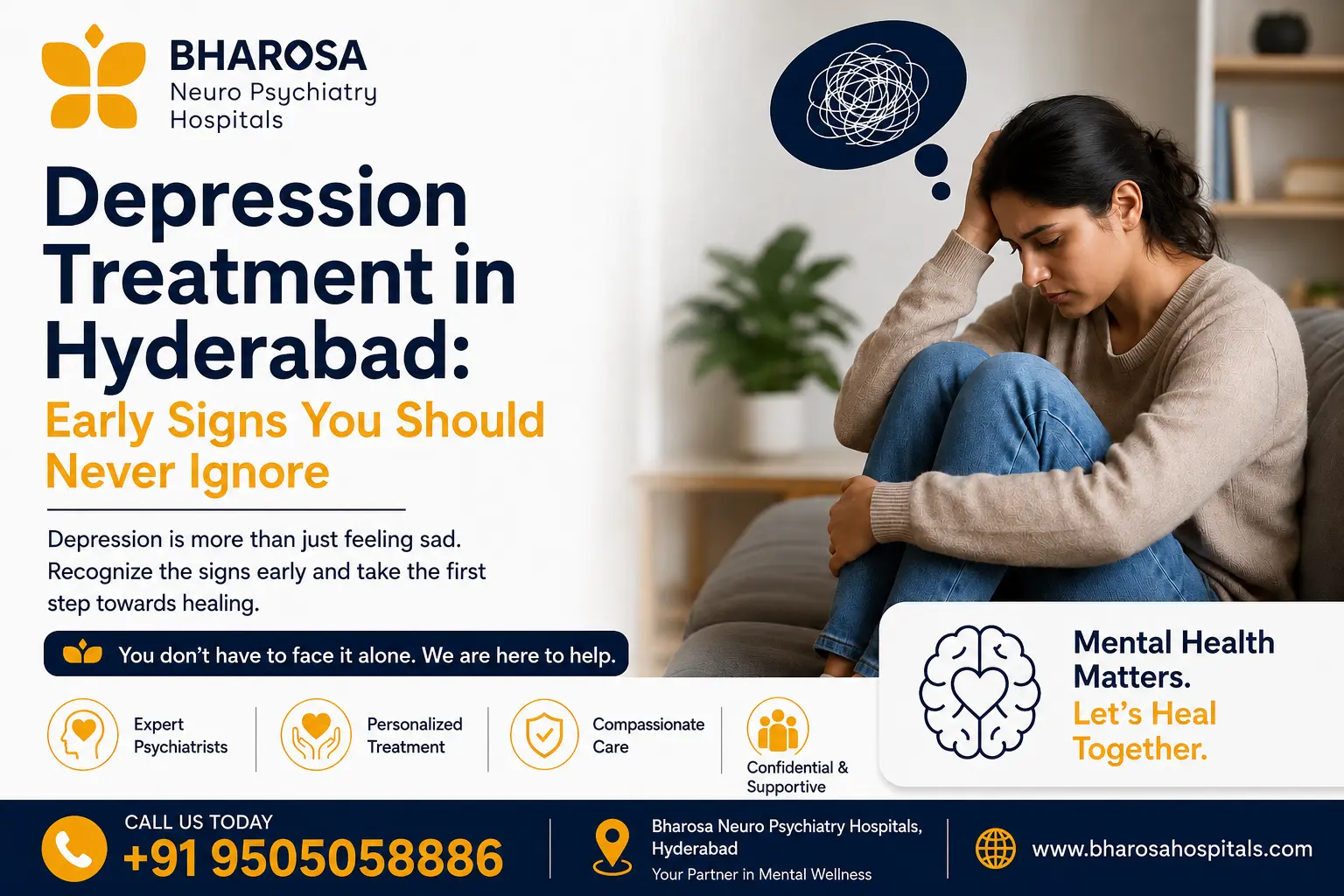
Depression is one of the most prevalent and most misunderstood mental health conditions in the world. In India, it is estimated that over 56 million people live with depression — yet the vast majority never receive professional help. Many dismiss it as sadness, weakness, or a temporary phase. Many suffer in silence for years before seeking the care they deserve. At Bharosa Neuro Psychiatry Hospital, the stories of recovery we witness every day are powerful testaments to what professional Depression Treatment in Hyderabad can achieve. This blog shares the journeys of patients who found their way back to hope — and explains how Bharosa made that possible.
1. Understanding the Weight of Depression
Depression is not sadness. It is a complex, multi-dimensional medical condition that affects brain chemistry, neurological function, sleep, appetite, energy, concentration, self-perception, and the capacity to experience pleasure. It robs people of their identity, relationships, and professional functioning — silently and relentlessly.
Major depressive disorder (MDD) can range from mild persistent low mood to severe, debilitating episodes involving complete withdrawal from life, inability to work or maintain relationships, and in the worst cases, suicidal thoughts. Without professional intervention, depression tends to worsen over time — each episode making the next more likely and more severe.
2. Recovery Story: From Darkness to Light — Ravi's Journey
Ravi (name changed for confidentiality) was a 34-year-old IT professional from Hyderabad who spent three years hiding his depression behind long work hours and social withdrawal. By the time he reached Bharosa Hospitals, he had lost 12 kilograms, stopped communicating with his family, and was experiencing persistent thoughts of self-harm.
After a thorough psychiatric assessment, Ravi was placed on a structured Depression Treatment in Hyderabad programme that included antidepressant medication under close monitoring, twice-weekly individual CBT sessions, and group therapy. Within six weeks, his sleep had stabilised. Within three months, he described feeling emotions he hadn't experienced in years — including moments of genuine joy. Ravi returned to work and is today an active advocate for mental health awareness.
3. Recovery Story: Rebuilding Life After Postpartum Depression — Sunitha's Story
Sunita (name changed), a 28-year-old new mother, found herself unable to bond with her newborn and experiencing overwhelming feelings of guilt, worthlessness, and panic. Her family initially attributed it to adjustment difficulties. By the time she reached Bharosa, she had not slept more than 2 hours in weeks and was experiencing severe anxiety episodes.
Sunita was admitted for inpatient care and received a combination of carefully chosen antidepressants appropriate for nursing mothers, IPT (Interpersonal Therapy) focused on the life transition she was navigating, and family counselling to help her husband and parents understand and support her recovery. Within 8 weeks, she was actively engaging with her baby and described feeling reconnected to her life.
4. Recovery Story: When Depression Hides Behind Anger — Arun's Experience
Arun (name changed) was a 42-year-old businessman who came to Bharosa after his wife insisted he seek help. He presented with severe irritability, anger outbursts, and a complete loss of interest in his once-thriving business. He did not describe himself as depressed — he described himself as 'tired of everything'.
The Bharosa psychiatry team identified male depression presenting as irritability and anhedonia — a pattern frequently missed in clinical settings. With targeted medication and a combination of CBT and mindfulness-based therapy, Arun's anger diminished significantly within weeks. Six months later, he described the treatment as having saved his marriage, his business, and his life.
5. What Makes Depression Treatment at Bharosa Different
Bharosa's approach to Depression Treatment in Hyderabad is built on several critical pillars:
- Accurate Diagnosis: Distinguishing between different forms of depression (MDD, dysthymia, bipolar depression, treatment-resistant depression, postpartum depression) enables targeted, effective treatment
- Medication Precision: Experienced psychiatrists select and monitor antidepressants, adjusting for individual response and minimising side effects
- Evidence-Based Therapy: CBT, IPT, MBCT, and psychodynamic therapy are matched to the patient's personality, history, and type of depression
- Inpatient Care When Needed: For severe episodes, the 110-bed residential facility provides a safe, structured environment for intensive recovery
- ECT for Treatment-Resistant Cases: For patients who do not respond to medication, Bharosa offers Electroconvulsive Therapy — a highly effective, modern, and safe intervention for severe depression
- Family Integration: Depression affects the entire family; Bharosa involves families in education, therapy, and discharge planning
6. Hope is Real — and Recovery is Possible
The stories above represent a fraction of the hundreds of patients at Bharosa Hospitals who have recovered from depression and returned to full, meaningful lives. Depression is treatable. With the right professional support, accurate diagnosis, and sustained engagement with therapy, recovery is not just possible — it is the most common outcome.
If you or a loved one are experiencing symptoms of depression in Hyderabad, reaching out to a specialist is the single most important step you can take.
Hospital Address
Bharosa Neuro Psychiatry Hospital & Rehabilitation Center
Plot No. 114, Mythripuram, Karmanghat, Opposite TKR College Common (TKR Kamaan), Main Road, LB Nagar / Karmanghat, Hyderabad – 500079, Telangana
Phone: +91 95050 58886 (Available 24/7 for appointments and crisis support)
Website: www.bharosahospitals.com
Frequently Asked Questions
Q1. How do I know if what I'm experiencing is depression or just stress?
Stress is typically tied to specific circumstances and resolves when those circumstances change. Depression is persistent, pervasive, and not fully explained by external events. Symptoms lasting more than two weeks — particularly loss of interest, persistent low mood, sleep and appetite changes, and fatigue — warrant a psychiatric evaluation.
Q2. Does depression treatment always involve medication?
Not always. Mild to moderate depression often responds well to psychotherapy alone. Moderate to severe depression typically requires a combination of medication and therapy. The Bharosa psychiatry team makes this determination based on a thorough assessment.
Q3. How long does depression treatment last?
The acute phase of treatment typically lasts 6 to 12 weeks. Maintenance therapy to prevent relapse is usually recommended for 6 to 24 months, depending on the patient's history and risk profile.
Q4. Will I have to be admitted to a hospital for depression treatment?
Most patients with depression can be treated through outpatient consultations. Inpatient admission is recommended when there is a risk of self-harm, when depression is severe enough to impair daily functioning completely, or when a rapid, intensive therapeutic response is needed.
Q5. Is there a risk of relapse after successful depression treatment?
Depression can recur, particularly in individuals who have had multiple episodes. However, with proper aftercare, maintenance medication, and lifestyle strategies, the risk of relapse can be significantly reduced. Bharosa provides structured aftercare plans for all patients.