
Depression Treatment in Hyderabad — Bharosa Neuro Psychiatry Hospital
Depression is more than sadness. It is a serious medical condition that affects how you think, feel, and function in daily life. In Hyderabad alone, millions of people struggle silently with depression — many without realising that what they are experiencing is a treatable condition. The stigma surrounding mental health in India means that most people suffer for years before seeking help, by which time the condition has often become severe and entangled with other problems like alcohol dependence, relationship breakdown, and career loss.
Bharosa Neuro Psychiatry Hospital offers comprehensive depression treatment in Hyderabad, from mild outpatient management to intensive inpatient care for severe, treatment-resistant depression. Our team of MD psychiatrists, clinical psychologists, and counsellors provides evidence-based treatment combining medication, psychotherapy, lifestyle intervention, and — when needed — advanced treatments like Electroconvulsive Therapy (ECT). With over 5,000 families served and a 110-bed NABH-accredited facility, Bharosa is where Hyderabad comes for expert depression care.
Understanding Depression — More Than Just Feeling Sad
Clinical depression (Major Depressive Disorder) is fundamentally different from ordinary sadness or grief. It is a medical condition caused by changes in brain chemistry — specifically, imbalances in neurotransmitters like serotonin, norepinephrine, and dopamine. These chemical changes affect mood regulation, energy, sleep, appetite, concentration, and motivation.
Depression can be triggered by life events (loss, trauma, stress), but it can also occur without any obvious external cause. Genetics, family history, chronic illness, hormonal changes, and substance use all play a role in vulnerability to depression.
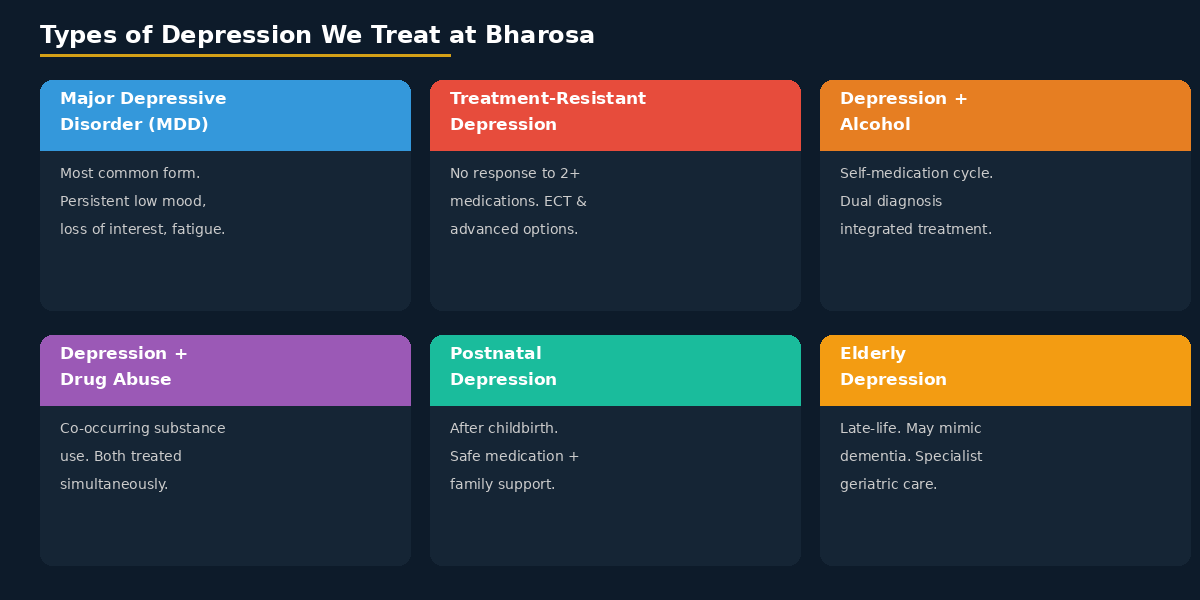
Types of Depression We Treat
Major Depressive Disorder (MDD)
The most common form of clinical depression. Characterised by persistent low mood, loss of interest, fatigue, sleep disturbances, appetite changes, concentration problems, feelings of worthlessness, and in severe cases, thoughts of death or suicide. Episodes last at least 2 weeks and can recur throughout life.
Treatment-Resistant Depression (TRD)
When depression does not respond to two or more adequate trials of antidepressant medication. This affects approximately 30% of people with MDD. At Bharosa, we offer advanced treatment options for TRD including medication combinations, augmentation strategies, ECT (Electroconvulsive Therapy), and intensive inpatient programs.
Depression with Alcohol Dependence
Depression and alcohol abuse are deeply interconnected. Many people drink to cope with depression, while chronic alcohol use itself causes and worsens depressive symptoms. This creates a vicious cycle that is impossible to break without treating both conditions simultaneously. Our integrated dual diagnosis program addresses depression and alcoholism together under one psychiatric team.
Read more: Alcohol De-Addiction Centre in Hyderabad (link to /alcohol-de-addiction-hyderabad)
Depression with Drug Abuse
Similar to alcohol, drug use — particularly cannabis, opioids, and benzodiazepines — is closely linked with depression. Our dual diagnosis approach ensures that both the substance use and the underlying depression are treated concurrently.
Postnatal Depression
Depression that occurs after childbirth, affecting the mother's ability to bond with and care for her baby. Our team provides compassionate, specialised care including medication safe for breastfeeding, supportive therapy, and family guidance.
Seasonal and Situational Depression
Depression triggered by seasons, life changes, or specific situations (job loss, divorce, bereavement). While often milder, these forms can escalate without proper support and intervention.
Depression in the Elderly
Late-life depression is common but frequently undiagnosed. It can mimic or co-occur with dementia, making accurate diagnosis critical. Our geriatric psychiatry specialists are experienced in identifying and treating depression in older adults.
Warning Signs — When to Seek Help
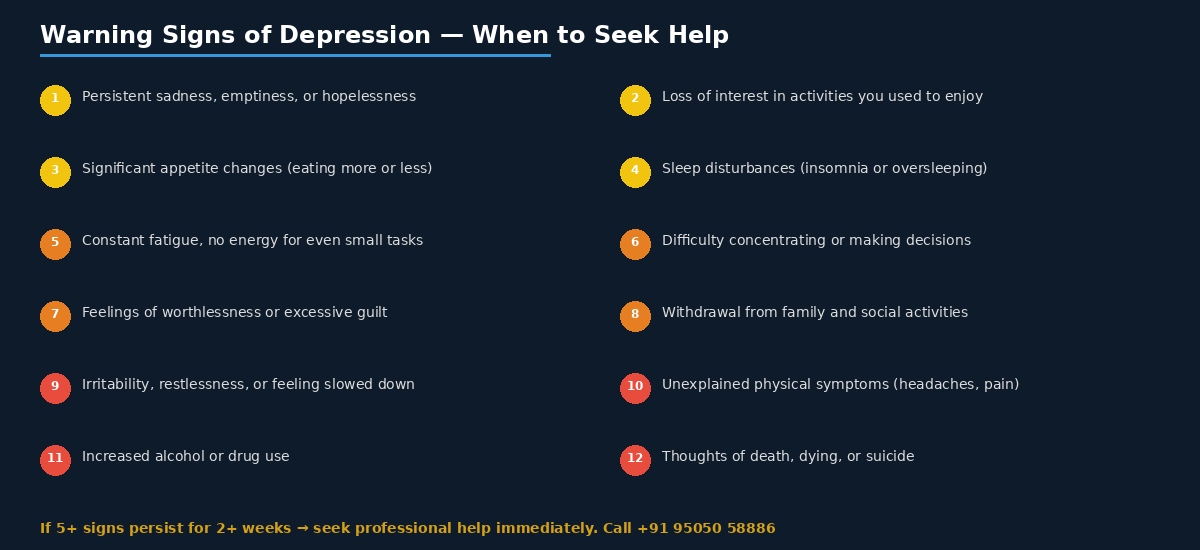
If you or a loved one experiences several of the following symptoms most of the day, nearly every day, for more than two weeks, it is time to seek professional help:
- Persistent feelings of sadness, emptiness, or hopelessness that do not lift
- Loss of interest or pleasure in activities you used to enjoy
- Significant changes in appetite — eating much more or much less than usual
- Sleep disturbances — insomnia, early morning waking, or sleeping excessively
- Constant fatigue and lack of energy, even for small tasks
- Difficulty concentrating, making decisions, or remembering things
- Feelings of worthlessness, excessive guilt, or self-blame
- Withdrawal from family, friends, and social activities
- Irritability, restlessness, or feeling slowed down
- Unexplained physical symptoms — headaches, body aches, digestive problems
- Increased alcohol or drug use
- Thoughts of death, dying, or suicide
If you recognise these signs, please reach out. Call +91 95050 58886. Help is available 24/7.
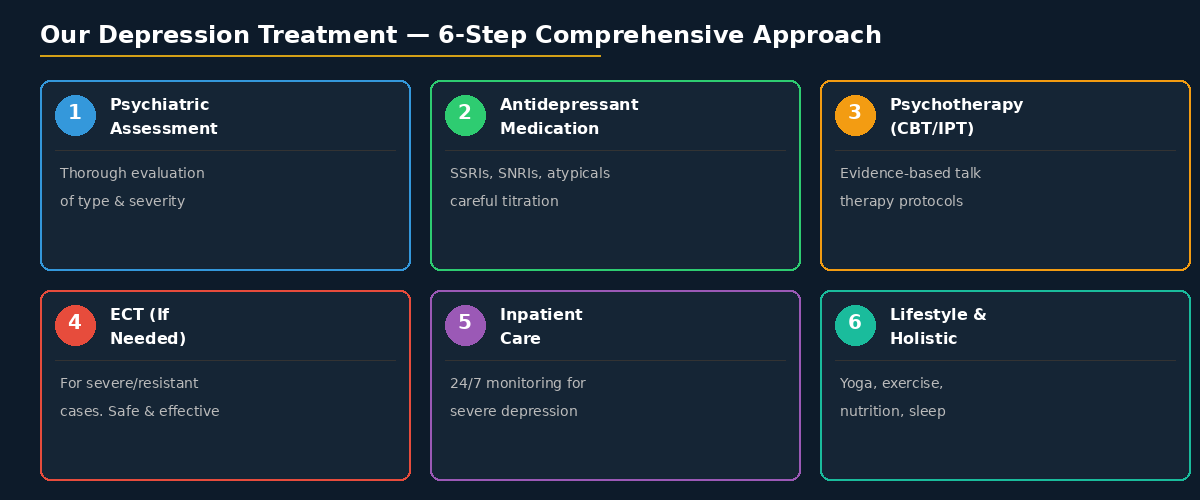
Our Depression Treatment Approach
1. Thorough Psychiatric Assessment
Depression treatment at Bharosa begins with a comprehensive evaluation by our MD psychiatrists. We assess the type, severity, and duration of depression, rule out medical causes (thyroid disorders, vitamin deficiencies, hormonal imbalances), screen for co-occurring conditions (anxiety, addiction, bipolar disorder), evaluate suicide risk, and understand the individual's personal, family, and social context. This detailed assessment ensures an accurate diagnosis and a treatment plan tailored to the specific form of depression.
2. Antidepressant Medication
For moderate to severe depression, medication is usually the first line of treatment. Our psychiatrists prescribe and monitor:
- SSRIs (Selective Serotonin Reuptake Inhibitors) — fluoxetine, sertraline, escitalopram — the most commonly prescribed first-line antidepressants
- SNRIs (Serotonin-Norepinephrine Reuptake Inhibitors) — venlafaxine, duloxetine — for depression with prominent anxiety or pain
- Atypical antidepressants — bupropion, mirtazapine — for specific symptom profiles or when SSRIs are not effective
- Augmentation agents — lithium, atypical antipsychotics, thyroid supplements — for treatment-resistant cases
Finding the right medication and dose requires patience and expert guidance. Our psychiatrists follow evidence-based protocols and provide close follow-up, especially in the first 4-6 weeks when response is being established.
3. Evidence-Based Psychotherapy
- Cognitive Behavioural Therapy (CBT) — the gold standard for depression; identifies and changes negative thought patterns and behaviours that maintain depression
- Interpersonal Therapy (IPT) — focuses on improving relationships and communication patterns that contribute to depression
- Behavioural Activation — structured approach to increasing engagement in rewarding activities to break the cycle of withdrawal and low mood
- Mindfulness-Based Cognitive Therapy (MBCT) — combines mindfulness practices with CBT to prevent relapse in recurrent depression
- Supportive therapy and counselling — for individuals who benefit from a safe space to process emotions
4. Electroconvulsive Therapy (ECT)
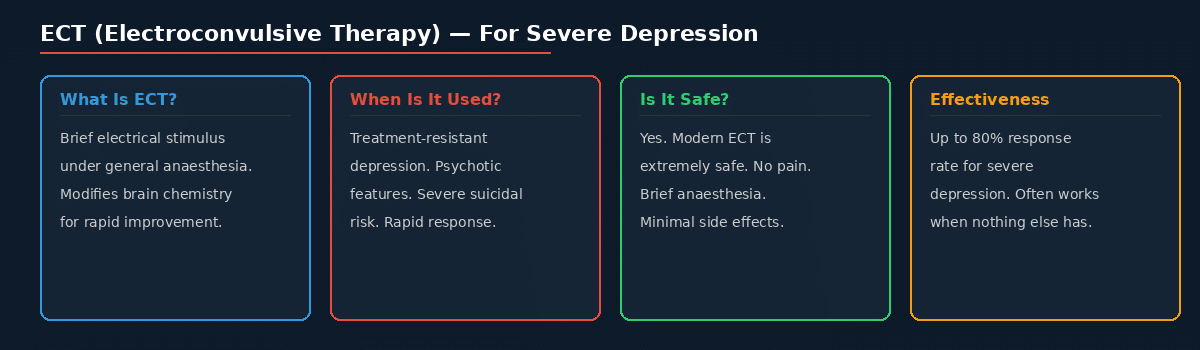
For severe, treatment-resistant depression — particularly when there is a risk to life, psychotic features, or when rapid response is essential — ECT is one of the most effective treatments available. Modern ECT is safe, painless (administered under brief general anaesthesia), and highly effective. At Bharosa, we have a dedicated ECT suite staffed by experienced psychiatrists and anaesthesiologists.
5. Inpatient Depression Care
When depression is severe enough to impair functioning completely, when there is a risk of self-harm, or when outpatient treatment has not been sufficient, our inpatient program provides the intensive support needed:
- 24/7 psychiatric monitoring and nursing care
- Rapid medication optimization in a controlled environment
- Daily therapy sessions (individual and group)
- Structured daily routine with activities, meals, and rest
- Safety and containment for individuals at risk
- Family counselling and discharge planning
6. Lifestyle and Holistic Interventions
- Yoga and meditation — proven to reduce depressive symptoms and improve emotional regulation
- Physical exercise programs — regular exercise is as effective as medication for mild to moderate depression
- Nutritional guidance — diet modifications that support brain health and mood
- Sleep hygiene counselling — establishing healthy sleep patterns
- Art and music therapy — creative expression for emotional processing
Depression and Alcohol — Breaking the Vicious Cycle
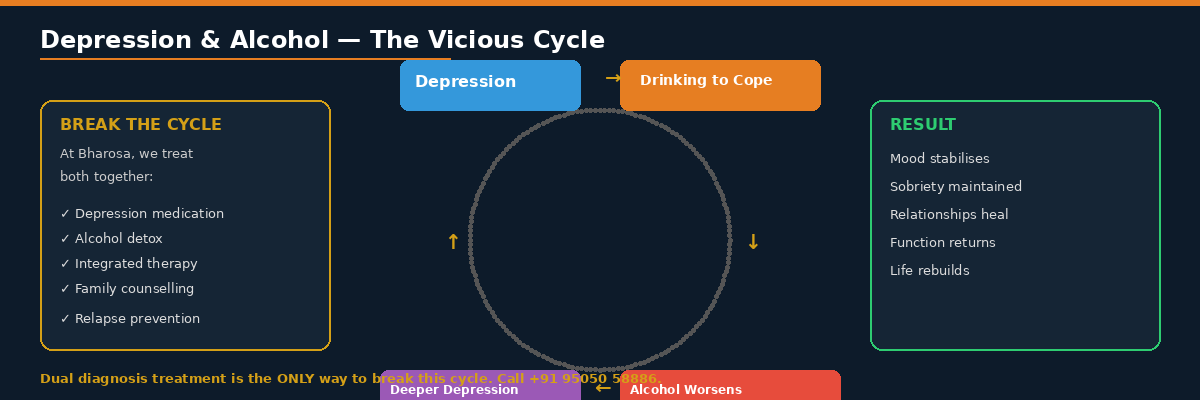
Depression and alcohol abuse are two of the most commonly co-occurring conditions we see at Bharosa. The relationship works both ways:
- Depression leads to drinking — alcohol temporarily numbs emotional pain, creating a pattern of self-medication
- Alcohol worsens depression — chronic alcohol use depletes serotonin and other neurotransmitters, deepening the depression
- Both fuel each other — forming a vicious cycle that accelerates deterioration in health, relationships, and functioning
At Bharosa, we never treat depression and alcohol dependence separately. Our integrated dual diagnosis approach addresses both conditions simultaneously, with a single coordinated team of psychiatrists, counsellors, and therapists. This integrated approach is the only way to break the cycle effectively.
Frequently Asked Questions — Depression Treatment Hyderabad
Q1: Can depression be completely cured?
Many people recover fully from depression with proper treatment. For some, depression is a single episode that resolves completely. For others, it may recur and require ongoing management. Early treatment, adherence to medication, and psychotherapy significantly improve the chances of full and lasting recovery.
Q2: How long does depression treatment take?
Antidepressant medication typically takes 4-6 weeks to show full effect. A minimum of 6-12 months of continued treatment is usually recommended after the first episode to prevent relapse. For recurrent depression, longer-term or maintenance treatment may be advised by your psychiatrist.
Q3: Are antidepressants addictive?
No. Modern antidepressants (SSRIs, SNRIs) are not addictive. They do not cause cravings or compulsive use. However, they should never be stopped abruptly — gradual tapering under psychiatric guidance prevents discontinuation symptoms.
Q4: Is ECT safe?
Yes. Modern ECT is extremely safe and is performed under brief general anaesthesia. The person feels no pain during the procedure. ECT is one of the most effective treatments for severe depression, especially when medication has not been effective or when rapid response is needed.
Q5: Can depression cause alcohol addiction?
Yes. Many people with depression self-medicate with alcohol, which can lead to alcohol dependence over time. Conversely, chronic alcohol use worsens depression. At Bharosa, we treat both conditions together through our integrated dual diagnosis program.
Q6: When should someone with depression be hospitalised?
Hospitalisation is recommended when there is a risk of self-harm or suicide, when depression is so severe that the person cannot care for themselves, when psychotic features are present, or when outpatient treatment has not been effective after adequate trials.


Delaying treatment can extend suffering, but taking action now can bring relief and clarity.
Mental health struggles do not define you, and you don’t have to face them alone. If you notice any early signs of mental health disorders in yourself or a family member, take the first step today.