
Bipolar Disorder and Emotional Health: A Complete Understanding | Bharosa Hospitals
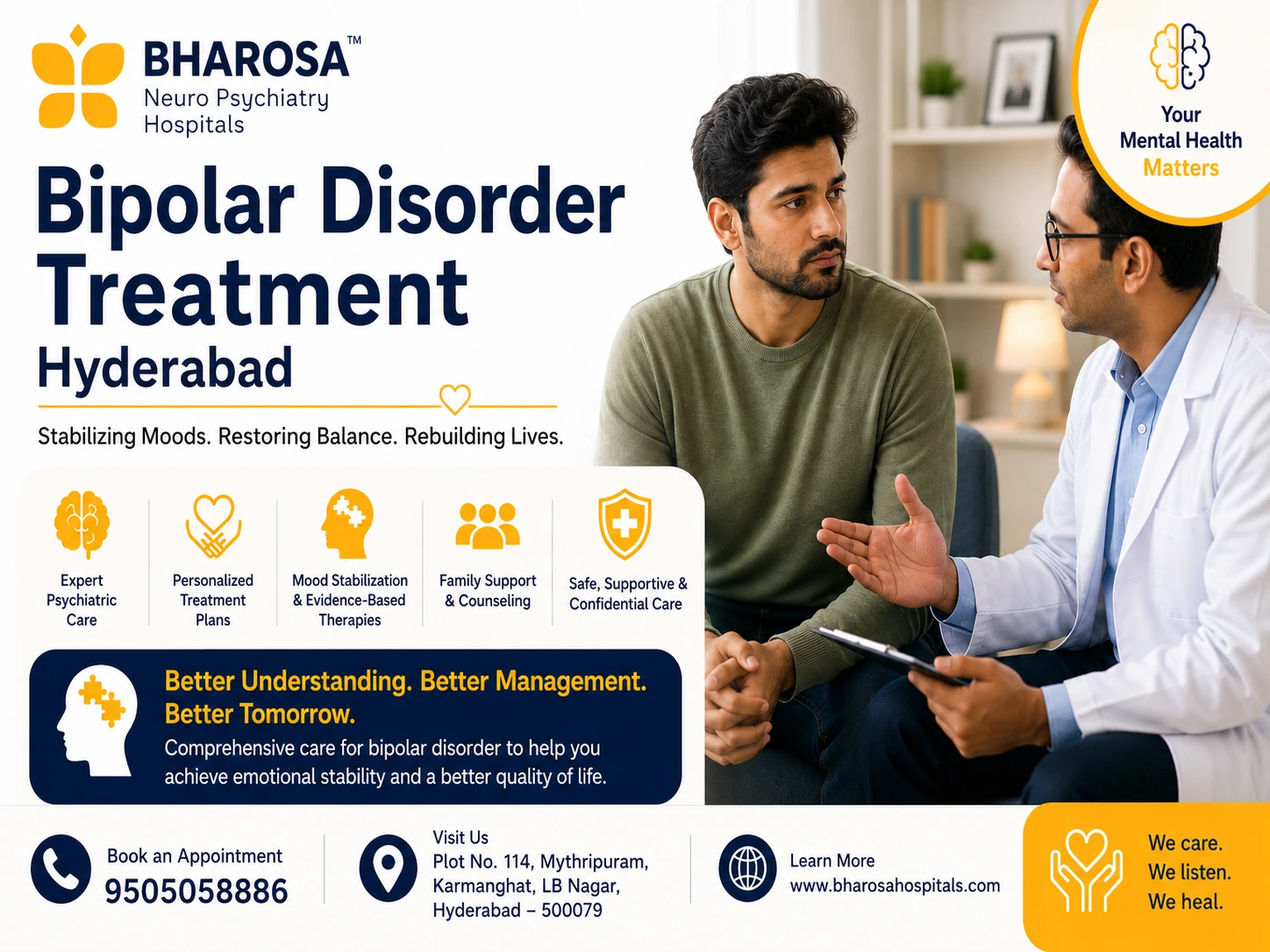
Bipolar disorder is one of the most misunderstood mental health conditions, often reduced to phrases like "mood swings" in everyday conversation. In reality, it is a serious, lifelong psychiatric condition that affects how a person feels, thinks, and functions on a daily basis. At Bharosa Hospitals, we regularly meet families who are confused, frightened, or exhausted trying to understand what their loved one is going through. This blog aims to break down bipolar disorder in simple terms and explain why timely, structured Bipolar Disorder Treatment Hyderabad can completely change the course of a person's life.
What Is Bipolar Disorder?
Bipolar disorder is a mood disorder characterized by extreme emotional highs (mania or hypomania) and extreme lows (depression). Unlike ordinary mood changes that last a few hours, bipolar episodes can persist for days or weeks and significantly disrupt relationships, work, and daily functioning.
During a manic phase, a person may feel unusually energetic, overly confident, impulsive, or may need very little sleep. During a depressive phase, the same person may feel hopeless, fatigued, disinterested in life, and struggle to get out of bed. These shifts are not a matter of willpower — they stem from changes in brain chemistry, particularly involving neurotransmitters like dopamine and serotonin.
Common Symptoms to Watch For
Manic/Hypomanic Symptoms:
- Excessive energy and reduced need for sleep
- Rapid speech and racing thoughts
- Impulsive decisions (spending, relationships, risky behavior)
- Inflated self-esteem or grandiosity
- Irritability or agitation
Depressive Symptoms:
- Persistent sadness or emptiness
- Loss of interest in previously enjoyed activities
- Fatigue and low energy
- Difficulty concentrating
- Feelings of worthlessness or, in severe cases, suicidal thoughts
Why Emotional Health Matters in Bipolar Disorder
Bipolar disorder doesn't just affect mood — it affects a person's entire emotional ecosystem: self-esteem, relationships, career stability, and family trust. Left untreated, the cycle of highs and lows can lead to broken relationships, job loss, financial difficulties, and substance use as a coping mechanism. This is why emotional health support — not just medication — is a critical part of recovery.
How Bipolar Disorder Is Diagnosed
A qualified psychiatrist evaluates the pattern, frequency, and severity of mood episodes over time, along with family history and any co-occurring conditions like anxiety or substance use. At Bharosa Hospitals, our psychiatric team, led by Dr. Uday Kiran (MBBS, MD Psychiatry Resident, Osmania Medical College), conducts a thorough assessment before recommending a treatment plan.
Treatment Approach at Bharosa Hospitals
Bipolar disorder cannot be cured with medication alone or therapy alone — it requires an integrated, long-term approach:
- Medication Management – Mood stabilizers, antipsychotics, or antidepressants prescribed and monitored by experienced psychiatrists to bring chemical balance.
- Psychotherapy – Cognitive Behavioral Therapy (CBT) and Dialectical Behavior Therapy (DBT) help patients recognize early warning signs and manage emotional triggers.
- Family Counseling – Since bipolar disorder affects the whole household, family involvement improves long-term outcomes significantly.
- Structured 100-Day Recovery Program – Bharosa Hospitals' scientifically designed 100-day program allows enough time (12–16 weeks) for brain circuits to stabilize, medication to take full effect, and healthier routines to form.
- Lifestyle and Routine Building – Sleep regulation, stress management, and daily structure are essential in preventing relapse.
Why Choose Bharosa Hospitals for Bipolar Disorder Treatment Hyderabad
Bharosa Hospitals offers a fully equipped, monitored campus combining psychiatry, psychotherapy, and residential care under one roof. Our approach to Bipolar Disorder Treatment Hyderabad is holistic — blending medical treatment with emotional and behavioral support so patients don't just stabilize temporarily, but build the tools for long-term emotional health.
If you or a loved one is experiencing intense mood swings that disrupt daily life, don't wait for the condition to escalate. Early intervention leads to better outcomes and a much smoother recovery journey.
FAQs
Q1. Is bipolar disorder same as having frequent mood swings?
No. Bipolar disorder involves distinct episodes of mania and depression that last days to weeks and significantly impact functioning, unlike normal day-to-day mood fluctuations.
Q2. Can bipolar disorder be completely cured?
There is no permanent "cure," but with consistent treatment, medication, and therapy, most patients lead stable, productive lives with well-managed symptoms.
Q3. How long does bipolar disorder treatment take to show results?
Medication typically needs 8–12 weeks to show full effect, while our 100-day program is designed for complete stabilization of mood, behavior, and routine.
Q4. Is hospitalization necessary for bipolar disorder?
Not always. Mild to moderate cases can be managed with outpatient care, but severe manic or depressive episodes may require short-term residential monitoring for safety.
Q5. Does Bharosa Hospitals offer family counseling for bipolar patients?
Yes, family counseling is an integral part of our treatment plan since family support greatly improves recovery outcomes.
Hospital Address
Bharosa Neuro Psychiatry Hospital
Plot No. 114, Mythripuram, Karmanghat, Opposite TKR College Comman (TKR Kamaan), Main Road, LB Nagar / Karmanghat, Hyderabad – 500079, Telangana
Call/WhatsApp: 9505058886