Bipolar Disorder Treatment Hyderabad: Understanding Care and Management
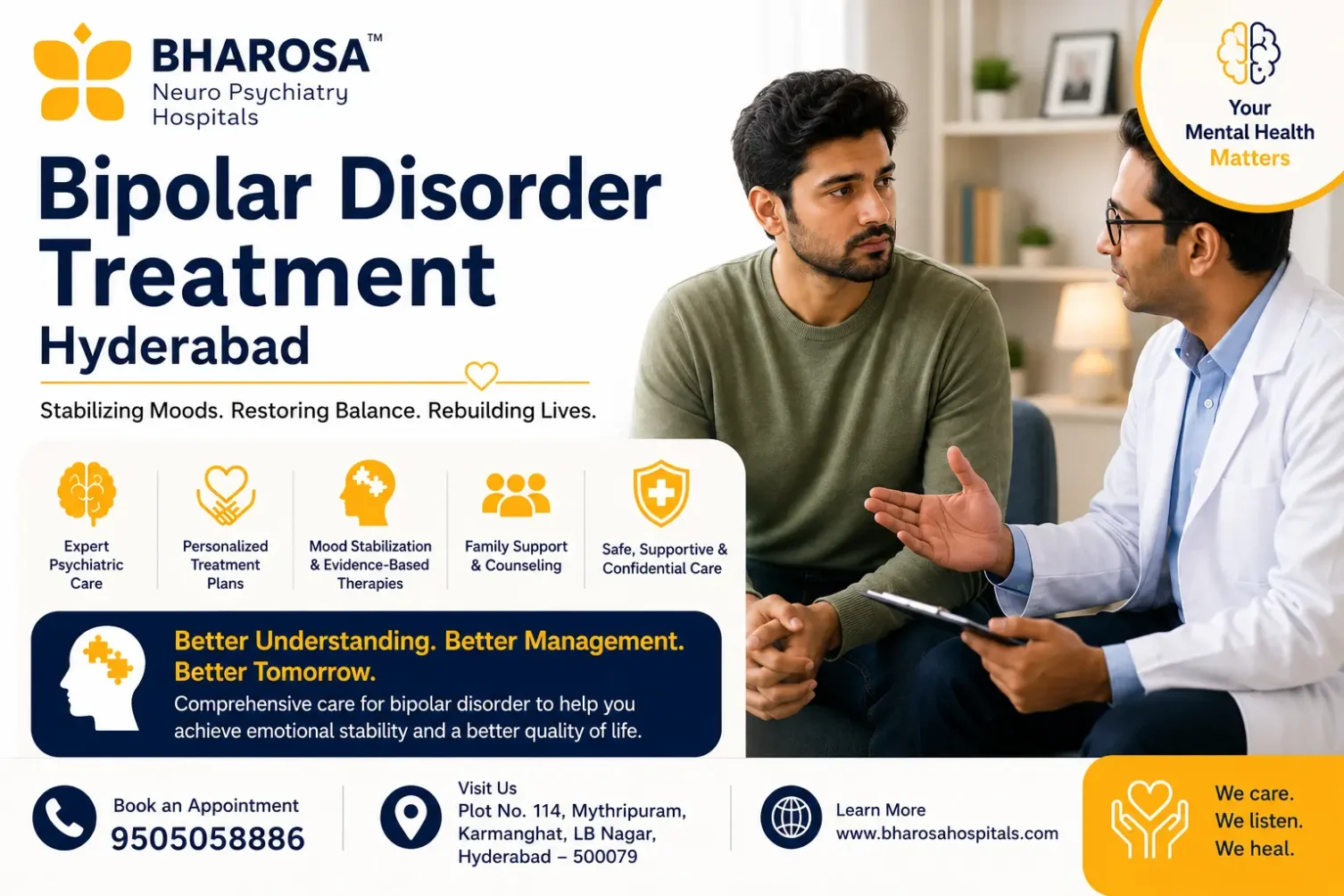
Living with bipolar disorder can feel like riding an unpredictable emotional rollercoaster — one day soaring with boundless energy and grandiose ideas, the next plummeting into a pit of hopelessness and despair. Bipolar disorder is a complex, lifelong mood condition that affects millions of people in India, yet it remains widely misunderstood and frequently misdiagnosed. With expert Bipolar Disorder Treatment Hyderabad at Bharosa Neuro Psychiatry Hospital, patients can achieve genuine mood stability, lead productive lives, and maintain healthy relationships.
Bharosa Hospitals, situated in LB Nagar, Hyderabad, is one of the most trusted psychiatric facilities in Telangana for the diagnosis and long-term management of bipolar disorder. Our multidisciplinary team of experienced psychiatrists, therapists, and counsellors provides personalised, evidence-based care that addresses every dimension of this condition — from acute mood episodes to long-term maintenance and relapse prevention.
What Is Bipolar Disorder?
Bipolar disorder, formerly known as manic-depressive illness, is a chronic psychiatric condition characterised by extreme mood swings that include emotional highs (mania or hypomania) and lows (depression). These mood episodes are not simply mood variations everyone experiences — they are intense, prolonged, and significantly impair a person's ability to function at work, maintain relationships, and care for themselves.
Bipolar disorder is caused by a combination of genetic factors, neurobiological imbalances — particularly in dopamine, serotonin, and norepinephrine pathways — and environmental triggers. It is a medical brain condition, not a personality flaw or a weakness of character.
Types of Bipolar Disorder
Accurate diagnosis is the foundation of effective Bipolar Disorder Treatment Hyderabad. Our psychiatrists diagnose and treat all types:
Bipolar I Disorder
Characterised by at least one manic episode lasting seven or more days (or requiring hospitalisation), often preceded or followed by hypomanic or major depressive episodes. Manic episodes can be severe enough to cause psychosis — hallucinations or delusions — and may require emergency psychiatric intervention.
Bipolar II Disorder
Involves recurrent major depressive episodes alternating with hypomanic episodes (less severe than full mania). Bipolar II is frequently misdiagnosed as depression because the hypomanic episodes are often not recognised as problematic. It is equally debilitating due to the frequency and severity of depressive episodes.
Cyclothymic Disorder
A milder form involving numerous periods of hypomanic symptoms and mild depressive symptoms over at least two years. While less severe, cyclothymia can significantly impact quality of life and carries a risk of progressing to Bipolar I or II.
Bipolar Disorder with Mixed Features
Episodes where manic and depressive symptoms co-occur simultaneously — one of the most difficult clinical presentations to manage, associated with higher suicide risk and requiring particularly expert psychiatric care.
Rapid Cycling Bipolar Disorder
Defined by four or more mood episodes (manic, hypomanic, or depressive) within a 12-month period. Rapid cycling requires specialised medication management and intensive therapeutic support.
Recognising the Symptoms
Symptoms of Mania / Hypomania
- Abnormally elevated, expansive, or irritable mood
- Dramatically decreased need for sleep without feeling tired
- Racing thoughts, pressured speech, and rapid idea generation
- Inflated self-esteem or grandiosity — unrealistic beliefs in special abilities or powers
- Increased goal-directed activity — starting multiple projects simultaneously
- Impulsive, reckless behaviour — excessive spending, sexual indiscretion, risky investments
- Severe mania may include hallucinations or paranoid delusions
Symptoms of Bipolar Depression
- Persistent sadness, emptiness, or hopelessness
- Loss of interest in previously enjoyed activities
- Significant fatigue and low energy
- Hypersomnia or insomnia
- Difficulty concentrating and making decisions
- Feelings of worthlessness or excessive guilt
- Suicidal thoughts or behaviour — seek immediate psychiatric help
The Diagnostic Process at Bharosa
Bipolar disorder is one of the most complex psychiatric conditions to diagnose accurately. It is frequently mistaken for unipolar depression (when the patient presents in a depressive episode), ADHD, personality disorders, or substance use disorders. On average, patients in India receive a correct diagnosis 8–10 years after symptoms first appear.
At Bharosa, our expert psychiatrists use a comprehensive diagnostic protocol — including detailed psychiatric history, mood charting, structured clinical interviews, medical workup to rule out thyroid and neurological conditions, and standardised assessment tools — to arrive at an accurate diagnosis and tailor the most effective treatment plan.
Comprehensive Bipolar Disorder Treatment Hyderabad at Bharosa
Our Bipolar Disorder Treatment Hyderabad program is designed for both acute episode management and long-term mood stabilisation:
1. Mood Stabiliser Medication Management
The cornerstone of bipolar treatment is mood stabiliser medication — including lithium, valproate, lamotrigine, and atypical antipsychotics. Our psychiatrists carefully prescribe, monitor blood levels, and adjust medications to achieve the best therapeutic effect with minimal side effects. Medication adherence is critical, and our team provides ongoing education and support to help patients stay consistent.
2. Psychoeducation
Understanding bipolar disorder is transformative. At Bharosa, patients and their families receive detailed psychoeducation about the nature of the illness, triggers, warning signs of upcoming episodes, the importance of medication adherence, sleep hygiene, and lifestyle factors that affect mood stability. Informed patients are empowered patients.
3. Cognitive Behavioural Therapy (CBT) for Bipolar
Specialised CBT for bipolar disorder helps patients identify and manage early warning signs of mood episodes, challenge distorted thinking patterns, develop coping strategies for depression and mania, and build a personalised relapse prevention plan. CBT significantly reduces episode frequency and severity when combined with medication.
4. Interpersonal and Social Rhythm Therapy (IPSRT)
IPSRT is an evidence-based therapy specifically developed for bipolar disorder that focuses on stabilising daily routines — sleep, meals, and activities — which directly regulate the biological rhythms that influence mood. Disruption to these rhythms is a major trigger for bipolar episodes; establishing regularity is protective.
5. Family-Focused Therapy
Bipolar disorder profoundly affects families. Partners and relatives often experience confusion, frustration, and emotional exhaustion. Our family therapy sessions educate loved ones about the illness, improve communication patterns, reduce expressed emotion (a known trigger for relapse), and create a supportive home environment that protects mood stability.
6. Inpatient Care for Acute Episodes
Severe manic or depressive episodes often require inpatient stabilisation in a safe, monitored environment. Bharosa's residential facility provides 24/7 psychiatric supervision, rapid medication adjustment, de-escalation support, and structured daily routines to bring acute episodes under control quickly and safely — protecting the patient from the harmful consequences of severe mania or deep depression.
Long-Term Management: Living Well with Bipolar Disorder
Bipolar disorder is a lifelong condition, but it is absolutely manageable with consistent care. Many patients with bipolar disorder lead highly successful, fulfilling lives — in careers, relationships, and creative pursuits — when their condition is well-managed. The key components of long-term success include unwavering medication adherence, regular psychiatric follow-ups, sleep regularity, stress management, avoidance of alcohol and drugs, and a strong support network.
At Bharosa, we are committed to being long-term partners in every patient's journey — from acute episode management through lifelong wellness maintenance.
Frequently Asked Questions (FAQs)
Q: Can bipolar disorder be cured completely?
A: Bipolar disorder is a lifelong condition without a definitive cure, but it is highly manageable with consistent treatment. With appropriate medication, therapy, and lifestyle management, many patients achieve sustained mood stability and lead full, productive lives. Early diagnosis and consistent treatment are the most important factors in long-term outcomes.
Q: How is bipolar disorder different from ordinary mood swings?
A: Bipolar mood episodes are extreme, prolonged, and significantly impair functioning — unlike the normal mood variations everyone experiences. Manic episodes involve dramatically reduced sleep, racing thoughts, and impulsive behaviour; depressive episodes are deep and persistent. These are medical states, not emotional reactions to circumstances.
Q: What medications are used for Bipolar Disorder Treatment Hyderabad at Bharosa?
A: Our psychiatrists use evidence-based mood stabilisers including lithium, valproate, and lamotrigine, as well as atypical antipsychotics. The choice of medication is highly individualised based on bipolar subtype, episode history, other medical conditions, and side effect profile. Medications are carefully monitored and adjusted over time.
Q: Is hospitalisation always necessary for bipolar disorder?
A: Not always. Many patients are successfully managed through outpatient consultation and therapy. However, hospitalisation is recommended during severe manic or depressive episodes, particularly when there is psychosis, suicidal ideation, or a risk of harm. Bharosa's residential facility provides safe, expert inpatient care when needed.
Q: Does bipolar disorder run in families?
A: Yes. Bipolar disorder has a strong genetic component — first-degree relatives of people with bipolar disorder have a significantly higher risk. However, genetics alone do not determine whether someone develops the condition; environmental and psychological factors also play important roles.
Q: How do I book a bipolar disorder consultation at Bharosa Hospitals?
A: Call or WhatsApp us at +91 9505058886 or visit our hospital at LB Nagar, Hyderabad. Our team will schedule a confidential psychiatric assessment at your earliest convenience.
Hospital Address & Contact
Bharosa Neuro Psychiatry Hospital & Rehabilitation Center
Plot No. 114, Mythripuram, Karmanghat, Opposite TKR College Comman (TKR Kamaan), Main Road, LB Nagar / Karmanghat, Hyderabad – 500079, Telangana, India
+91 9505058886