Best Autism & ADHD Specialists in Hyderabad — Bharosa Neuro Psychiatry Hospital
Attention Deficit Hyperactivity Disorder (ADHD) and Autism Spectrum Disorder (ASD) are two of the most prevalent neurodevelopmental conditions affecting children, adolescents, and adults across India. Despite growing awareness, these conditions remain profoundly misunderstood — frequently dismissed as laziness, bad parenting, or behavioural stubbornness. The consequences of this misunderstanding are devastating: delayed diagnosis, inappropriate interventions, academic failure, social isolation, damaged self-esteem, and families left exhausted and confused.
At Bharosa Neuro Psychiatry Hospital, we believe that every individual with ADHD or Autism deserves accurate diagnosis, evidence-based treatment, and a clear pathway to reaching their full potential. Led by Dr. Uday Kiran (MBBS, MD Psychiatry, Osmania Medical College) and a multidisciplinary team of more than ten board-certified MD psychiatrists, clinical psychologists, occupational therapists, and special educators, we provide comprehensive neurodevelopmental care for patients of all ages. Our NABH-accredited, 110-bed facility in LB Nagar, Hyderabad, has supported over 5,000 families — and we are here to support yours.
Understanding ADHD: Beyond the Myths
ADHD is a neurodevelopmental disorder characterised by persistent patterns of inattention, hyperactivity, and impulsivity that interfere with functioning and development. It is not a deficit of willpower or intelligence — research consistently shows that ADHD involves differences in brain structure and function, particularly in areas governing executive function, attention regulation, and impulse control.
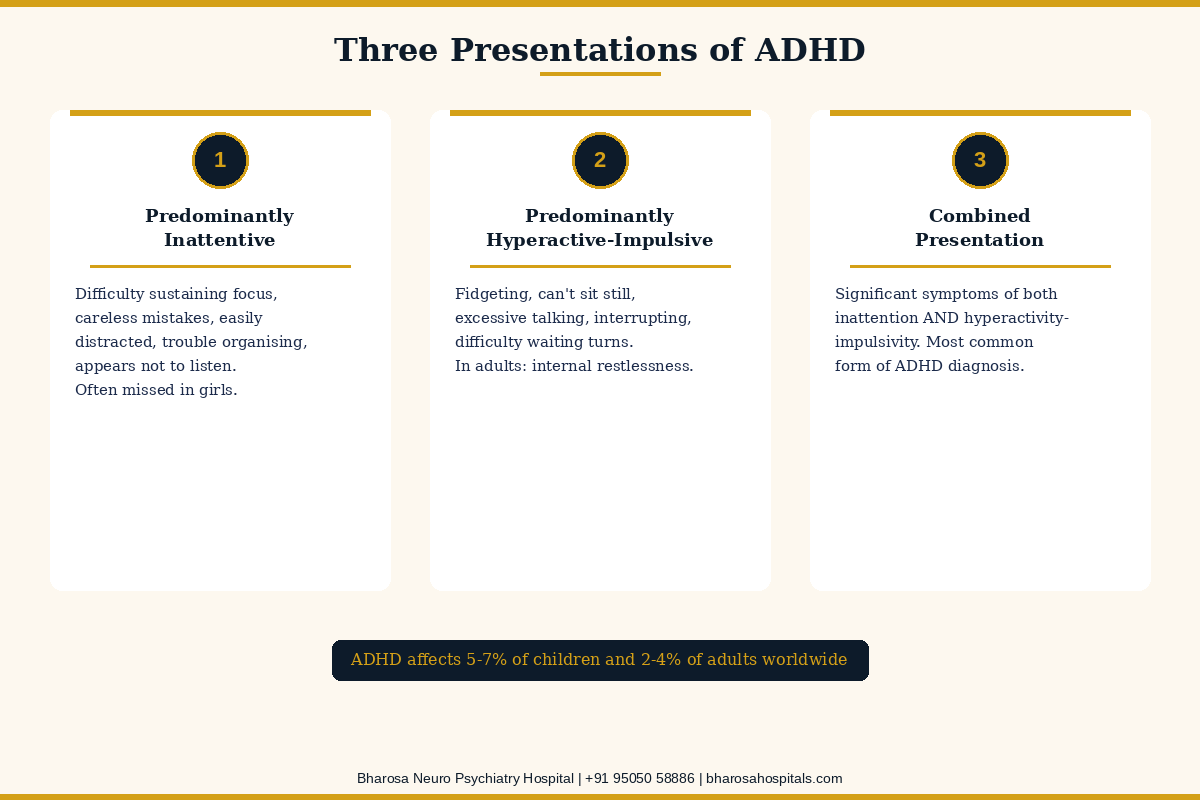
ADHD affects approximately 5–7% of children and 2–4% of adults worldwide. In India, cultural factors often delay diagnosis: a child struggling in school is labelled “lazy”; a teenager who cannot sit still is called “indisciplined”; an adult who chronically misses deadlines is told to “try harder.” These labels cause immense harm, compounding the neurological challenges with layers of shame, anxiety, and depression.
Types of ADHD We Diagnose and Treat
Predominantly Inattentive Presentation (formerly ADD): Difficulty sustaining attention, frequent careless mistakes, trouble organising tasks, easily distracted, often loses things, appears not to listen when spoken to directly. This presentation is frequently missed in girls and women, who may compensate through enormous effort that eventually leads to burnout.
Predominantly Hyperactive-Impulsive Presentation: Fidgeting, inability to remain seated, excessive talking, difficulty waiting turns, interrupting others, a constant sense of restlessness. In adults, hyperactivity often manifests as internal restlessness rather than overt physical movement.
Combined Presentation: The most common form, involving significant symptoms of both inattention and hyperactivity-impulsivity. This is the presentation most people associate with ADHD, though all three forms are equally valid and require professional attention.
ADHD Across the Lifespan
While ADHD is often perceived as a childhood condition, research has established that approximately 60–70% of children with ADHD continue to experience clinically significant symptoms into adulthood. Adult ADHD presents unique challenges: difficulty maintaining employment, relationship instability, financial disorganisation, chronic procrastination, emotional dysregulation, and a significantly elevated risk of comorbid conditions including anxiety, depression, and substance use disorders.
At Bharosa Hospital, we provide ADHD assessment and treatment for patients across all age groups — from young children presenting with behavioural concerns in school, to adolescents navigating the increased demands of higher education, to adults who may have spent decades struggling without understanding why.
Understanding Autism Spectrum Disorder (ASD)
Autism Spectrum Disorder is a complex neurodevelopmental condition characterised by differences in social communication, social interaction, and the presence of restricted or repetitive patterns of behaviour, interests, or activities. The term “spectrum” reflects the enormous variability in how autism presents — from individuals who require substantial daily support to those who live independently but experience persistent challenges with social nuance, sensory processing, or flexibility of thought.
Autism is not a disease to be cured. It is a neurological difference that, with appropriate understanding, support, and intervention, allows individuals to lead meaningful, fulfilling lives. Our approach at Bharosa is grounded in this philosophy: we work to understand each patient’s unique profile of strengths and challenges, and we build interventions that enhance quality of life, develop functional skills, and support the family system as a whole.
Key Characteristics of ASD
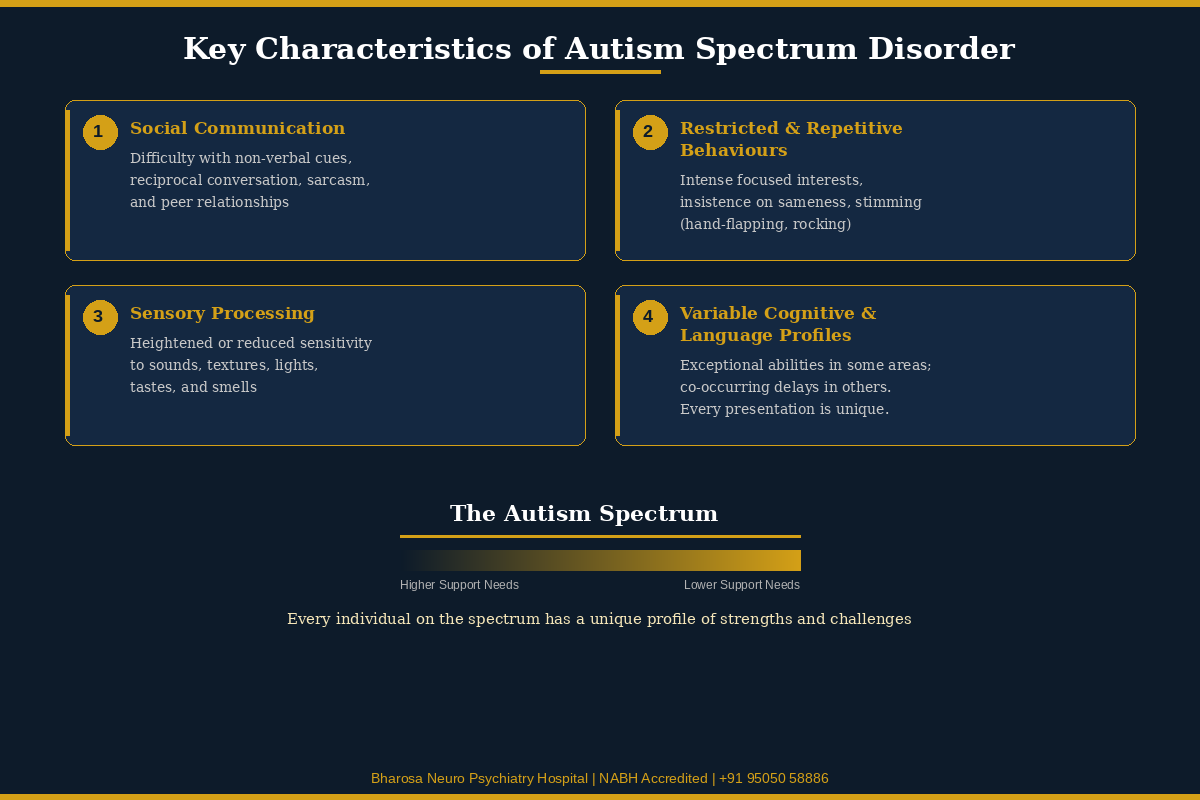
Social Communication Differences: Difficulty understanding non-verbal cues such as facial expressions, tone of voice, and body language. Challenges with maintaining reciprocal conversation, understanding sarcasm or figurative language, and developing age-appropriate peer relationships.
Restricted and Repetitive Behaviours: Intense, focused interests in specific topics. Insistence on sameness and difficulty with transitions or changes in routine. Repetitive motor movements (stimming) such as hand-flapping, rocking, or spinning. These behaviours often serve important self-regulatory functions.
Sensory Processing Differences: Heightened or reduced sensitivity to sensory input — sounds, textures, lights, tastes, or smells. A child who covers their ears in noisy environments, refuses certain food textures, or becomes distressed under fluorescent lighting may be experiencing sensory processing challenges associated with autism.
Variable Cognitive and Language Profiles: Some individuals with autism demonstrate exceptional abilities in areas such as mathematics, music, visual thinking, or pattern recognition. Others may have co-occurring intellectual disability or language delays. Every presentation is unique.
Why Choose Bharosa Hospital for ADHD & Autism Care in Hyderabad?
Neurodevelopmental conditions require a level of diagnostic precision and therapeutic breadth that few centres in Hyderabad can match. At Bharosa Neuro Psychiatry Hospital, we have built our neurodevelopmental services around the principles that families tell us matter most: accuracy, compassion, collaboration, and results.
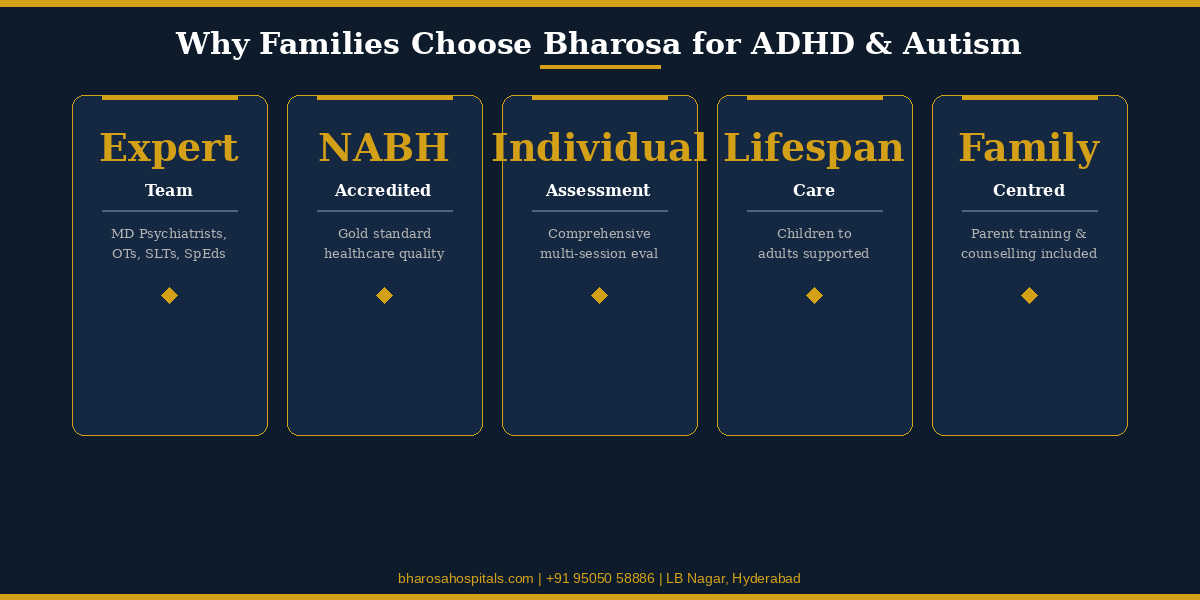
Multidisciplinary Expert Team
ADHD and autism assessment and treatment require expertise that extends beyond psychiatry alone. Our team of MD psychiatrists works in close collaboration with clinical psychologists specialising in neuropsychological assessment, occupational therapists trained in sensory integration, speech and language therapists, special educators, and behavioural therapists. This multidisciplinary approach ensures that every dimension of a patient’s functioning is evaluated and addressed.
NABH-Accredited Standards
Our NABH accreditation guarantees that every assessment, intervention, and care pathway meets rigorous national quality standards. From standardised diagnostic protocols to evidence-based treatment plans, every aspect of your experience at Bharosa reflects our commitment to clinical excellence.
Individualised Assessment and Diagnosis
We do not rely on brief screening tools or hasty clinical impressions. Our diagnostic evaluations for ADHD and autism are comprehensive, typically spanning multiple sessions and incorporating structured clinical interviews, standardised rating scales (such as the Conners Rating Scales for ADHD or the ADOS-2 for autism), cognitive and neuropsychological testing, behavioural observation, and detailed developmental history gathered from parents, teachers, and other informants.
Treatment Across the Lifespan
Whether your child has just received a diagnosis at age four or you are an adult seeking assessment at age forty, Bharosa provides age-appropriate, evidence-based care. Our programmes are designed to evolve with the patient, adapting to changing developmental needs, academic demands, and life transitions.
Family-Centred Approach
We recognise that neurodevelopmental conditions affect the entire family. Our family counselling and support services equip parents, siblings, and caregivers with the knowledge, strategies, and emotional support they need to create a home environment that fosters growth, reduces stress, and strengthens family relationships.
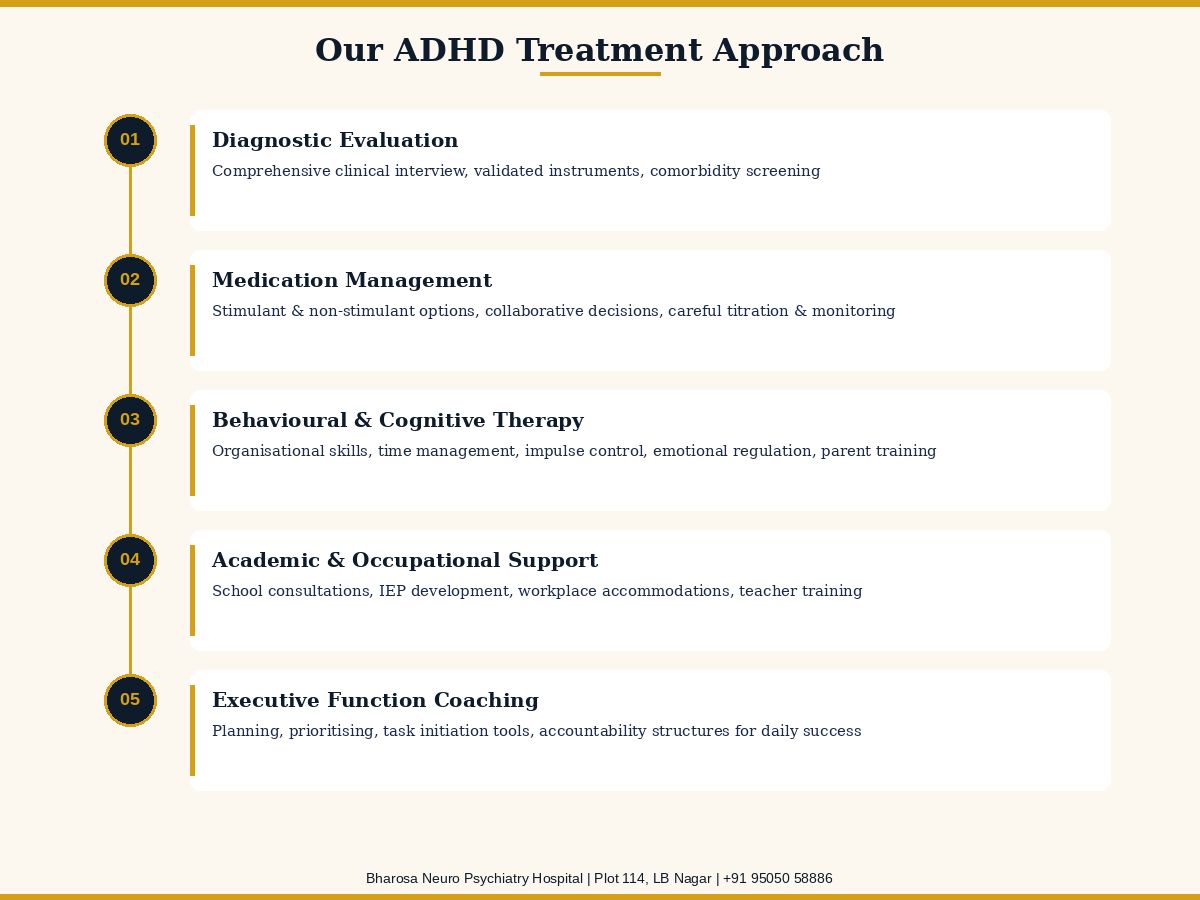
Our Treatment Approach: ADHD
Treatment for ADHD at Bharosa follows an integrated model that addresses neurological, behavioural, and environmental factors simultaneously.
Comprehensive Diagnostic Evaluation
Every ADHD assessment begins with a thorough clinical interview and the administration of validated diagnostic instruments. We assess for common comorbidities — anxiety, depression, learning disabilities, oppositional behaviour — that frequently co-occur with ADHD and significantly impact treatment planning.
Medication Management
When clinically indicated, our psychiatrists prescribe evidence-based ADHD medications including stimulant (methylphenidate, amphetamine-based) and non-stimulant (atomoxetine, guanfacine) options. Medication decisions are made collaboratively with patients and families, with careful titration, regular monitoring for efficacy and side effects, and ongoing adjustment as needed. Medication is never the sole intervention — it is one component of a comprehensive treatment plan.
Behavioural and Cognitive Interventions
Our clinical psychologists deliver structured behavioural therapy and cognitive-behavioural interventions that help patients develop organisational skills, time management strategies, impulse control techniques, and emotional regulation capacities. For children, parent training programmes teach caregivers evidence-based behaviour management strategies that create structure and consistency at home.
Academic and Occupational Support
We collaborate with schools and employers to develop reasonable accommodations and support strategies. For children, this may include individualised education plans, classroom modifications, and teacher consultations. For adults, we address workplace challenges through coaching, strategy development, and advocacy.
Executive Function Coaching
ADHD fundamentally affects executive functions — the brain’s management system for planning, prioritising, initiating, and completing tasks. Our executive function coaching programmes provide practical tools and accountability structures that help patients build the scaffolding they need to succeed in daily life.
Our Treatment Approach: Autism Spectrum Disorder
Our autism services are built on the principle that every individual on the spectrum has a unique combination of strengths, challenges, and goals. There is no single treatment for autism — there are treatment plans, carefully designed for each patient.
Detailed Diagnostic Assessment
Autism diagnosis at Bharosa involves a comprehensive evaluation that may include the Autism Diagnostic Observation Schedule (ADOS-2), the Autism Diagnostic Interview-Revised (ADI-R), cognitive assessment, adaptive behaviour evaluation, language assessment, and sensory processing profiling. We take the time necessary to build a complete picture of each individual.
Applied Behaviour Analysis (ABA) and Behavioural Support
For patients who benefit from structured behavioural intervention, our trained therapists deliver evidence-based ABA therapy focused on developing communication skills, social competencies, daily living skills, and reducing behaviours that interfere with learning and participation. Our approach is contemporary, emphasising naturalistic teaching strategies and the development of functional skills in real-world contexts.
Speech and Language Therapy
Communication is often a primary area of challenge for individuals with autism. Our speech and language therapists work on developing verbal and non-verbal communication skills, pragmatic language abilities, social communication competencies, and alternative and augmentative communication (AAC) systems where needed.
Occupational Therapy and Sensory Integration
Many individuals with autism experience significant sensory processing differences that affect their ability to participate in daily activities, tolerate environments, and regulate their emotional states. Our occupational therapists provide sensory integration therapy, fine motor skill development, daily living skill training, and environmental modification strategies.
Social Skills Development
Developing and maintaining social relationships is a core challenge for many individuals with autism. We offer structured social skills groups, peer interaction programmes, and individualised social coaching that teach practical strategies for navigating social situations, understanding perspectives, and building friendships.
Family Training and Support
Parents and caregivers are the most important intervention agents in a child’s life. Our parent training programmes provide evidence-based strategies for supporting communication development, managing challenging behaviours, creating structured home environments, and advocating for your child’s needs in educational and community settings.
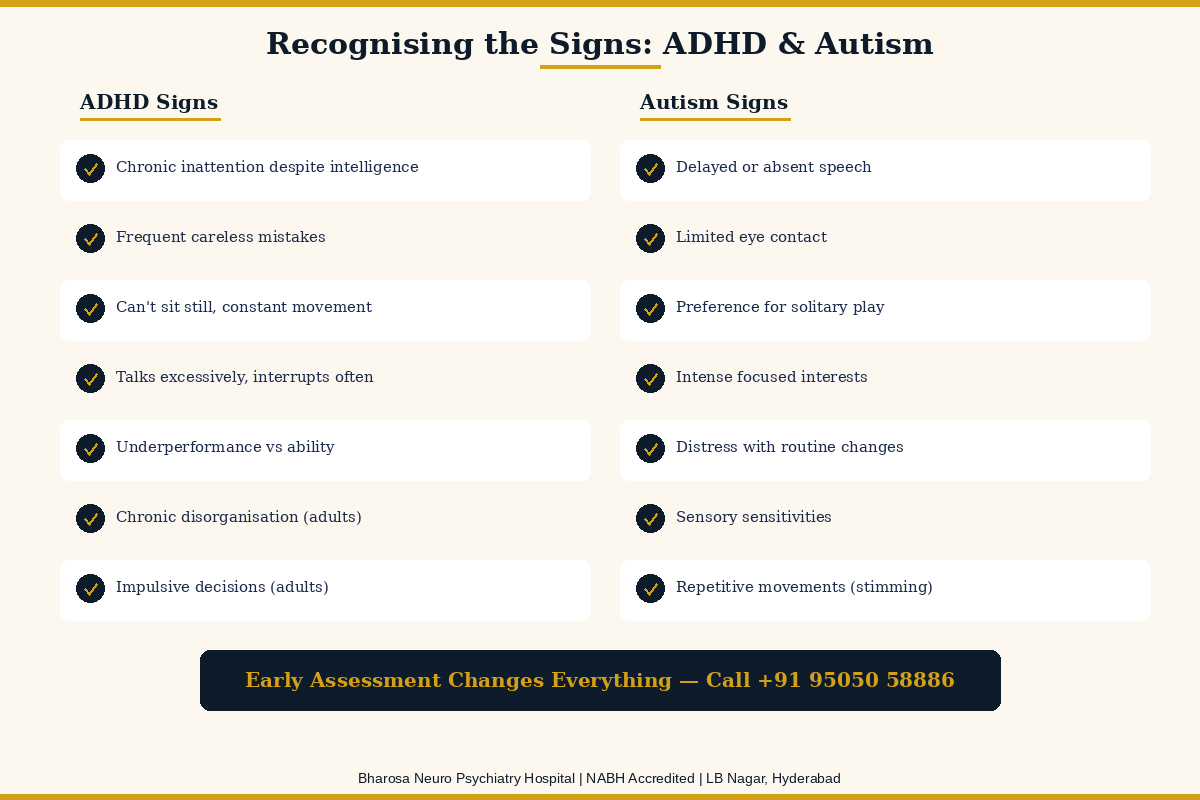
Recognising the Signs: When to Seek Assessment
Early identification and intervention significantly improve outcomes for both ADHD and autism. We encourage families to seek professional assessment at Bharosa if they observe any of the following:
Signs of ADHD in Children
- Chronic difficulty paying attention in class despite adequate intelligence
- Frequent careless mistakes in schoolwork or daily tasks
- Seeming not to listen when spoken to directly
- Difficulty organising tasks, losing belongings regularly
- Excessive fidgeting, inability to sit still, constant movement
- Talking excessively, interrupting others, difficulty waiting turns
- Academic underperformance that does not match cognitive ability
Signs of ADHD in Adults
- Chronic disorganisation, missed deadlines, financial difficulties
- Difficulty sustaining attention in meetings, conversations, or while reading
- Restlessness, difficulty relaxing, always needing to be “on the go”
- Impulsive decisions in relationships, spending, or career changes
- Emotional volatility, low frustration tolerance, frequent mood shifts
Signs of Autism in Children
- Delayed or absent speech development
- Limited eye contact and difficulty reading facial expressions
- Preference for solitary play and difficulty with peer interactions
- Intense, focused interests in specific topics or objects
- Distress with changes in routine or unexpected transitions
- Sensory sensitivities: covering ears, refusing certain textures, avoiding lights
- Repetitive movements such as hand-flapping, rocking, or spinning
Signs of Autism in Adults
- Difficulty understanding social norms, sarcasm, or unwritten rules
- Challenges maintaining friendships or romantic relationships
- Preference for routine and significant distress when plans change
- Sensory overwhelm in busy environments such as shopping centres or offices
- Intense expertise in specific interest areas
If any of these patterns resonate, professional assessment can provide clarity, validation, and a clear pathway to support.
Frequently Asked Questions
At what age can ADHD be diagnosed?
ADHD can be reliably diagnosed from age four onwards, though symptoms are often identified earlier. Many adults receive their first ADHD diagnosis later in life, sometimes in their thirties, forties, or beyond. It is never too late to seek assessment.
At what age can autism be diagnosed?
Autism can sometimes be identified as early as 18 months, with reliable diagnosis typically possible by age two to three. However, individuals with subtler presentations — particularly girls and women — may not receive a diagnosis until adolescence or adulthood.
Does my child need medication for ADHD?
Not necessarily. Medication is one component of a comprehensive treatment plan and is recommended based on symptom severity, functional impairment, and individual clinical factors. Many children benefit significantly from medication, while others respond well to behavioural interventions alone. Our psychiatrists discuss all options thoroughly with families before making any recommendations.
Can adults be diagnosed with autism for the first time?
Absolutely. Many adults, particularly women and those with strong compensatory strategies, go undiagnosed throughout childhood. An adult autism diagnosis can provide profound relief and understanding, explaining lifelong patterns of social difficulty, sensory sensitivity, and the need for routine.
Is autism curable?
Autism is a neurological difference, not a disease. While there is no “cure,” appropriate interventions can dramatically improve communication, social functioning, daily living skills, and overall quality of life. Our goal is not to change who your child is, but to equip them with the skills and support they need to thrive.
Do you provide school consultations?
Yes. We work closely with schools to develop individualised support plans, provide teacher training, and ensure that accommodations are in place to support your child’s academic success. We also provide detailed assessment reports that schools can use for formal support planning.
CALL NOW: +91 95050 58886 | Walk-ins Welcome at LB Nagar, Hyderabad
Location & Contact: Bharosa Neuro Psychiatry Hospital
Plot No. 114, Mythripuram, Karmanghat, LB Nagar, Hyderabad, Telangana 500079
Phone: +91 95050 58886
Website: www.bharosahospitals.com
Hours: 24/7 Emergency & Admission Services | OPD: 9:00 AM – 8:00 PM
Conveniently located in LB Nagar with easy access from Dilsukhnagar, Kothapet, Nagole, Hayathnagar, Vanasthalipuram, Saroornagar, and the broader Hyderabad metropolitan area. Free parking available.