
When Should You Seek Stress Treatment in Hyderabad? | Bharosa Hospitals
Stress is a normal part of life — a looming deadline, a difficult conversation, or a busy week can all trigger short-term stress that resolves once the situation passes. But when stress becomes constant, overwhelming, or starts affecting your physical and emotional health, it may be time to consider professional Stress Treatment in Hyderabad. This blog explains the difference between everyday stress and chronic stress, and how to recognize when it's time to seek help.
Understanding Stress: Normal vs. Chronic
Occasional stress is the body's natural response to challenges, and it typically resolves once the stressor is removed. Chronic stress, on the other hand, persists over weeks or months, keeping the body's stress response activated long after it's needed. This prolonged activation can have serious effects on both mental and physical health, including weakened immunity, disrupted sleep, and increased risk of anxiety or depression.
Common Signs of Chronic Stress
Physical Symptoms
- Persistent headaches or muscle tension
- Fatigue, even after adequate rest
- Digestive issues or changes in appetite
- Frequent illness due to weakened immunity
- Sleep disturbances, including insomnia or oversleeping
Emotional Symptoms
- Persistent irritability or feeling constantly "on edge"
- Difficulty relaxing, even during downtime
- Feeling overwhelmed by everyday tasks
- Increased anxiety or a sense of dread
- Emotional numbness or detachment
Behavioral Symptoms
- Withdrawing from friends, family, or social activities
- Increased reliance on alcohol, caffeine, or other substances to cope
- Procrastination or difficulty completing tasks
- Changes in eating habits — eating too much or too little
- Reduced productivity at work or school despite increased effort
Cognitive Symptoms
- Difficulty concentrating or making decisions
- Racing thoughts or constant worry
- Memory problems
- Negative or catastrophic thinking patterns
When Stress Becomes a Concern
Not every stressful period requires professional intervention — but certain signs indicate it's time to seek help:
- Stress has lasted more than a few weeks without improvement, even after the triggering situation has passed
- Physical symptoms are worsening — frequent headaches, chest tightness, or digestive issues that don't resolve
- Sleep is significantly disrupted, either through insomnia or excessive fatigue
- Relationships are being affected due to irritability, withdrawal, or emotional unavailability
- Work or academic performance is declining despite increased effort
- You're relying on unhealthy coping mechanisms like alcohol, overeating, or avoidance
- You feel unable to relax, even during vacations or time off
- Stress is accompanied by symptoms of anxiety or depression, such as persistent sadness or excessive worry
Why Chronic Stress Shouldn't Be Ignored
Left unaddressed, chronic stress can contribute to serious health issues, including high blood pressure, weakened immune function, anxiety disorders, and depression. It can also erode relationships and career performance over time. Seeking help early — before stress escalates into a diagnosable condition — leads to faster, more effective treatment outcomes.
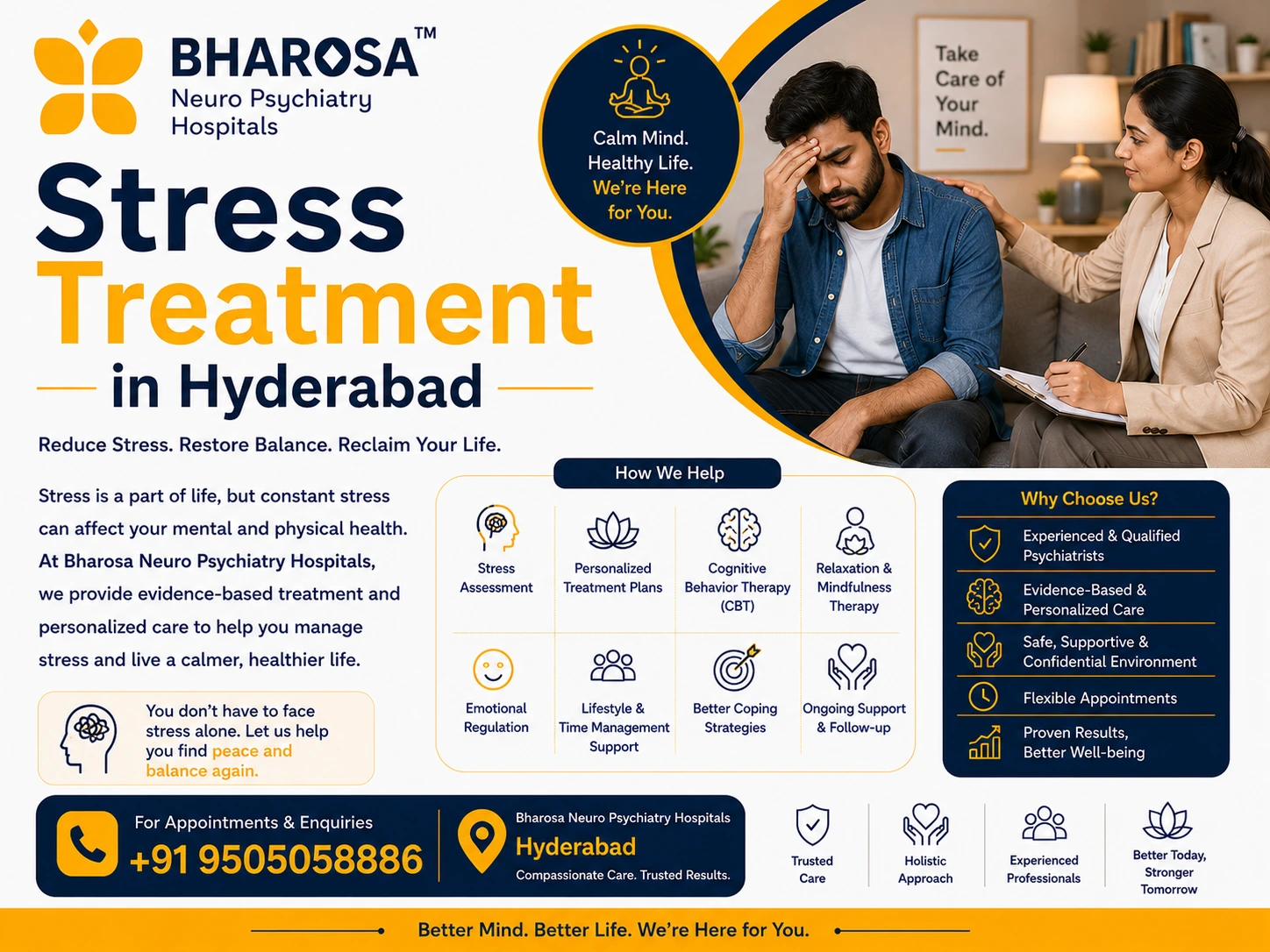
Treatment Approach at Bharosa Hospitals
Our approach to Stress Treatment in Hyderabad is designed to address both immediate relief and long-term resilience:
- Comprehensive Assessment – Identifying the underlying sources of stress and any co-occurring conditions like anxiety or depression
- Cognitive Behavioral Therapy (CBT) – Helping patients reframe stress-inducing thought patterns and develop healthier coping strategies
- Relaxation and Mindfulness Techniques – Practical tools to calm the body's stress response in the moment
- Lifestyle Counseling – Guidance on sleep, routine, and healthy boundaries to reduce ongoing stress load
- Medication Support – When stress is accompanied by significant anxiety or depression, psychiatric evaluation ensures appropriate medical support
- Family and Workplace Guidance – Helping patients communicate their needs effectively in personal and professional relationships
Why Choose Bharosa Hospitals
With experienced psychologists and psychiatrists working together, Bharosa Hospitals offers comprehensive Stress Treatment in Hyderabad that goes beyond temporary relief. Our goal is to help patients understand their stress triggers, build sustainable coping strategies, and prevent stress from escalating into more serious mental health conditions.
If stress has become a constant companion rather than an occasional visitor, it's worth reaching out for professional support. Contact our team at Bharosa Hospitals for a confidential consultation.
FAQs
Q1. How do I know if my stress is 'normal' or something that needs treatment?
If stress persists for several weeks, worsens over time, or begins affecting your sleep, relationships, or daily functioning, it's a sign professional support may be needed.
Q2. Can chronic stress lead to depression or anxiety?
Yes, prolonged, unmanaged stress significantly increases the risk of developing anxiety disorders or depression over time.
Q3. What therapy techniques are most effective for stress management?
Cognitive Behavioral Therapy (CBT) and mindfulness-based relaxation techniques are among the most effective, evidence-based approaches for managing chronic stress.
Q4. Is medication ever needed for stress treatment?
Medication isn't always necessary, but when stress is accompanied by significant anxiety or depression, psychiatric evaluation can determine if medication support would help.
Q5. How long does stress treatment usually take?
This varies by individual, but many people notice meaningful improvement within 6–10 sessions of consistent therapy, combined with lifestyle adjustments.
Hospital Address
Bharosa Neuro Psychiatry Hospital
Plot No. 114, Mythripuram, Karmanghat, Opposite TKR College Comman (TKR Kamaan), Main Road, LB Nagar / Karmanghat, Hyderabad – 500079, Telangana
Call/WhatsApp: 9505058886