
How to Recognize a Panic Attack | Bharosa Hospitals
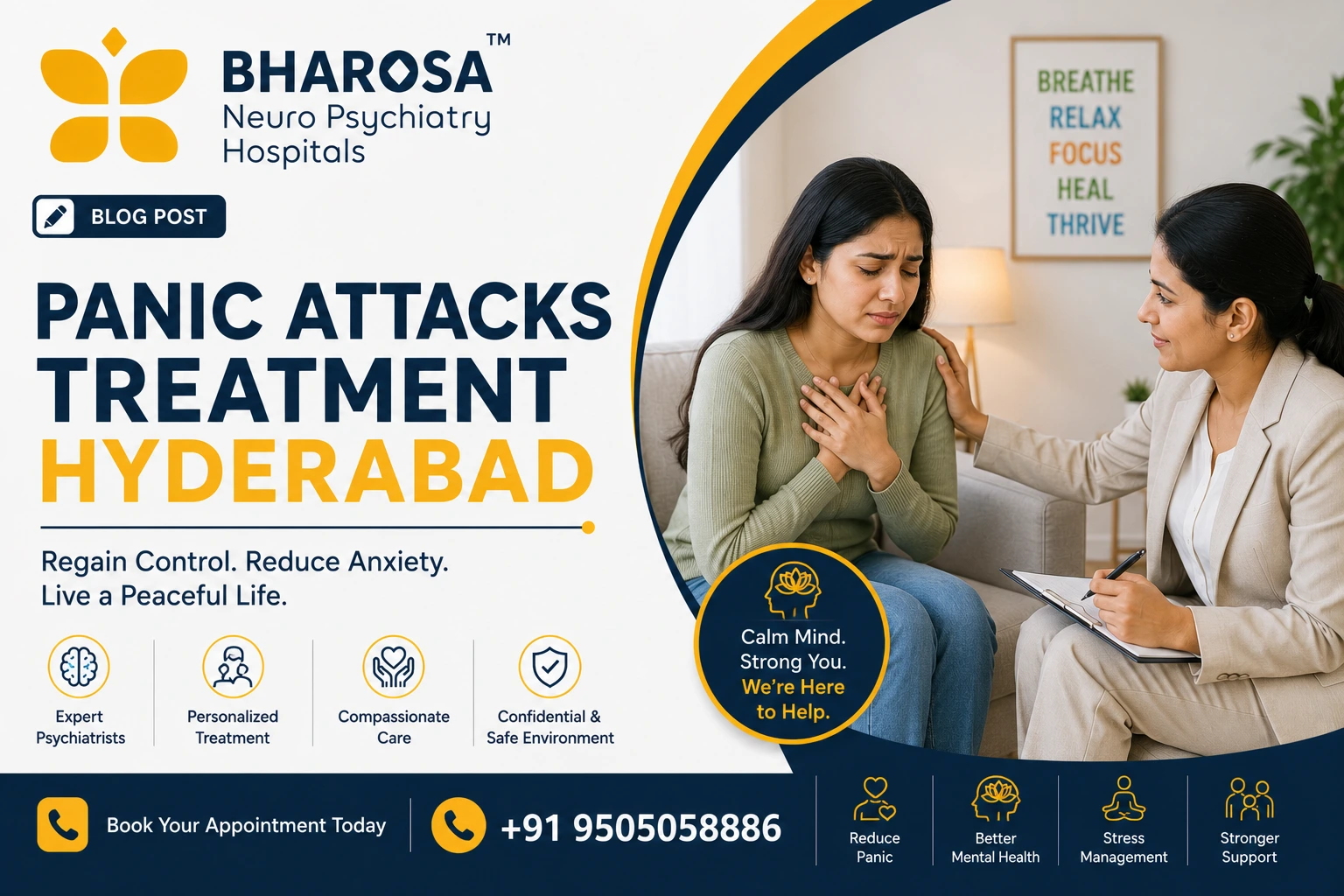
A panic attack can feel terrifying — many people who experience one for the first time believe they are having a heart attack or are about to die. Understanding what a panic attack actually is, and how to recognize it, is the first step toward managing it effectively. This blog explains the signs of a panic attack and why timely Panic Attacks Treatment Hyderabad can help you regain control and confidence in daily life.
What Is a Panic Attack?
A panic attack is a sudden episode of intense fear or discomfort that triggers severe physical symptoms, even when there is no real danger present. It typically peaks within 10 minutes and can occur unexpectedly or be triggered by a specific stressor. While a single panic attack doesn't necessarily indicate a disorder, recurring attacks may point to panic disorder, which benefits significantly from professional treatment.
Common Physical Symptoms
- Rapid heartbeat or palpitations
- Shortness of breath or a feeling of choking
- Chest pain or tightness
- Sweating and trembling
- Dizziness or lightheadedness
- Nausea or stomach discomfort
- Numbness or tingling sensations, often in the hands or face
- Chills or sudden hot flashes
Common Emotional and Cognitive Symptoms
- An overwhelming sense of impending doom
- Fear of losing control or "going crazy"
- Fear of dying, especially during the episode
- A feeling of detachment from reality or oneself (derealization/depersonalization)
- Intense urge to escape the situation immediately
How to Tell It's a Panic Attack and Not a Medical Emergency
Because panic attacks mimic symptoms of serious medical conditions like heart attacks, it's important to rule out physical causes first, especially if it's your first episode. However, some distinguishing features of panic attacks include:
- Symptoms typically peak within 10 minutes and then gradually subside
- Episodes are often (though not always) linked to specific stressors or triggers
- There's frequently a history of anxiety or previous panic episodes
- Physical tests (like ECGs) usually show no cardiac abnormalities during an attack
If you're ever unsure, especially during a first episode, seeking immediate medical evaluation is always the safest choice.
What Triggers Panic Attacks?
Panic attacks can be triggered by identifiable stressors — such as public speaking, crowded spaces, or conflict — or can occur seemingly out of nowhere. Common contributing factors include chronic stress, underlying anxiety disorders, major life changes, trauma history, and even excessive caffeine intake in some individuals.
The Difference Between Panic Attacks and Panic Disorder
Experiencing an isolated panic attack during a highly stressful period doesn't necessarily mean you have panic disorder. However, if you experience recurrent, unexpected panic attacks accompanied by persistent worry about future attacks or significant behavioral changes (like avoiding certain places or situations), it may indicate panic disorder, which requires structured treatment.
Treatment Approach at Bharosa Hospitals
Our Panic Attacks Treatment Hyderabad program focuses on both immediate symptom relief and long-term prevention:
- Cognitive Behavioral Therapy (CBT) – Helps identify and reframe thought patterns that trigger or worsen panic symptoms
- Breathing and Relaxation Techniques – Practical tools to manage physical symptoms during an attack
- Exposure Therapy – Gradual, guided exposure to feared situations to reduce avoidance behavior over time
- Medication Management – When appropriate, anti-anxiety or antidepressant medication to reduce frequency and intensity of attacks
- Lifestyle Counseling – Guidance on sleep, caffeine intake, and stress management to reduce overall vulnerability to panic episodes
What to Do During a Panic Attack
- Focus on slow, deep breathing to counteract hyperventilation
- Remind yourself that the symptoms, while frightening, are not dangerous and will pass
- Ground yourself by focusing on physical sensations around you (what you can see, hear, or touch)
- Avoid fighting the panic — allow it to peak and subside naturally while using coping techniques
Why Choose Bharosa Hospitals
Bharosa Hospitals offers experienced, compassionate Panic Attacks Treatment Hyderabad that goes beyond just managing symptoms in the moment. Our psychiatrists and psychologists work together to identify underlying triggers and build long-term coping strategies, helping patients regain confidence in their daily lives.
If panic attacks are affecting your ability to work, socialize, or feel safe in everyday situations, professional support can help. Reach out to our team for a confidential consultation.
Frequently Asked Questions
Q1. How long does a typical panic attack last?
Most panic attacks peak within 10 minutes and gradually subside within 20–30 minutes, though residual anxiety may linger longer.
Q2. Can panic attacks happen without any warning or trigger?
Yes, panic attacks can occur unexpectedly, without an obvious trigger, especially in individuals with panic disorder.
Q3. Is it normal to feel exhausted after a panic attack?
Yes, the intense physical and emotional response during a panic attack often leaves people feeling drained or fatigued afterward.
Q4. Do I need medication to treat panic attacks?
Not always. Many people manage panic attacks effectively through therapy alone, though medication may be recommended for more frequent or severe cases.
Q5. When should I see a doctor about panic attacks?
If you experience recurrent panic attacks, persistent worry about future episodes, or find yourself avoiding situations due to fear of an attack, it's time to seek professional evaluation.
Hospital Address
Bharosa Neuro Psychiatry Hospital
Plot No. 114, Mythripuram, Karmanghat, Opposite TKR College Comman (TKR Kamaan), Main Road, LB Nagar / Karmanghat, Hyderabad – 500079, Telangana
Call: 9505058886