
Stress Treatment in Hyderabad: Causes, Symptoms & Solutions | Bharosa Hospitals
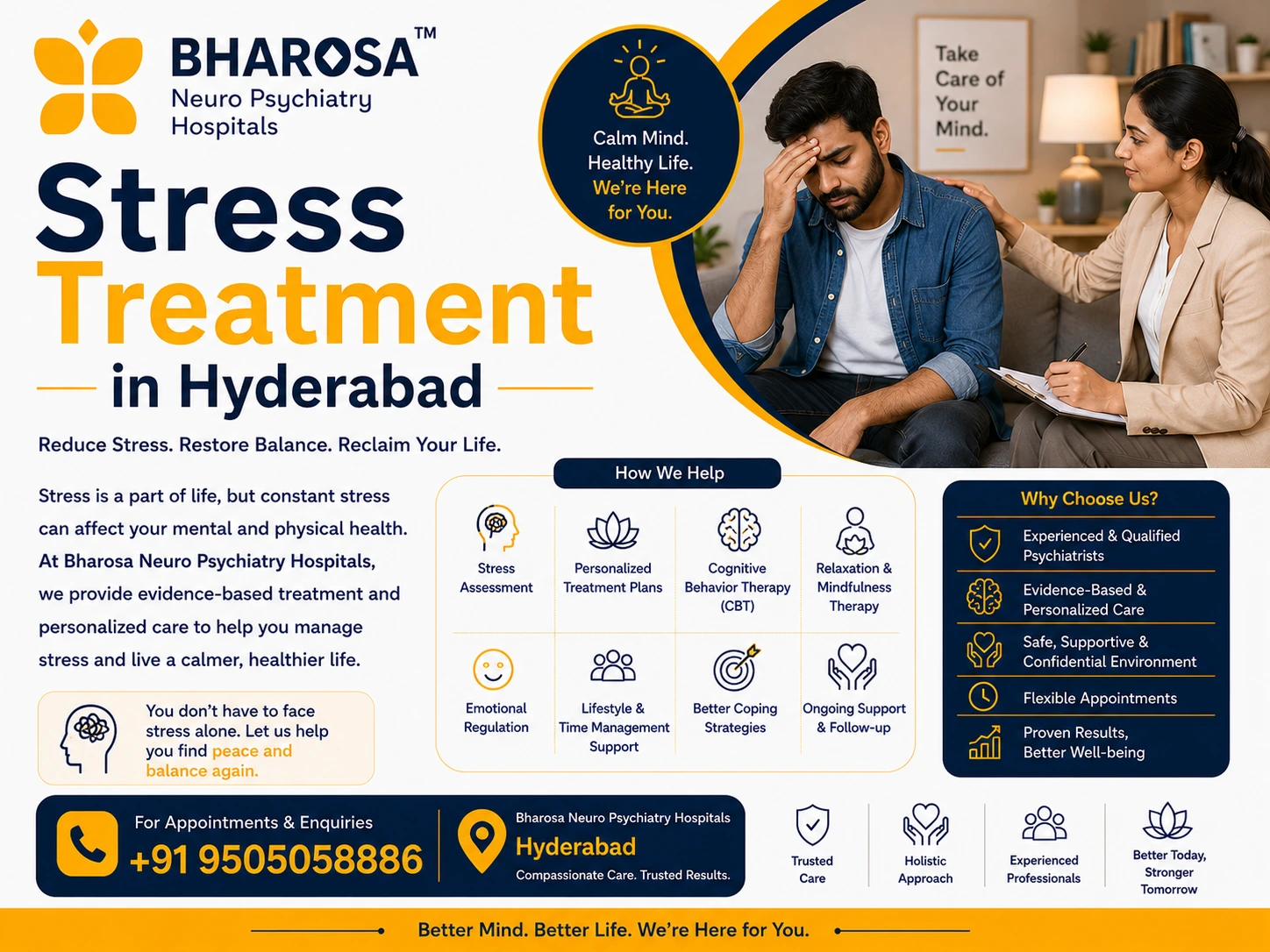
Stress has become the defining health crisis of modern urban life. In a city like Hyderabad — with its high-pressure IT industry, demanding corporate culture, academic competition, long commutes, rapidly changing social norms, and the relentless pace of contemporary life — chronic stress has moved from occasional inconvenience to persistent, health-damaging condition for millions of people. Yet many individuals dismiss their stress as 'normal' or 'something everyone deals with' — unaware that untreated chronic stress is causing measurable, progressive damage to their brain, body, and relationships. Expert Stress Treatment in Hyderabad at Bharosa Neuro Psychiatry Hospital provides the comprehensive professional support that transforms chronic stress from a constant burden into a manageable dimension of life.
Bharosa Hospitals, located in LB Nagar, Hyderabad, offers a dedicated stress assessment and management program combining psychiatric evaluation, evidence-based psychological therapy, mindfulness and relaxation training, lifestyle interventions, and where indicated, medical treatment for the physical consequences of chronic stress.
WHO Data: Stress-related disorders are among the leading causes of disease burden globally. Chronic stress doubles the risk of depression, triples cardiovascular risk, significantly impairs immune function, and is a major driver of workplace absenteeism and reduced life expectancy.
Understanding Stress: Normal Response vs Harmful Chronic Condition
Not all stress is harmful. Acute stress — the short-term activation of the body's fight-or-flight response in response to a genuine challenge or deadline — is a normal, adaptive biological response that sharpens focus, boosts energy, and enhances performance. This acute stress response is designed to resolve within hours to days once the stressor passes.
Chronic stress — the sustained activation of the stress response when stressors are persistent, multiple, or perceived as uncontrollable — is an entirely different phenomenon. When the stress response does not resolve and the body remains in a state of prolonged physiological activation, the cumulative effects are profoundly damaging to virtually every system of the body and mind.
The fundamental difference is resolution. Acute stress resolves when the stressor resolves. Chronic stress persists because the stressors are ongoing (work demands, financial pressure, relationship conflict), overwhelming (feeling unable to cope), or internalised (driven by internal psychological patterns such as perfectionism, excessive responsibility, or inability to set boundaries).
Common Causes of Chronic Stress in Hyderabad
Understanding the specific sources of your stress is the first step in effective Stress Treatment in Hyderabad. The most common causes seen at Bharosa Hospitals include:
Workplace and Professional Stress
- Excessive workload, unrealistic deadlines, and chronic overwork — particularly prevalent in Hyderabad's IT, pharmaceutical, and corporate sectors
- Job insecurity, performance pressure, and fear of professional failure
- Workplace conflict, difficult colleagues or managers, and toxic work environments
- Lack of work-life balance — working evenings, weekends, and unable to psychologically 'switch off'
- Burnout — the state of complete physical, emotional, and cognitive exhaustion resulting from prolonged workplace stress
Academic and Examination Stress
- Intense competitive pressure in board examinations, entrance tests (JEE, NEET, EAMCET), and professional degrees
- Parental expectations, peer comparison, and performance anxiety
- Social media comparison and the pressure to meet curated standards of success
Relationship and Family Stress
- Marital conflict, divorce, and relationship breakdown
- Parenting challenges — particularly balancing career with raising children in a competitive environment
- Caring for elderly parents or a family member with serious illness
- Intergenerational conflict, joint family tensions, and social pressure around marriage and life choices
Financial Stress
- Debt, loan repayment pressure, and financial insecurity
- Business stress, entrepreneurial risk, and economic uncertainty
- Housing costs, escalating cost of living, and inadequate savings
Health-Related Stress
- Chronic illness — either personal or a family member's — and the physical and emotional demands it creates
- Health anxiety — persistent worry about health and potential illness
- Recovery from major illness, surgery, or medical trauma
Symptoms of Chronic Stress: Physical, Emotional, Cognitive, and Behavioural
Recognising the full spectrum of chronic stress symptoms is essential for early intervention. If you experience multiple symptoms across these dimensions, Stress Treatment in Hyderabad at Bharosa should be your next step:
Physical Symptoms
- Persistent headaches, migraines, and jaw tension (bruxism — teeth grinding)
- Muscle tension and pain — particularly in the neck, shoulders, and back
- Chronic fatigue and exhaustion that sleep does not resolve
- Gastrointestinal disturbances — irritable bowel, nausea, stomach pain, and appetite changes
- Cardiovascular effects — palpitations, elevated blood pressure, and chest tightness
- Skin problems — eczema flare-ups, psoriasis exacerbation, acne
- Frequent illness — impaired immune function leading to repeated infections
- Menstrual irregularities and sexual dysfunction
Emotional Symptoms
- Persistent irritability, short temper, and disproportionate emotional reactions
- Feeling overwhelmed, helpless, or out of control
- Anxiety, worry, and inability to relax even in downtime
- Low mood, emotional flatness, or tearfulness
- Cynicism, negativity, and loss of enthusiasm for previously enjoyed activities
Cognitive Symptoms
- Difficulty concentrating, racing thoughts, and impaired decision-making
- Memory difficulties — forgetting appointments, losing track of tasks
- Reduced creativity and problem-solving ability
- Catastrophising — expecting worst-case outcomes across multiple life domains
Behavioural Symptoms
- Social withdrawal — reducing contact with friends, family, and colleagues
- Changes in eating patterns — stress eating or loss of appetite
- Increased alcohol or caffeine consumption as coping mechanisms
- Procrastination and reduced productivity despite increased working hours
- Neglecting exercise, relaxation, and self-care activities
When Does Stress Become a Psychiatric Condition?
Chronic stress, if unaddressed, can progress into clinical psychiatric conditions requiring formal treatment. The most common stress-related psychiatric conditions treated at Bharosa include:
- Major Depressive Disorder: Prolonged chronic stress depletes serotonin, norepinephrine, and other neurotransmitters, and causes structural brain changes that produce clinical depression
- Generalised Anxiety Disorder (GAD): Chronic stress activates anxiety circuits that, over time, become dysregulated — producing persistent, uncontrollable worry across multiple life domains
- Adjustment Disorder: A clinical stress response to a specific identifiable stressor that produces emotional or behavioural symptoms disproportionate to the stressor's severity
- Burnout: Recognised by the WHO as an occupational phenomenon characterised by exhaustion, cynicism, and reduced professional efficacy — a severe consequence of chronic workplace stress
- PTSD: When stress is caused by traumatic events — accidents, violence, medical emergencies — it can develop into Post-Traumatic Stress Disorder requiring specialist trauma treatment
Comprehensive Solutions: Stress Treatment in Hyderabad at Bharosa
Bharosa's Stress Treatment in Hyderabad program provides a comprehensive, multi-layered approach to stress assessment and management:
1. Comprehensive Stress Assessment
Every patient begins with a thorough clinical assessment — identifying specific stressors, evaluating stress severity, assessing for co-existing depression, anxiety, or burnout, examining the cognitive and behavioural patterns that amplify stress responses, and understanding the individual's existing coping resources and support systems. This assessment guides a personalised, targeted intervention plan.
2. Cognitive Behavioural Therapy (CBT) for Stress
CBT for stress addresses the cognitive patterns — perfectionism, catastrophising, excessive responsibility-taking, all-or-nothing thinking — that significantly amplify normal stressors into overwhelming experiences. By identifying and restructuring these thinking patterns, CBT reduces the psychological load of stress without needing to eliminate the stressors themselves (which is often impossible). Behavioural strategies including time management, assertiveness training, and problem-solving skills are also developed.
3. Mindfulness-Based Stress Reduction (MBSR)
MBSR is an 8-week, structured mindfulness program with the strongest evidence base of any stress management intervention — demonstrating significant reductions in stress, anxiety, burnout, and physical health consequences of chronic stress. MBSR teaches patients to develop a mindful, present-focused awareness that breaks the autopilot ruminative thinking that amplifies stress, building a fundamental shift in how one relates to difficult experience.
4. Relaxation Therapy and Biofeedback
Progressive muscle relaxation (PMR), deep diaphragmatic breathing, autogenic training, and guided imagery are structured relaxation techniques that directly counteract the physiological stress response — reducing cortisol levels, lowering blood pressure, decreasing muscle tension, and restoring the parasympathetic ('rest and digest') state. At Bharosa, these techniques are taught systematically with structured home practice.
5. Burnout Recovery Program
For professionals experiencing clinical burnout — particularly IT employees, healthcare workers, educators, and business owners — Bharosa offers a specialised burnout recovery program addressing the trilogy of exhaustion, cynicism, and reduced efficacy through combined psychological therapy, energy restoration strategies, values clarification, and career counselling support.
6. Lifestyle Medicine Integration
Chronic stress management is inseparable from lifestyle — sleep quality, physical activity, nutrition, digital hygiene, and social connection all profoundly influence stress vulnerability and resilience. Bharosa's holistic stress program includes structured lifestyle guidance across all these domains, recognising that sustainable stress management requires whole-life change rather than isolated psychological techniques.
7. Medical Treatment for Stress-Related Physical Conditions
When chronic stress has produced measurable physical health consequences — hypertension, chronic pain, gastrointestinal disorders, or immune dysfunction — Bharosa coordinates with appropriate medical specialists to address these physical dimensions while simultaneously treating the underlying stress through psychological and psychiatric interventions.
Building Long-Term Stress Resilience: Prevention and Maintenance
The ultimate goal of stress treatment is not simply symptom relief, but building the psychological, relational, and lifestyle foundations for long-term resilience — the capacity to experience life's inevitable stressors without being overwhelmed by them. At Bharosa, every stress treatment plan includes a resilience-building component — developing the mindfulness skills, cognitive tools, boundary-setting capacity, social support, and self-care practices that make sustained wellbeing possible.
Chronic stress is not a personality weakness, not a natural consequence of ambition, and not something to simply endure. It is a treatable health condition with serious long-term consequences that deserves professional attention — just as much as any physical illness. Expert Stress Treatment in Hyderabad at Bharosa Neuro Psychiatry Hospital provides the comprehensive assessment, evidence-based therapy, and holistic lifestyle support that transforms your relationship with stress — from overwhelming burden to managed, navigable challenge. Your wellbeing matters. Reach out today.
Frequently Asked Questions (FAQs)
Q: How do I know if my stress requires professional Stress Treatment in Hyderabad?
A: If stress has persisted for more than a few weeks, is significantly affecting your sleep, health, work performance, or relationships, is leading to increased alcohol or substance use, or you feel persistently overwhelmed and unable to cope despite your best efforts, professional assessment is warranted. Chronic stress that is not addressed professionally tends to worsen over time and can progress into depression, anxiety disorders, or burnout — making early professional support a wise investment.
Q: Is workplace burnout different from ordinary stress?
A: Yes. Burnout is a specific, clinically recognised consequence of chronic workplace stress characterised by three dimensions: emotional exhaustion (feeling completely drained, unable to give more), depersonalisation/cynicism (emotional detachment from work, colleagues, and clients; feeling indifferent or negative about the work), and reduced professional efficacy (feeling incompetent, unaccomplished, and unable to perform effectively). Burnout typically requires a more structured, longer-term recovery program than ordinary stress management.
Q: Can stress cause physical illness, or is it all in the mind?
A: Stress causes very real, measurable physical health consequences — it is not 'all in the mind.' Chronic stress elevates cortisol and adrenaline levels, which over time damage cardiovascular function, suppress immune activity, impair gastrointestinal health, disrupt hormonal balance, accelerate cellular ageing, and increase inflammation throughout the body. The mind-body connection is scientifically well-established — chronic psychological stress produces genuine physical pathology.
Q: What is Mindfulness-Based Stress Reduction (MBSR) and is it available at Bharosa?
A: MBSR is an 8-week, structured program combining mindfulness meditation, body awareness exercises, and yoga-based movement, with the most robust evidence base of any stress management intervention. Research demonstrates significant reductions in perceived stress, anxiety, burnout, and physical stress consequences after MBSR completion. Yes, mindfulness-based approaches including MBSR techniques are an integral component of Bharosa's stress treatment program.
Q: Can children and teenagers receive stress treatment at Bharosa?
A: Yes. Academic stress, examination anxiety, parental pressure, bullying, and social media-related stress are significant causes of psychological distress in children and adolescents in Hyderabad. Bharosa's child and adolescent psychiatric team provides age-appropriate stress assessment and management — including CBT for children, mindfulness for teens, parent guidance, and school liaison support.
Q: How do I book a Stress Treatment consultation at Bharosa Hospitals?
A: Call or WhatsApp +91 9505058886 at any time — our team is available 24 hours a day, 7 days a week. You can also visit our hospital at Plot No. 114, Mythripuram, Karmanghat, Opposite TKR College Comman, LB Nagar, Hyderabad – 500079. Same-week appointments are available for stress assessment. No referral is required.
Hospital Address & Contact
Bharosa Neuro Psychiatry Hospital & Rehabilitation Center
Plot No. 114, Mythripuram, Karmanghat, Opposite TKR College Comman (TKR Kamaan),Main Road, LB Nagar / Karmanghat, Hyderabad – 500079, Telangana, India
Phone: +91 9505058886