
Schizophrenia Hospital Hyderabad: Comprehensive Treatment and Care Guide
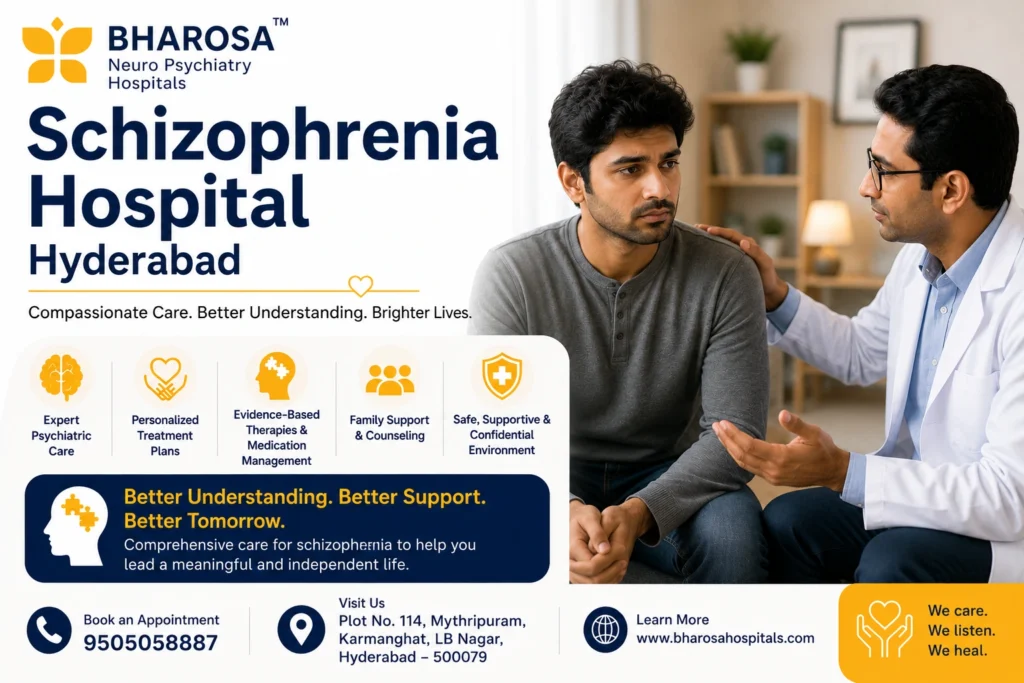
Schizophrenia is one of the most misunderstood and stigmatised psychiatric conditions in the world. Contrary to popular myths, people with schizophrenia are not violent, dangerous, or permanently incapacitated. With timely diagnosis and consistent, expert treatment at a dedicated Schizophrenia Hospital Hyderabad like Bharosa Neuro Psychiatry Hospital, the vast majority of patients can significantly reduce symptoms, regain meaningful functioning, and live fulfilling lives within their families and communities.
This comprehensive guide is designed to help patients and families understand schizophrenia — its causes, symptoms, types, and the full spectrum of treatment and care available at Bharosa Hospitals, LB Nagar, Hyderabad.
What Is Schizophrenia?
Schizophrenia is a serious, chronic psychiatric disorder that affects how a person thinks, feels, and behaves. It is characterised by distortions in thinking, perception, emotion, language, sense of self, and behaviour. People with schizophrenia may experience hallucinations (most commonly hearing voices), delusions (fixed false beliefs), disorganised thinking, and severely impaired social and occupational functioning.
Schizophrenia affects approximately 1% of the global population — around 21 million people worldwide. It typically emerges in late adolescence or early adulthood and affects men and women in roughly equal numbers, though men tend to experience an earlier onset. Without treatment, schizophrenia is severely disabling; with appropriate care, many patients achieve significant recovery.
Causes and Risk Factors of Schizophrenia
Schizophrenia is understood to be a neurodevelopmental disorder caused by a complex interaction of:
- Genetic Factors: Having a first-degree relative with schizophrenia increases risk significantly. Specific gene variants affecting dopamine and glutamate systems are implicated.
- Neurobiological Abnormalities: Dysregulation of dopamine and glutamate neurotransmitter systems, structural brain differences, and abnormal neural connectivity contribute to the development of symptoms.
- Environmental Triggers: Prenatal exposure to infections, malnutrition, or stress; complications during birth; and early childhood adversity can increase vulnerability.
- Substance Use: Cannabis use — particularly potent strains — during adolescence significantly increases schizophrenia risk in genetically predisposed individuals.
- Urban Living & Childhood Adversity: Growing up in urban environments and experiencing childhood trauma are associated with elevated risk.
Recognising the Symptoms of Schizophrenia
Early recognition is critical. At Bharosa — the leading Schizophrenia Hospital Hyderabad — we see families who have waited years before seeking help. Recognising the following symptoms early dramatically improves outcomes:
Positive Symptoms (Additions to normal experience)
- Hallucinations: Most commonly auditory — hearing voices that comment on the person's actions, give commands, or converse with each other. Visual, tactile, and olfactory hallucinations also occur.
- Delusions: Fixed, false beliefs maintained despite clear evidence to the contrary. Common types include persecutory delusions (being watched or poisoned), grandiose delusions (believing one has special powers), and referential delusions (believing media messages are directed at them personally).
- Disorganised Thinking & Speech: Incoherent or loosely connected thoughts expressed through confused, tangential, or incomprehensible speech. Thought blocking — sudden stopping mid-sentence — is characteristic.
- Disorganised or Abnormal Motor Behaviour: Unpredictable agitation, bizarre posturing, or catatonia (stupor or complete unresponsiveness).
Negative Symptoms (Reductions from normal functioning)
- Avolition: Severe lack of motivation to initiate or sustain goal-directed activities
- Alogia: Reduced speech output and poverty of thought
- Anhedonia: Inability to experience pleasure from previously enjoyed activities
- Flat or Blunted Affect: Reduced emotional expression through facial expression, voice, and body language
- Social Withdrawal: Increasingly isolated from family, friends, and community
Cognitive Symptoms
- Impaired working memory and difficulty processing information
- Poor attention and concentration
- Difficulty with planning, problem-solving, and abstract reasoning
Types of Schizophrenia Spectrum Disorders Treated at Bharosa
- Schizophrenia — the primary diagnosis characterised by the full symptom profile above
- Schizoaffective Disorder — schizophrenia combined with prominent mood disorder (depressive or bipolar)
- Schizophreniform Disorder — schizophrenia symptoms lasting 1–6 months
- Brief Psychotic Disorder — sudden, short-term psychotic episode lasting less than one month
- Delusional Disorder — persistent delusions without the full symptom profile of schizophrenia
- First Episode Psychosis (FEP) — the earliest stage, where rapid intervention yields the best outcomes
Comprehensive Treatment at Bharosa Schizophrenia Hospital Hyderabad
As the premier Schizophrenia Hospital Hyderabad, Bharosa provides a fully integrated, evidence-based treatment program encompassing:
1. Antipsychotic Medication Management
Antipsychotic medications are the primary treatment for schizophrenia, significantly reducing positive symptoms such as hallucinations and delusions. Our expert psychiatrists prescribe and carefully monitor second-generation (atypical) antipsychotics — the current gold standard — adjusting dosages to maximise efficacy while minimising side effects including metabolic effects, movement disorders, and sedation. For patients with poor medication adherence, long-acting injectable antipsychotics (LAIs) are an effective alternative to daily oral medication.
2. Psychoeducation for Patients & Families
Understanding schizophrenia is the single most powerful tool for better outcomes. At Bharosa, patients and families receive comprehensive psychoeducation about the nature of schizophrenia, the neurobiology of symptoms, the importance of medication adherence, warning signs of relapse, and the role of family support. Educated families are the most effective partners in long-term recovery.
3. Cognitive Remediation Therapy (CRT)
Schizophrenia significantly impairs cognitive functioning — affecting memory, attention, and executive function. Cognitive remediation therapy uses structured exercises and strategies to rebuild cognitive abilities, improve daily functioning, and enhance quality of life. Bharosa's therapists use evidence-based CRT protocols to help patients regain cognitive independence.
4. Social Skills Training
Schizophrenia often devastates social functioning. Social skills training at Bharosa uses role-play, modelling, and structured practice to rebuild conversation skills, assertiveness, conflict resolution, and community integration — helping patients re-engage with the world around them.
5. Individual & Group Therapy
Individual supportive therapy helps patients process the experience of having schizophrenia, build coping strategies, and maintain hope. Group therapy creates a safe community of peers who understand each other's experiences, reducing isolation and building mutual support.
6. Vocational Rehabilitation
Returning to meaningful work or education is a critical dimension of recovery. Our vocational rehabilitation program supports patients in identifying realistic goals, building work-readiness skills, and accessing appropriate employment or educational opportunities.
7. Family Therapy & Expressed Emotion Reduction
High expressed emotion in the family environment — criticism, hostility, or emotional overinvolvement — is one of the strongest predictors of schizophrenia relapse. Bharosa's family therapy program specifically targets these patterns, helping families communicate more effectively and create a low-stress home environment that protects against relapse.
8. Long-Term Inpatient & Community Care
For patients with severe or chronic schizophrenia, long-term residential care in a structured, supportive environment provides the stability needed for meaningful recovery. Bharosa's residential facility offers safe, supervised care with 24/7 medical availability, structured daily routines, and ongoing therapeutic engagement.
The Critical Importance of Treating First Episode Psychosis
The first episode of psychosis is the most critical window for intervention. Research consistently shows that reducing the duration of untreated psychosis (DUP) is the strongest predictor of long-term outcome. Patients who receive treatment within weeks of their first psychotic episode show significantly greater recovery than those who wait months or years. If you notice psychotic symptoms in a loved one, act immediately — contact Bharosa Hospitals today.
Frequently Asked Questions (FAQs)
Q: Is schizophrenia a curable condition?
A: While schizophrenia currently has no definitive cure, it is highly treatable. With consistent antipsychotic medication, psychosocial therapies, and family support, many patients achieve significant symptom reduction, regain functional independence, and live meaningful lives. Early treatment delivers the best long-term outcomes.
Q: Are people with schizophrenia dangerous?
A: This is one of the most persistent and harmful myths about schizophrenia. The vast majority of people with schizophrenia are not violent. In fact, they are more likely to be victims of violence than perpetrators. Stigma and misconceptions are major barriers to seeking help — and Bharosa is committed to challenging these harmful myths.
Q: What is the difference between schizophrenia and split personality?
A: Schizophrenia is not split personality. Split personality — or Dissociative Identity Disorder (DID) — is an entirely different condition. Schizophrenia involves a break from reality through hallucinations and delusions, not a division into multiple personalities. This is a very common and important misconception to correct.
Q: How long does schizophrenia treatment take at Bharosa Hospitals?
A: Schizophrenia is a long-term condition requiring long-term management. Acute episodes are typically stabilised within 4–8 weeks of inpatient treatment. Ongoing outpatient follow-up, medication management, and therapy continue long-term to prevent relapse and support recovery. Duration is personalised based on individual progress.
Q: What should I do if a family member is having a psychotic episode?
A: Stay calm and avoid arguing with or challenging their delusions. Ensure a safe environment, reduce stimulation, and contact Bharosa Hospitals immediately at 9505058886. Our team can guide you through the situation and arrange rapid assessment and admission if needed.
Q: Does Bharosa provide residential care for schizophrenia patients?
A: Yes. Bharosa's secure, comfortable residential facility provides long-term and short-term inpatient care for schizophrenia patients requiring intensive support, stabilisation after acute episodes, or structured long-term management. All residential care is medically supervised 24/7.Hospital Address & Contact
Bharosa Neuro Psychiatry Hospital & Rehabilitation Center
Plot No. 114, Mythripuram, Karmanghat, Opposite TKR College Comman (TKR Kamaan), Main Road, LB Nagar / Karmanghat, Hyderabad – 500079, Telangana, India
+919505058886