
Anxiety Disorder Specialist Hyderabad: A Guide to Finding the Right Care
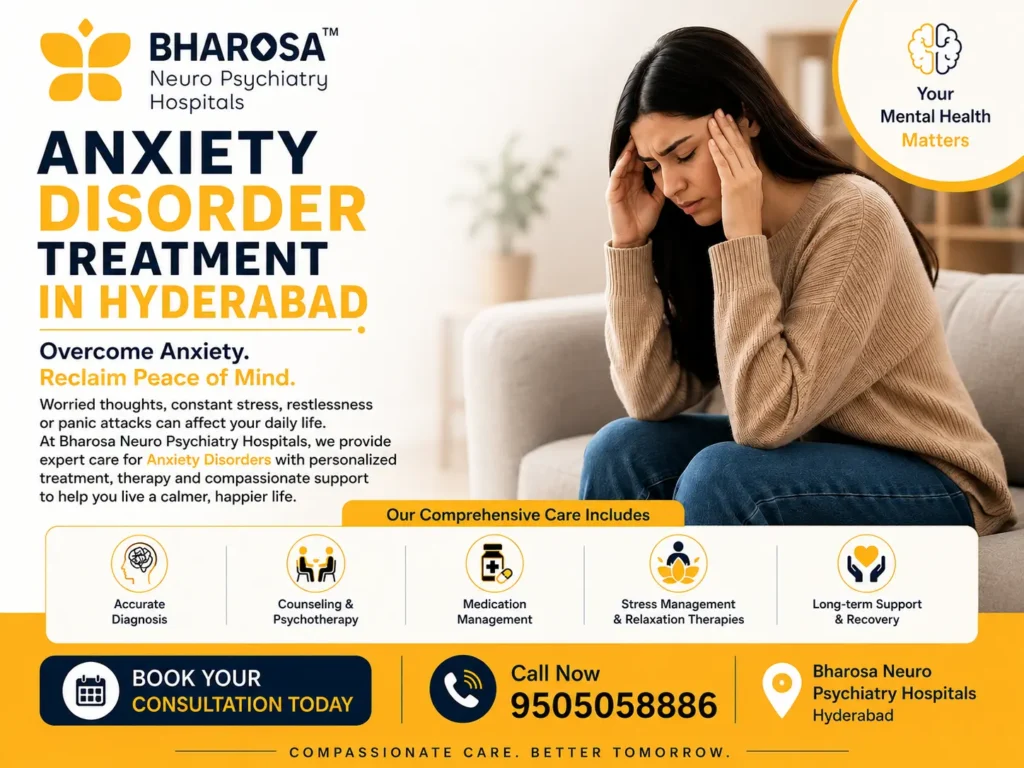
Anxiety is the most common mental health condition globally — yet it remains one of the most misunderstood and underdiagnosed. Millions of people live with constant, debilitating anxiety that affects their work, relationships, sleep, and physical health, assuming it is simply stress or a personality trait. It is not. Anxiety disorders are medical conditions that respond remarkably well to expert treatment from an Anxiety Disorder Specialist Hyderabad — and Bharosa Neuro Psychiatry Hospital in LB Nagar is where that expertise lives.
This guide will help you understand the different types of anxiety disorders, what distinguishes expert care from generic treatment, and how to find the right anxiety disorder specialist in Hyderabad for you or your loved one.
What Is an Anxiety Disorder?
Unlike normal, temporary stress responses, anxiety disorders involve persistent, excessive fear or worry that is disproportionate to the actual situation and significantly interferes with daily life. They are caused by a combination of genetic predisposition, brain chemistry imbalances (particularly in serotonin and GABA pathways), environmental stressors, and learned patterns of thinking.
Anxiety disorders are among the most treatable psychiatric conditions. With proper care from a qualified anxiety disorder specialist, the vast majority of patients achieve substantial relief and return to full functioning.
Types of Anxiety Disorders Treated at Bharosa Hospitals
Our Anxiety Disorder Specialist Hyderabad team diagnoses and treats the full spectrum of anxiety conditions:
1. Generalised Anxiety Disorder (GAD)
Characterised by persistent, uncontrollable worry about multiple areas of life — work, health, family, finances — for more than six months. People with GAD often feel constantly on edge, exhausted, and unable to relax. Physical symptoms include muscle tension, headaches, and gastrointestinal issues.
2. Panic Disorder
Recurrent, unexpected panic attacks — sudden episodes of intense fear accompanied by physical symptoms such as racing heart, chest pain, shortness of breath, dizziness, and a sense of impending doom. Many patients mistake panic attacks for heart attacks. Panic disorder also causes persistent fear of future attacks (anticipatory anxiety).
3. Social Anxiety Disorder (Social Phobia)
An intense fear of social situations where one might be judged, embarrassed, or humiliated. This goes far beyond shyness — it can prevent people from attending school or work, speaking in public, eating in front of others, or maintaining relationships.
4. Specific Phobias
Intense, irrational fear of specific objects or situations — heights, animals, blood, flying, enclosed spaces (claustrophobia). Phobias cause significant avoidance behaviour that restricts daily life.
5. Obsessive-Compulsive Disorder (OCD)
OCD involves recurrent, intrusive obsessive thoughts that cause intense anxiety, followed by compulsive behaviours or mental rituals performed to reduce that anxiety. Common obsessions include fears of contamination, harm, or making mistakes; compulsions include excessive handwashing, checking, and ordering.
6. Post-Traumatic Stress Disorder (PTSD)
Anxiety disorder triggered by experiencing or witnessing a traumatic event. PTSD involves flashbacks, nightmares, hypervigilance, emotional numbness, and avoidance of reminders of the trauma. It requires specialist trauma-focused therapy including EMDR (Eye Movement Desensitisation and Reprocessing).
7. Separation Anxiety Disorder
While commonly associated with children, separation anxiety can affect adults — causing excessive fear about separation from attachment figures. It is increasingly recognised in adults experiencing relationship anxiety or extreme dependency.
What to Look for in an Anxiety Disorder Specialist Hyderabad
Choosing the right Anxiety Disorder Specialist Hyderabad is one of the most important decisions in your recovery journey. Here are the key qualities to look for:
- Qualified Psychiatrist or Clinical Psychologist: The specialist should hold recognised medical qualifications (MBBS, MD Psychiatry) and have specific experience in diagnosing and treating anxiety disorders.
- Comprehensive Diagnostic Approach: A good specialist does not rush to diagnose. They take a thorough history, use validated assessment tools, and rule out medical causes of anxiety before developing a treatment plan.
- Evidence-Based Treatment Options: Look for specialists who offer CBT, DBT, EMDR, exposure therapy, medication management, and mindfulness-based approaches — not just one-size-fits-all solutions.
- Collaborative & Patient-Centred Care: The specialist should listen, explain, and involve you in decisions about your treatment — making you feel heard and respected throughout the process.
- Access to Multidisciplinary Support: The best care integrates psychiatry with psychology, family therapy, and holistic approaches — precisely what Bharosa Hospitals provides.
The Bharosa Approach to Anxiety Disorder Treatment
At Bharosa, our Anxiety Disorder Specialist Hyderabad team follows a structured, evidence-based treatment pathway:
- Detailed psychiatric evaluation and anxiety disorder diagnosis using standardised tools
- Personalised medication management using SSRIs, SNRIs, or other appropriate agents
- CBT — the gold-standard psychological treatment for all anxiety disorders
- Exposure and Response Prevention (ERP) for OCD
- EMDR therapy for PTSD and trauma-related anxiety
- Mindfulness-Based Cognitive Therapy (MBCT) for anxiety prevention and relapse reduction
- Group therapy — connecting with others experiencing similar struggles in a safe, guided setting
- Family therapy — educating and involving loved ones in the recovery process
- Lifestyle guidance — sleep hygiene, nutrition, exercise, and stress management
Anxiety & Physical Health: Understanding the Connection
Anxiety disorders frequently manifest as physical symptoms — chest pain, palpitations, shortness of breath, headaches, irritable bowel syndrome, and chronic fatigue. Many patients visit cardiologists, gastroenterologists, and general physicians repeatedly before the underlying anxiety disorder is identified. At Bharosa, our holistic assessment addresses both the psychological and physical dimensions of anxiety.
The gut-brain axis — the communication pathway between the digestive system and the brain — plays a significant role in anxiety. Our team includes Dr. Raghuteja, a general surgeon specialising in gut health and the brain axis, ensuring patients receive integrated physical and mental health care.
Anxiety in Children & Adolescents
Anxiety disorders are increasingly common in children and teenagers — manifesting as school refusal, separation anxiety, social withdrawal, excessive worry, and physical complaints. Bharosa's Child Psychiatry Department provides age-appropriate interventions including play therapy, CBT for children, social skills training, and parent guidance to help young patients overcome anxiety and thrive.
Taking the First Step: Why You Shouldn't Wait
Anxiety disorders worsen over time without treatment. The longer they go untreated, the more entrenched the fear responses become, the more restrictive avoidance behaviours grow, and the greater the impact on every area of life. Early intervention with a qualified anxiety disorder specialist delivers faster, more complete recovery.
If anxiety is controlling your life, it does not have to. Expert help from an Anxiety Disorder Specialist Hyderabad at Bharosa Hospitals is just one call away.
Call us today: +91 9505058886
Frequently Asked Questions (FAQs)
Q: What is the difference between normal anxiety and an anxiety disorder?
A: Normal anxiety is a temporary, proportionate response to a real stressor that resolves once the situation passes. An anxiety disorder involves persistent, excessive anxiety that is disproportionate to circumstances, lasts for months, and significantly interferes with daily functioning.
Q: Can anxiety disorders be cured completely?
A: Many people achieve full remission from anxiety disorders with appropriate treatment. Even for those with chronic anxiety tendencies, expert treatment dramatically reduces symptoms and restores normal functioning. CBT, in particular, provides lasting skills that continue to help long after formal treatment ends.
Q: What medications are used for anxiety treatment at Bharosa?
A: Our psychiatrists use evidence-based medications including SSRIs (e.g., sertraline, escitalopram), SNRIs, and other appropriate agents depending on the specific anxiety disorder. Medication is always combined with psychotherapy for the best outcomes. Benzodiazepines, if used, are prescribed cautiously and for short durations.
Q: How long does anxiety disorder treatment take at Bharosa Hospitals?
A: Most patients see significant improvement within 8–16 weeks of consistent treatment. Full recovery timelines vary by disorder type, severity, and individual factors. Our psychiatrists provide a personalised prognosis after the initial assessment.
Q: Is anxiety treatment available for children at Bharosa?
A: Yes. Bharosa's dedicated Child Psychiatry Department offers age-appropriate anxiety treatment including play therapy, CBT for children, social skills training, and parent guidance for children and adolescents struggling with anxiety disorders, school refusal, and social withdrawal.
Q: How do I book an appointment with an Anxiety Disorder Specialist Hyderabad at Bharosa?
A: Call or WhatsApp us at +91 9505058886, or visit our hospital at Plot No. 114, Mythripuram, Karmanghat, Opposite TKR College Comman, LB Nagar, Hyderabad – 500079. Our team will schedule a confidential consultation at your convenience.
Hospital Address & Contact
Bharosa Neuro Psychiatry Hospital & Rehabilitation Center
Plot No. 114, Mythripuram, Karmanghat, Opposite TKR College Comman (TKR Kamaan), Main Road, LB Nagar / Karmanghat, Hyderabad – 500079, Telangana
+91 9505058886