
How Families Can Support Loved Ones with Bipolar Disorder | Bharosa Hospitals
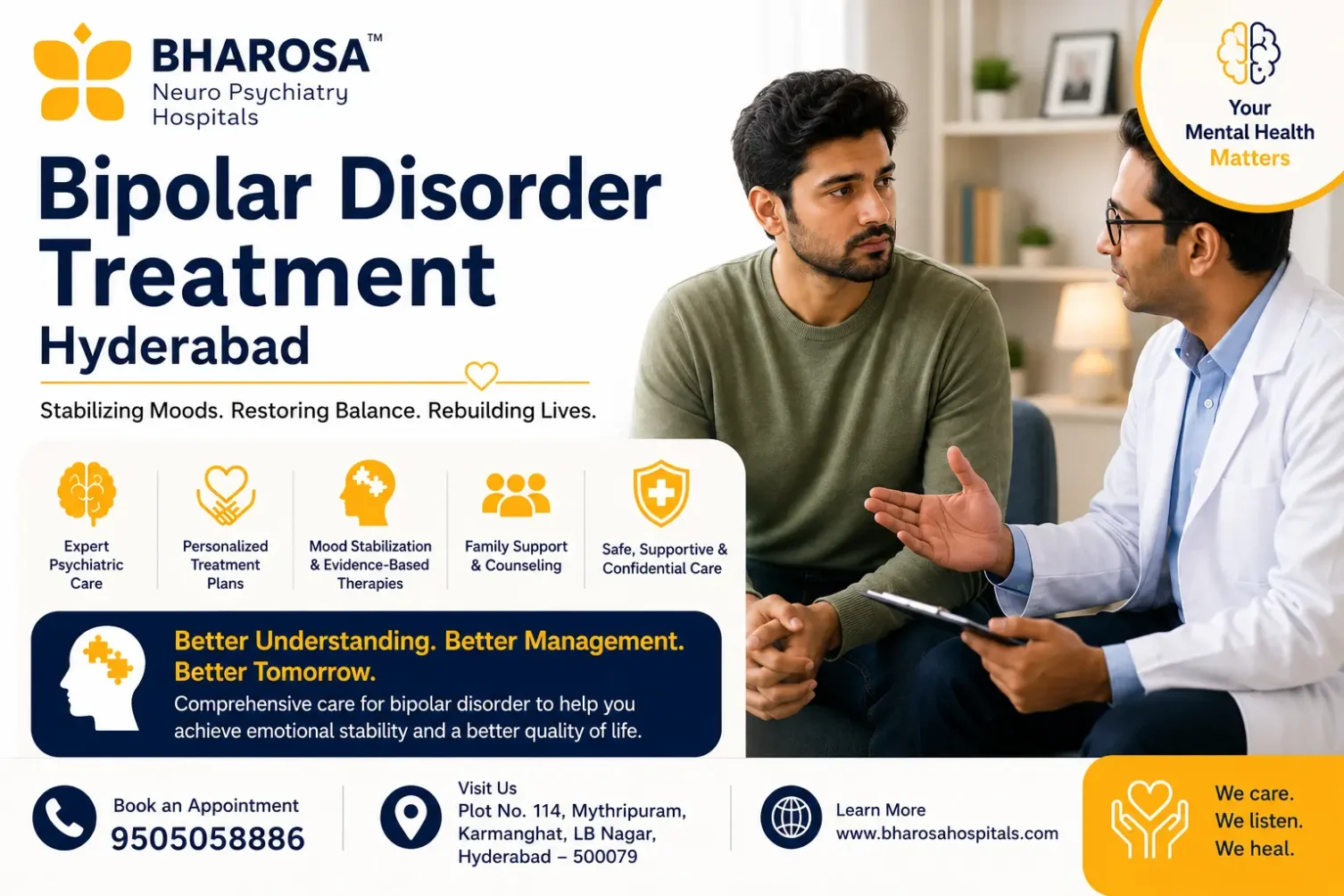
Bipolar disorder is one of the most complex and emotionally demanding mental health conditions — not only for the person living with it, but for every family member who loves them. The unpredictable swings between mania and depression, the changes in personality, the impulsive decisions, the withdrawal, the emotional storms — all of it can leave families feeling helpless, frightened, and exhausted. But family support is one of the most powerful forces in bipolar recovery. And when that support is paired with expert Bipolar Disorder Treatment Hyderabad professionals at Bharosa Neuro Psychiatry Hospital provide, the outcome changes dramatically.
1. Understanding Bipolar Disorder: What Families Need to Know
Bipolar disorder is a chronic brain condition characterised by extreme shifts in mood, energy, and activity levels. It is not a personality flaw or a result of weakness — it is a biologically driven neurological condition that requires long-term medical management, just as diabetes or hypertension do.
There are several types of bipolar disorder, and understanding which type your loved one has is important:
- Bipolar I Disorder: Characterised by full manic episodes lasting at least 7 days, often requiring hospitalisation, alternating with depressive episodes
- Bipolar II Disorder: Characterised by hypomanic episodes (less severe than full mania) and major depressive episodes
- Cyclothymic Disorder: A milder form involving numerous periods of hypomanic and depressive symptoms over at least two years
Episodes can be triggered by stress, sleep disruption, substance use, or major life changes — making a stable, supportive home environment a critical pillar of recovery.
2. Recognising the Warning Signs of an Episode
Families who can recognise early warning signs are invaluable partners in preventing full-blown episodes. Common early signs of a manic episode include decreased need for sleep without feeling tired, racing thoughts, pressured speech, increased goal-directed activity, and impulsive behaviour such as excessive spending or reckless decisions.
Early signs of a depressive episode include prolonged low mood, loss of interest in activities, social withdrawal, fatigue, poor concentration, and in severe cases, suicidal ideation. Keeping a mood journal together can help both the patient and family track patterns and communicate them to the treating psychiatrist.
3. How Families Can Actively Support Recovery
Educate Yourselves
The more a family understands bipolar disorder, the better equipped they are to respond rather than react during difficult moments. Bharosa Hospitals provides family psychoeducation sessions as a core component of its Bipolar Disorder Treatment Hyderabad programme — helping families understand the neuroscience behind bipolar, recognise episode triggers, and learn evidence-based communication strategies.
Maintain Routine and Structure
Bipolar disorder is profoundly sensitive to disruption in daily rhythms. Families can help by encouraging consistent sleep and wake times, regular mealtimes, predictable daily activities, and reducing unnecessary stressors in the home environment. A structured home routine reinforces the therapeutic work being done in treatment.
Communicate Without Conflict
During a manic episode, confrontation typically escalates the situation. During a depressive episode, criticism or pressure can worsen withdrawal. Families benefit enormously from learning communication strategies such as active listening, non-judgmental validation, and setting calm, firm boundaries — all of which are taught in Bharosa's family therapy sessions.
Support Medication Adherence
Medication non-adherence is the single most common cause of relapse in bipolar disorder. Families can support adherence by gently reminding loved ones of appointments, helping organise medications, and understanding that the person may feel they no longer need medication during stable periods — a dangerous cognitive trap. Discussing this with the treating psychiatrist is essential.
Look After Yourselves Too
Caregiver burnout is real and common among families of people with bipolar disorder. Seeking your own counselling, joining a support group, or simply scheduling regular time for self-care is not selfish — it is essential. A depleted caregiver cannot provide sustainable support.
4. What Bipolar Disorder Treatment at Bharosa Hospitals Involves
Bharosa Neuro Psychiatry Hospital offers comprehensive Bipolar Disorder Treatment Hyderabad patients and families rely on, combining:
- Precise psychiatric diagnosis differentiating bipolar from related conditions such as ADHD, borderline personality disorder, and cyclothymia
- Mood stabiliser medication management — including lithium, valproate, lamotrigine, and second-generation antipsychotics — carefully monitored by MD psychiatrists
- CBT for Bipolar: Helping patients identify and challenge cognitive distortions during both manic and depressive phases
- Interpersonal and Social Rhythm Therapy (IPSRT): Stabilising daily routines and relationships to reduce episode frequency
- DBT skills training: Building emotional regulation, distress tolerance, and interpersonal effectiveness
- Family Therapy: Involving families as active, informed participants in the treatment and recovery process
- Crisis and suicide support: Available 24/7 for patients and families navigating acute episodes
5. Long-Term Perspective: Living Well with Bipolar Disorder
Bipolar disorder is a manageable, long-term condition. With sustained treatment, strong family support, and lifestyle management, many people with bipolar disorder live rich, fulfilling, productive lives. The goal of treatment at Bharosa is not just episode management — it is the pursuit of a meaningful, stable life that the patient themselves is proud of.
Frequently Asked Questions
Q1. Is bipolar disorder genetic? Does it run in families?
Genetic factors play a significant role in bipolar disorder — first-degree relatives of someone with bipolar disorder have a higher risk of developing the condition. However, genetics is only one factor; environment, stress, and lifestyle also contribute significantly.
Q2. Can bipolar disorder be managed without medication?
For most people with bipolar disorder, medication is a necessary component of long-term management. Psychotherapy alone is generally insufficient for preventing manic episodes. However, therapy is an essential complement to medication, and together they produce the best outcomes.
Q3. What should I do if my loved one is in a manic episode and refuses help?
Stay calm, avoid confrontation, ensure their physical safety, and contact their treating psychiatrist immediately. In severe cases where the person is a danger to themselves or others, emergency psychiatric admission may be necessary. Bharosa Hospitals' crisis support line is available 24/7.
Q4. How long does bipolar disorder treatment take?
Bipolar disorder requires lifelong management, though the intensity of treatment varies across different phases. Acute episodes require more intensive intervention; stable periods require maintenance medication and periodic therapy. Bharosa provides both acute and long-term follow-up care.
Q5. Does Bharosa Hospitals provide residential care for bipolar disorder?
Yes. For patients experiencing severe manic or depressive episodes, Bharosa's 110-bed residential facility provides a safe, medically supervised environment for intensive stabilisation. Contact us at +91 95050 58886 for admission information.
Hospital Address
Bharosa Neuro Psychiatry Hospital & Rehabilitation Center
Address: Plot No. 114, Mythripuram, Karmanghat, Opposite TKR College Kamaan (TKR Kamaan), Main Road, LB Nagar / Karmanghat, Hyderabad – 500079, Telangana
+91 95050 58886
Available 24/7 — walk in, call, or book online for appointments and crisis support.