
Overcoming Addiction: How Professional Support Makes a Difference | Bharosa Hospitals
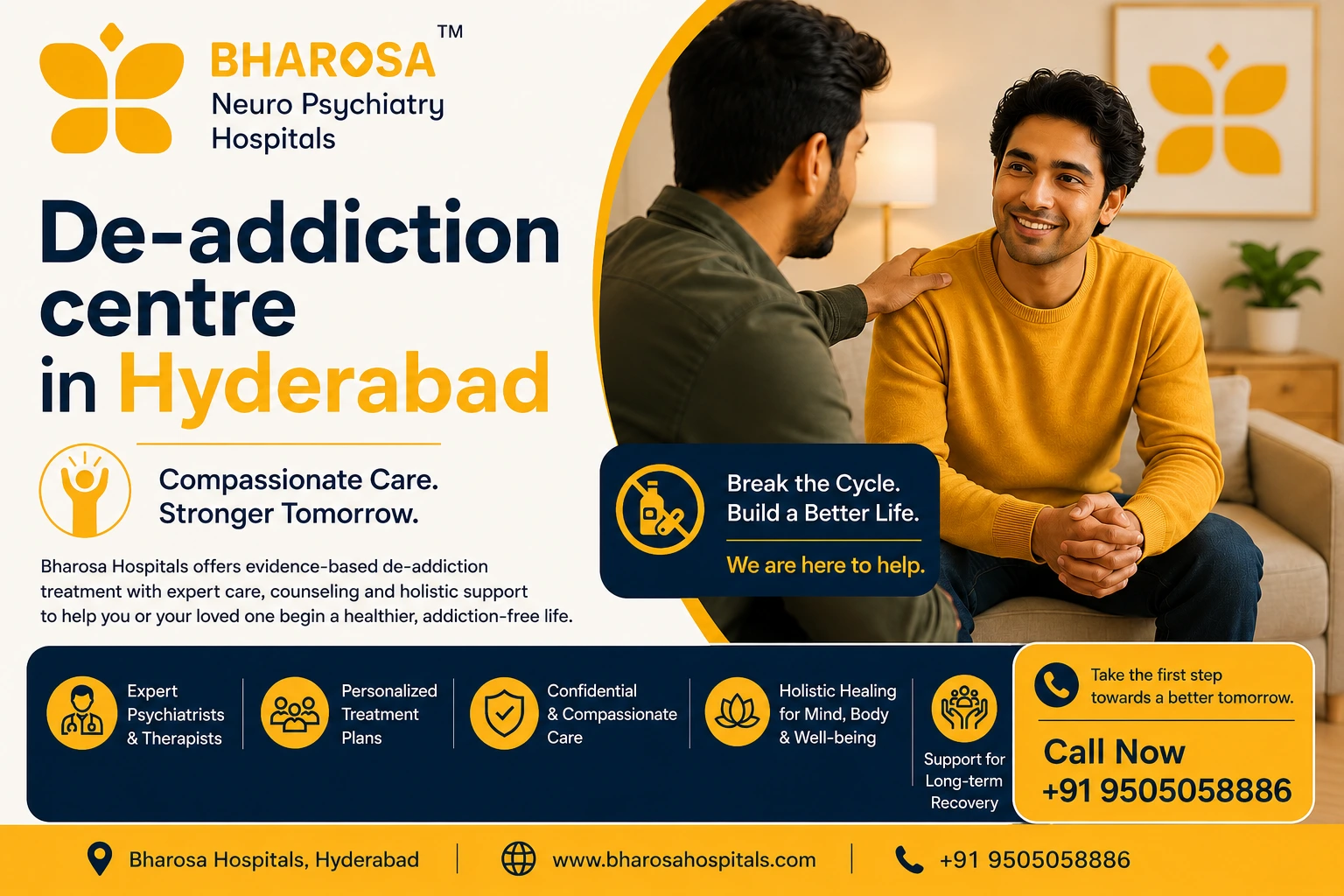
Addiction is not a moral failing — it is a complex brain disorder that requires professional medical intervention. Whether the substance is alcohol, opioids, cannabis, or a behavioural compulsion such as gambling or mobile addiction, the neurological changes caused by dependency cannot be reversed through willpower alone. Choosing a professional De addiction Centre in Hyderabad like Bharosa Hospitals dramatically improves the likelihood of complete, lasting recovery.
1. The Science of Addiction
When a person repeatedly uses a substance, the brain's reward pathways are fundamentally altered. Dopamine surges create powerful associations between the substance and pleasure, while the prefrontal cortex — responsible for rational decision-making — becomes increasingly suppressed. Over time, the person loses voluntary control over their use, even when faced with devastating consequences.
Understanding this neuroscience is crucial because it highlights why addiction requires clinical treatment, not just motivation. The brain literally needs time and professional support to rewire itself — a process that underlies the design of Bharosa Hospitals 100-Days Program.
2. What Professional Support Offers That Self-Help Cannot
Medically Supervised Detoxification
Withdrawal from substances like alcohol, opioids, and benzodiazepines can be life-threatening if unmanaged. At Bharosa Hospitals, detoxification is conducted under continuous medical supervision, with medications used to manage withdrawal symptoms safely, reduce cravings, and stabilise the patient's physical condition.
Psychiatric Co-management
A significant proportion of individuals with addiction also have underlying mental health conditions — depression, anxiety, PTSD, or bipolar disorder. A professional de-addiction centre treats both simultaneously, preventing the pattern where untreated mental illness drives relapse.
Structured Therapeutic Environment
The De addiction Centre in Hyderabad at Bharosa Hospitals provides a structured, peaceful residential environment away from triggers, peer pressure, and access to substances. This safe space allows the patient's brain and body to begin healing while they engage in intensive therapy.
Evidence-Based Behavioural Therapies
CBT helps patients identify and reframe the thought patterns that trigger substance use. DBT equips them with emotional regulation skills. Group therapy builds peer support and reduces shame. Family therapy heals relationships and creates a supportive home environment for post-discharge life.
3. Types of Addiction Treated at Bharosa Hospitals
- Alcohol de addiction
- Drug de-addiction (opioids, heroin, cannabis, cocaine)
- Tobacco and nicotine dependence
- Mobile and internet addiction
- Gaming addiction
- Gambling and betting addiction
- Shopping addiction
- Pornography addiction
4. The Role of Aftercare
Recovery does not end at discharge. Bharosa Hospitals designs comprehensive aftercare plans for every patient, including regular follow-up psychiatric consultations, continued therapy, peer support group participation, and relapse prevention training. Statistics consistently show that patients who participate in structured aftercare are significantly less likely to relapse within the critical first year of sobriety.
5. Breaking the Stigma
One of the greatest barriers to seeking help for addiction is social stigma. Bharosa Hospitals fosters a compassionate, non-judgmental environment where patients and families feel respected and understood. All consultations and treatment are conducted with complete confidentiality.
Hospital Address
Bharosa Neuro Psychiatry Hospital & Rehabilitation CenterPlot No. 114, Mythripuram, Karmanghat, Opposite TKR College Comman (TKR Kamaan), Main Road, LB Nagar / Karmanghat, Hyderabad – 500079, Telangana. Phone: +91 95050 58886
Frequently Asked Questions
Q1. How do I know if my loved one needs professional de-addiction treatment?
Signs include inability to control substance use despite wanting to stop, withdrawal symptoms when not using, neglect of responsibilities, financial or legal problems related to substance use, and continued use despite health consequences. If you observe these, professional help is needed.
Q2. Is admission to a de-addiction centre voluntary or forced?
At Bharosa Hospitals, treatment is primarily voluntary. However, in cases where the patient is a danger to themselves or others, family members and doctors can facilitate admission under appropriate legal and ethical frameworks.
Q3. How long is the de-addiction program?
Bharosa Hospitals recommends the 100-Days Program for optimal outcomes, though the duration may be adjusted based on the severity of the addiction and individual progress.
Q4. Will my identity be kept private?
Yes. Complete confidentiality is maintained for all patients and their families at Bharosa Hospitals.
Q5. Can family visit during inpatient de-addiction treatment?
Family visits are permitted as per the hospital's guidelines and are actively encouraged as part of the recovery process.
Visit Bharosa Hospitals
Bharosa Neuro Psychiatry Hospital & Rehabilitation Center
Plot No. 114, Mythripuram, Karmanghat, LB Nagar, Hyderabad – 500079
Opp. TKR College, Main Road, LB Nagar / Karmanghat, Hyderabad
+91 95050 58886 | www.bharosahospitals.com