
Why Early Treatment at a Schizophrenia Hospital Hyderabad Matters
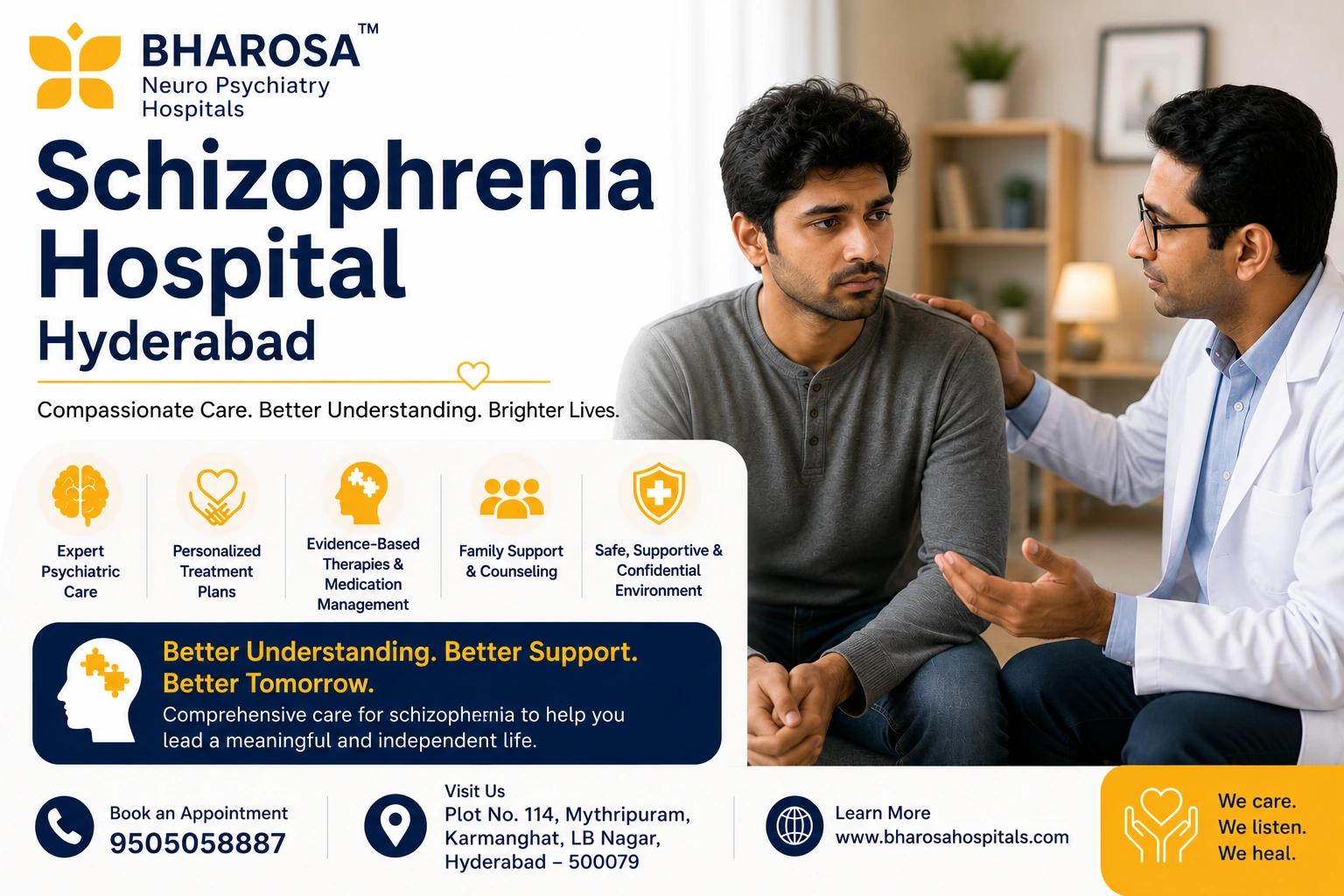
Schizophrenia is one of the most serious and misunderstood psychiatric conditions in the world. It profoundly affects a person's thoughts, perceptions, emotions, and ability to function in daily life. In India, cultural stigma, misinformation, and lack of awareness often delay proper diagnosis and treatment by years — sometimes decades. Yet clinical evidence is unequivocal: the earlier schizophrenia is treated at a qualified Schizophrenia Hospital Hyderabad, the better the long-term outcomes. Bharosa Hospitals, a leading neuro-psychiatry centre in Hyderabad, is committed to providing early, evidence-based, and compassionate care for individuals living with schizophrenia.
Understanding Schizophrenia
Schizophrenia is a chronic psychotic disorder characterised by hallucinations (hearing voices or seeing things that are not there), delusions (firmly held false beliefs), disorganised thinking, flat or inappropriate emotional expression, and significant social and occupational impairment. Contrary to popular misconceptions, schizophrenia does not mean 'split personality', and people living with the condition are rarely dangerous — they are far more likely to be vulnerable and in need of compassionate support.
Schizophrenia typically emerges in late adolescence or early adulthood. A period known as the 'prodrome' often precedes the first psychotic episode — during this time, individuals may show subtle changes in behaviour, social withdrawal, declining academic or work performance, and unusual beliefs. Identifying and treating schizophrenia during the prodromal phase or immediately after the first episode is critical.
The Critical Importance of Early Treatment
Evidence from global psychiatric research confirms that early treatment at a qualified Schizophrenia Hospital Hyderabad produces dramatically better outcomes compared to delayed treatment. Key benefits of early intervention include:
- Faster and more complete reduction of psychotic symptoms with lower medication doses
- Better preservation of cognitive functioning, including memory, attention, and problem-solving
- Higher rates of sustained remission and social recovery
- Reduced frequency and severity of future psychotic episodes
- Lower rates of hospitalisation, self-harm, and suicide
- Better social functioning, including maintaining relationships, education, and employment
Conversely, each untreated psychotic episode causes progressive neurological changes that make future episodes harder to treat and recovery less complete. Duration of Untreated Psychosis (DUP) is one of the strongest predictors of long-term outcomes — the shorter the DUP, the better the prognosis.
How Bharosa Hospitals Treats Schizophrenia
Antipsychotic Medication
Medication is the cornerstone of schizophrenia treatment. Bharosa's psychiatrists prescribe and carefully monitor antipsychotic medications — both first-generation and second-generation — to reduce or eliminate psychotic symptoms. Finding the right medication and dosage is a personalised process that may take time. Bharosa's residential program allows close monitoring throughout this critical period, ensuring rapid adjustments when needed.
Individual and Group Psychotherapy
Cognitive Behavioural Therapy for Psychosis (CBTp) is a specialised form of CBT adapted for schizophrenia. It helps patients evaluate the reality of their beliefs, manage distressing hallucinations, and develop strategies for coping with symptoms that may persist even with medication. Group therapy at Bharosa Hospitals provides peer support, social skills practice, and a sense of community that counteracts the isolation schizophrenia creates.
Family Education and Support
Families play a pivotal role in recovery from schizophrenia. Bharosa Hospitals provides structured psychoeducation for families, teaching them about the nature of the condition, communication strategies that reduce relapse risk, and how to create a low-stress home environment. Research consistently shows that family psychoeducation reduces relapse rates significantly.
Vocational and Social Rehabilitation
Recovery from schizophrenia is not just about symptom reduction — it is about reclaiming a meaningful life. Bharosa's Schizophrenia Hospital Hyderabad team provides structured rehabilitation activities, social skills training, and life skills development to help patients progressively rebuild their independence and social roles.
Schizophrenia is not a life sentence. With early treatment, expert psychiatric care, and a compassionate support system, many individuals with schizophrenia achieve meaningful recovery and live fulfilling lives. If you are concerned about a loved one showing signs of psychosis, do not delay. Contact Bharosa Hospitals — the trusted Schizophrenia Hospital Hyderabad — at +91 95050 58886 or visit bharosahospitals.com.
Frequently Asked Questions (FAQs)
Q: What are the early warning signs of schizophrenia?
A: Early warning signs include social withdrawal, declining school or work performance, unusual or magical thinking, increasing suspiciousness or paranoia, flat emotional expression, difficulty concentrating, and in later stages, hearing or seeing things others cannot.
Q: Is schizophrenia treatable at Bharosa Hospitals Hyderabad?
A: Yes. While schizophrenia is a chronic condition, it is highly treatable. With the right antipsychotic medication, psychotherapy, family support, and rehabilitation, many patients achieve significant symptom reduction and improved quality of life.
Q: Can a person with schizophrenia live a normal life?
A: With consistent treatment and support, many people with schizophrenia maintain employment, relationships, and independent living. Early treatment and medication adherence are the most important factors in achieving this outcome.
Q: How long does inpatient treatment for schizophrenia take at Bharosa Hospitals?
A: The duration depends on the severity of the episode and the patient's response to treatment. Bharosa's 100-day residential program is recommended for complex or severe presentations to allow adequate time for medication optimisation, therapy, and rehabilitation.
Q: Is forced hospitalisation possible for a person with severe schizophrenia?
A: Under India's Mental Healthcare Act 2017, involuntary admission may be considered when a person's safety is at serious risk due to severe psychosis and they are unable to make informed decisions. Bharosa Hospitals has a legal team, including an experienced criminal lawyer, to navigate such situations appropriately.
Q: What role does diet and sleep play in managing schizophrenia?
A: Regular sleep patterns, a balanced diet, and avoiding substances (especially cannabis) are critically important in managing schizophrenia. Bharosa's residential program structures daily routines including sleep hygiene, nutrition, and physical activity to support overall brain health.
Bharosa Neuro Psychiatry Hospital & Rehabilitation Center
Plot No. 114, Mythripuram, Karmanghat, LB Nagar, Hyderabad – 500079
Opp. TKR College, Main Road, LB Nagar / Karmanghat, Hyderabad
+91 95050 58886 | www.bharosahospitals.com