
Life After Addiction: Success Stories from a De-Addiction Centre in Hyderabad
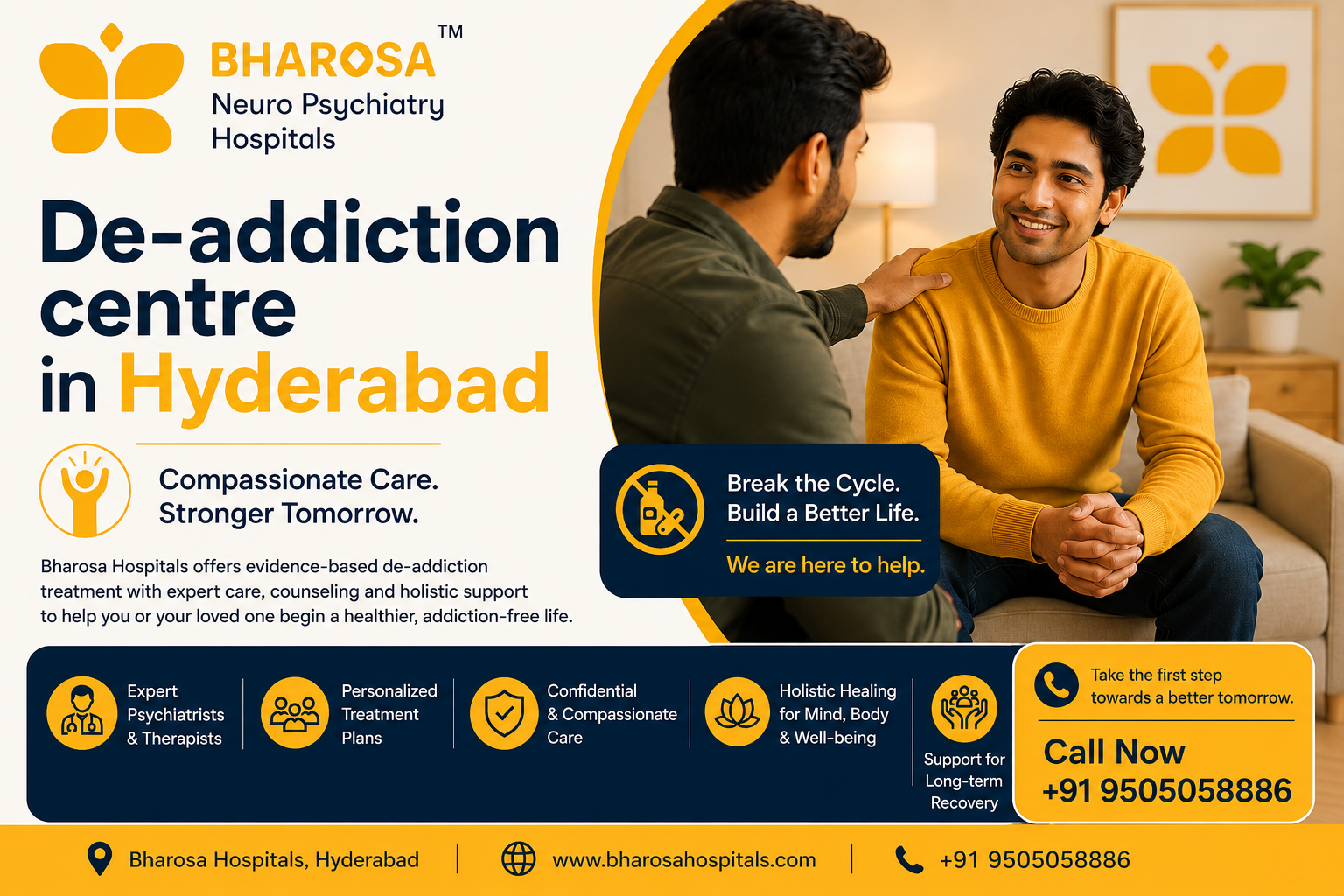
When addiction is at its worst, the concept of 'life after addiction' can seem not merely unlikely but genuinely impossible. The person trapped in the cycle of dependence — and the family watching helplessly from outside — can find it almost impossible to imagine what life could look like beyond the substance. This failure of imagination is one of addiction's most powerful tools: it substitutes the possible future for an apparently inevitable one. At Bharosa Neuro Psychiatry Hospital, the most trusted De-Addiction Centre in Hyderabad, we have witnessed hundreds of patients discover that the future they could not imagine was not only possible but extraordinary. The composite stories shared in this blog — representative of the recovery themes we encounter most consistently — are offered as evidence that life after addiction is not just possible. It is real, it is rich, and it is available to anyone willing to take the first step.
(Note: The stories below are composite narratives representing common recovery patterns at Bharosa Hospitals. Individual details have been changed to protect privacy.)
The Professional Who Got His Career Back
Recovery Theme: Career Restoration
A 38-year-old IT professional had been dependent on alcohol for seven years. By the time he arrived at Bharosa's de-addiction centre, he had been placed on a performance improvement plan at work, his marriage was at breaking point, and he was drinking from the moment he woke until he fell asleep. He completed the 100-Days Programme — medically supervised detox, dual diagnosis treatment for underlying depression, CBT, and family therapy. Two years later, he has been promoted, his marriage is restored, and he describes his current life as 'the one I always should have had'.
Career restoration is one of the most consistent outcomes reported by patients who complete the full programme at Bharosa's De-Addiction Centre in Hyderabad. Addiction impairs the cognitive functions — concentration, memory, decision-making, emotional regulation — that professional performance requires. As sobriety consolidates and dual diagnosis psychiatric treatment addresses underlying conditions, these cognitive functions recover measurably. Patients describe returning to work not just functional, but often more effective than they had been for years.
The Mother Who Reconnected with Her Children
Recovery Theme: Family Reconnection
A 44-year-old woman had been dependent on prescription sedatives for six years following the death of her mother. Her children — aged 15 and 12 — had effectively become the household's functioning adults, managing the home around their mother's sedated absence. Family therapy at Bharosa's de-addiction centre was the most challenging and most important component of her treatment. Eighteen months after discharge, she describes her relationship with her children as 'finally real' — they are rebuilding, slowly and genuinely, the connection that addiction had displaced.
Family reconnection is one of the dimensions of life after addiction that patients describe with the most profound emotion. The De-Addiction Centre in Hyderabad at Bharosa Hospitals integrates structured family therapy as a non-negotiable component of every treatment programme precisely because these relationships are where the deepest damage of addiction often occurs — and where the most meaningful recovery is experienced.
The Young Man Who Discovered Purpose
Recovery Theme: Identity and Purpose
A 26-year-old who had begun using cannabis at 16 and progressed to opioids by 21 arrived at Bharosa's programme not knowing who he was without substances. A decade of drug use had prevented the normal developmental process of identity formation. The 100-Days Programme gave him time — the first extended period of his adult life spent sober — in which he discovered, through art therapy, creative abilities he had never known he possessed. He is now studying design. He describes recovery as 'not going back to who I was — becoming who I was supposed to be'.
Identity reconstruction is one of the most profound and least discussed dimensions of recovery from addiction — particularly for those whose substance use began in adolescence or early adulthood. The De-Addiction Centre in Hyderabad at Bharosa Hospitals creates the conditions for this reconstruction through therapy, holistic programming, and the time the 100-Days Programme provides.
The Couple Whose Marriage Survived
Recovery Theme: Relationship Restoration
A husband and wife arrived at Bharosa separately — he for alcohol dependence, she for the secondary trauma of fifteen years as his primary enabler. Both underwent their own therapeutic processes simultaneously: he in the residential programme, she in individual therapy and the family psychoeducation programme. Their discharge plan included structured couple's sessions. Three years later, they describe their marriage as 'more honest and more connected than it has ever been'. They both credit the programme for saving not just his life, but their relationship.
The involvement of family members in their own therapeutic process — not only as supporters of the patient, but as individuals with their own recovery needs — is one of the most distinctive features of Bharosa's De-Addiction Centre in Hyderabad approach. Addiction affects the entire family system. Recovery must address the entire family system.
What Makes These Recoveries Possible
The success stories described above are not exceptional — they are representative of what the De-Addiction Centre in Hyderabad at Bharosa Hospitals produces when the full programme is completed. They share five common elements: medically supervised detox that ensures physical safety; dual diagnosis psychiatric treatment that addresses underlying conditions; comprehensive psychotherapy that addresses the psychological architecture of the addiction; structured family involvement that transforms the relational environment; and the 100-Days duration that allows all three healing timelines — neurological, pharmacological, and behavioural — to complete.
Frequently Asked Questions
Q: Are these recovery outcomes realistic for everyone who attends Bharosa's de-addiction programme?
A: The stories presented are representative of common recovery themes, not guaranteed outcomes for every patient. Recovery depends on multiple factors including the type and severity of addiction, the presence of co-occurring conditions, the patient's commitment to the programme, and the quality of post-discharge aftercare. Bharosa Hospitals maximises the probability of outcomes like these through comprehensive, evidence-based treatment — but the patient's active participation is essential.
Q: What is the most important factor in achieving lasting recovery from addiction?
A: Research and clinical experience consistently identify treatment duration as the strongest single predictor of long-term recovery — which is why the 100-Days Programme produces the outcomes described in this blog. Beyond duration, dual diagnosis treatment, family involvement, and quality aftercare are the most significant contributors to lasting sobriety.
Q: How long after completing the de-addiction programme do these recovery outcomes typically become apparent?
A: Some outcomes — improved physical health, clearer thinking, better sleep — are apparent within weeks of completing detox. Relationship restoration, career recovery, and identity rebuilding are processes that develop over months and years. Most patients describe the most profound transformations occurring between 6 months and 2 years after completing the programme.
Q: Is it possible to recover from addiction if my family is not willing to participate in treatment?
A: Yes. Family participation enhances outcomes significantly, but it is not a precondition for individual recovery. Bharosa Hospitals' treatment programme is designed to produce the best possible outcome for each patient regardless of family involvement, while working to increase family engagement where possible.
Q: How do I take the first step towards recovery at Bharosa's de-addiction centre in Hyderabad?
A: Call +91 95050 58886 or visit www.bharosahospitals.com. Our team will guide you through the initial assessment process — confidentially, compassionately, and without judgment. The first step is always the hardest, and it is always worth taking.