
Depression Treatment in Hyderabad: Modern Therapies That Help Patients Recover
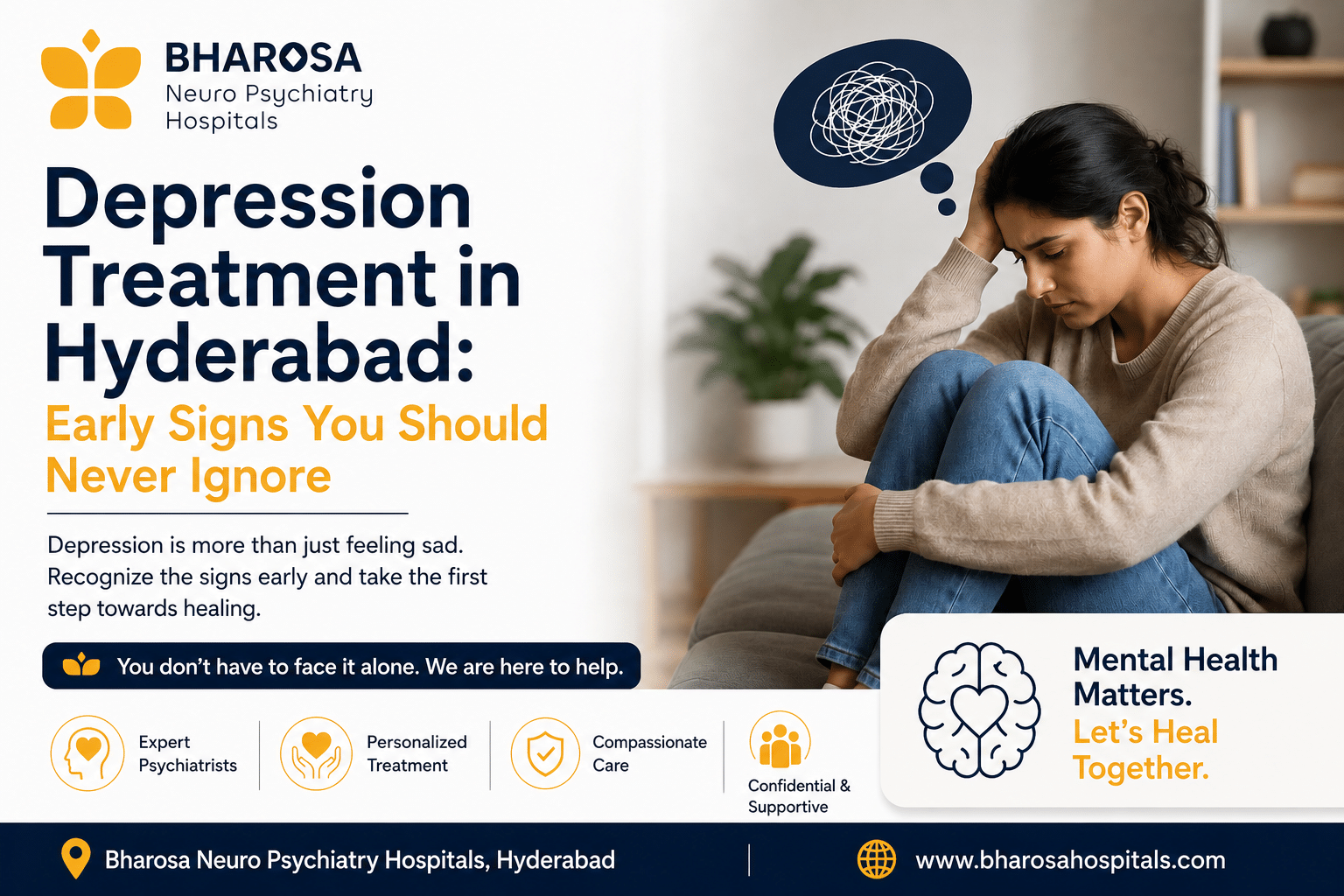
Depression treatment has evolved dramatically over the past two decades. What was once limited to a prescription and a referral is now a sophisticated, multi-modal process — combining neuroscience-informed medications, evidence-based psychotherapies, lifestyle interventions, and holistic healing approaches that together produce outcomes far superior to any single treatment alone. At Bharosa Neuro Psychiatry Hospital, our depression treatment in Hyderabad is built on this modern, comprehensive model — delivering real, lasting recovery for patients across all age groups and depression severities.
Understanding Depression as a Brain Condition
Modern psychiatry understands depression not as a character flaw or emotional weakness, but as a neurobiological condition. Dysregulation of serotonin, norepinephrine, and dopamine systems, disrupted HPA axis activity, reduced neuroplasticity in the hippocampus, and chronic inflammatory processes all contribute to the depressive state. This neurobiological understanding is what drives the effectiveness of contemporary Depression treatment in Hyderabad — because treatment is designed to address these underlying mechanisms, not merely suppress symptoms.
Modern Therapy 1: Cognitive Behavioural Therapy (CBT)
CBT remains the most extensively researched and clinically validated psychological treatment for depression in the world. At Bharosa Hospitals, CBT for depression involves identifying and systematically challenging the negative automatic thoughts and cognitive distortions that fuel depressive episodes — such as all-or-nothing thinking, catastrophising, personalisation, and mind-reading. Patients simultaneously develop behavioural activation strategies to overcome the withdrawal and inactivity that perpetuate depression. Multiple large-scale clinical trials confirm CBT's effectiveness is comparable to antidepressant medication for mild to moderate depression, and superior to medication alone for relapse prevention.
Modern Therapy 2: Mindfulness-Based Cognitive Therapy (MBCT)
MBCT is a revolutionary development in depression treatment in Hyderabad and globally — specifically designed to prevent relapse in patients who have experienced three or more depressive episodes. It combines the cognitive techniques of CBT with mindfulness meditation practices, teaching patients to notice the early warning signs of a depressive relapse and respond with mindful awareness rather than rumination. Clinical evidence shows MBCT reduces depression relapse risk by up to 44%. Bharosa Hospitals offers dedicated MBCT programmes delivered by trained therapists.
Modern Therapy 3: Interpersonal Therapy (IPT)
IPT addresses the relational dimensions of depression — the grief, role transitions, interpersonal disputes, and social isolation that frequently trigger or sustain depressive episodes. By improving communication skills, processing unresolved grief, and navigating relationship challenges, IPT provides meaningful relief for patients whose depression is closely tied to their relationships and life circumstances. It is particularly effective for depression triggered by bereavement, divorce, job loss, or major life transitions.
Modern Therapy 4: Psychodynamic Therapy
For patients with depression rooted in deeper psychological conflicts, unresolved early experiences, or complex personality dynamics, psychodynamic therapy explores the unconscious patterns and historical roots that drive current emotional suffering. At Bharosa Hospitals, experienced psychodynamic therapists work with patients who have not responded fully to CBT or who seek a deeper understanding of the emotional origins of their depression.
Modern Therapy 5: Evidence-Based Medication Management
Contemporary depression treatment in Hyderabad integrates pharmacotherapy carefully and intelligently. Our psychiatrists prescribe from a range of modern antidepressants — SSRIs, SNRIs, atypical antidepressants, and augmentation agents — selecting based on the patient's specific symptom profile, medical history, potential drug interactions, and side-effect tolerance. Medication is never a stand-alone solution at Bharosa — it is always paired with psychotherapy and lifestyle support for optimal outcomes.
Modern Therapy 6: Art and Music Therapy
Creative therapies provide pathways to emotional healing that verbal therapies cannot always reach. Art therapy allows patients to express and process emotions through creative making — bypassing the analytical mind to access deeper emotional material. Music therapy uses structured musical experiences to regulate mood, reduce isolation, improve motivation, and build positive emotional experiences. Bharosa Hospitals integrates both art and music therapy as standard components of its depression treatment programme.
Modern Therapy 7: Lifestyle Medicine and Sleep Intervention
Emerging research has firmly established the role of physical exercise, sleep quality, nutrition, and social connection in both the onset and recovery from depression. Bharosa Hospitals integrates structured physical activity programmes, sleep hygiene intervention, and nutritional guidance into every patient's depression treatment plan — addressing the biological foundations of mood alongside psychological treatment.
Treating Treatment-Resistant Depression
For patients who do not respond to standard antidepressants, Bharosa Hospital’s Depression treatment in Hyderabad extends to advanced interventions including augmentation strategies, combination pharmacotherapy, and referral for specialist neuromodulation treatments where clinically indicated. Our psychiatrists have extensive experience managing complex, treatment-resistant depressive presentations.
Frequently Asked Questions
Q: How do I know which therapy is right for my depression?
A: The right therapy depends on your specific type of depression, its severity, duration, underlying causes, and personal preferences. At Bharosa Hospitals, a thorough psychiatric and psychological assessment determines the most appropriate therapy combination for each individual patient.
Q: Can I do therapy without taking antidepressants?
A: Yes. For mild to moderate depression, psychotherapy alone — particularly CBT — can be highly effective. Your psychiatrist will advise based on your specific clinical picture. Many patients prefer to start with therapy before considering medication, which is a valid clinical approach in appropriate cases.
Q: How long before I start feeling better with depression treatment?
A: Most patients begin noticing improvements in mood and functioning within 4 to 8 weeks of starting combined therapy and medication. Full recovery typically requires 3 to 6 months of consistent treatment, with relapse prevention therapy continuing beyond that.
Q: Is online or outpatient therapy available for depression at Bharosa Hospitals?
A: Yes. Bharosa Hospitals offers both outpatient consultations and online psychiatric consultations for patients who do not require residential care. Contact +91 95050 58887 or visit www.bharosahospitals.com for appointment details.
Q: Does Bharosa treat postpartum depression?
A: Yes. Postpartum depression is among the conditions treated by Bharosa Hospitals' psychiatry team, with careful medication management appropriate for breastfeeding mothers and targeted therapy addressing the unique challenges of the postpartum period.
Bharosa Neuro Psychiatry Hospital & Rehabilitation Center
Plot No. 114, Mythripuram, Karmanghat, LB Nagar, Hyderabad – 500079
+91 95050 58887 | www.bharosahospitals.com