Bipolar Disorder Treatment Hyderabad: Understanding Mood Swings and Recovery
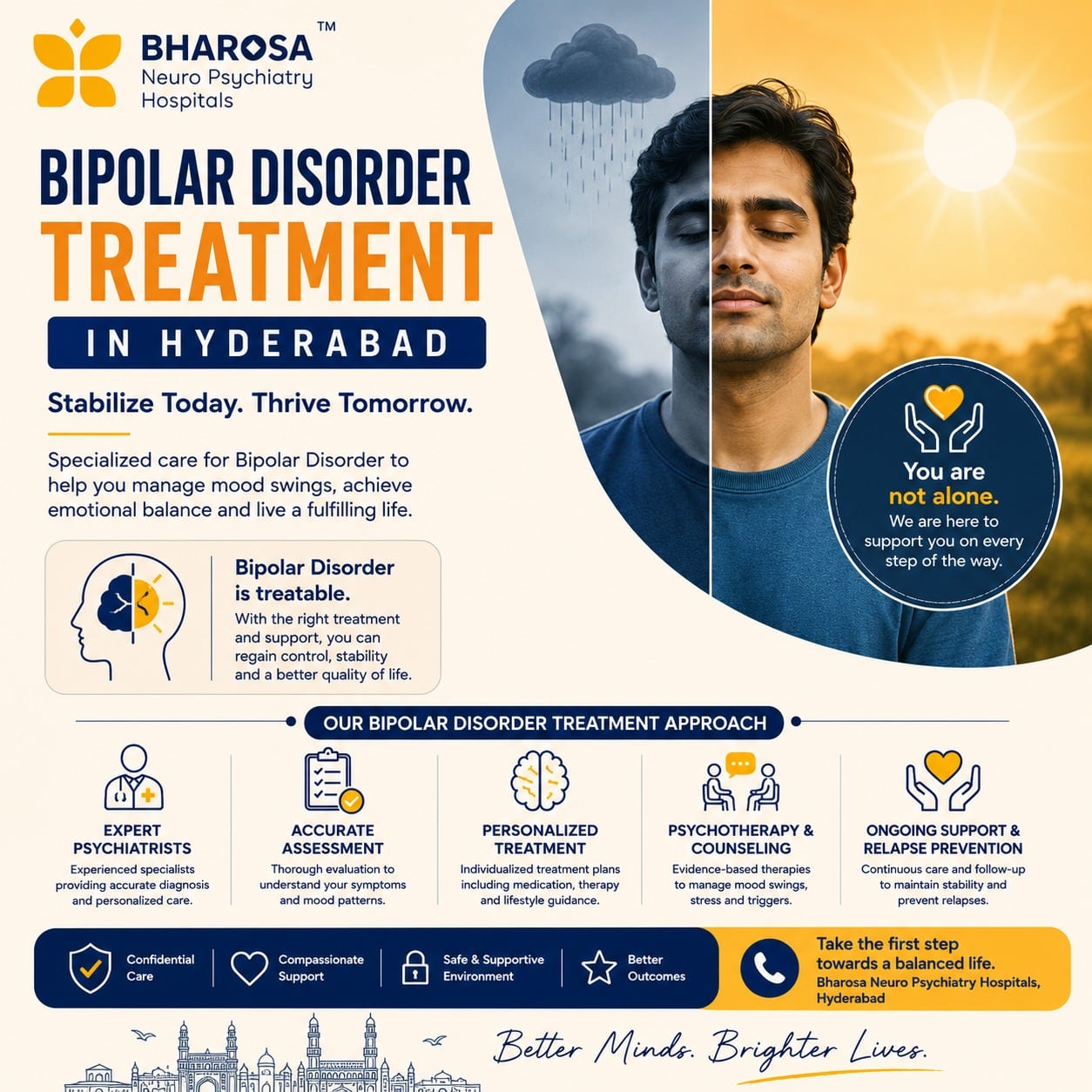
Bipolar disorder is often misunderstood — dismissed as simply being 'moody' or 'dramatic'. In reality, it is a serious neurological condition characterised by extreme shifts in mood, energy, and behaviour that can devastate careers, relationships, and lives. Expert bipolar disorder treatment Hyderabad is not just about managing highs and lows — it is about restoring stability, preventing relapse, and helping individuals lead full, meaningful lives.
Bharosa Neuro Psychiatry Hospital offers the most comprehensive Bipolar Disorder Treatment Hyderabad has available — combining precise diagnosis, evidence-based medication, psychotherapy, and long-term support for patients and their families.
What Is Bipolar Disorder?
Bipolar disorder is a lifelong mood disorder involving distinct episodes of mania (or hypomania) and depression, with periods of relative stability in between. It is classified into three main types: Bipolar I (involving full manic episodes that may require hospitalisation), Bipolar II (involving hypomanic episodes and major depressive episodes), and Cyclothymia (involving milder mood fluctuations over at least two years).
Recognising Mania and Hypomania
One of the most important skills our bipolar disorder treatment Hyderabad team teaches patients is recognising the early signs of a manic episode. Key features include:
- Unusually elevated, expansive, or irritable mood
- Dramatically reduced need for sleep without feeling tired
- Racing thoughts, rapid speech, and difficulty focusing
- Inflated self-esteem or grandiose beliefs
- Increased goal-directed activity or psychomotor agitation
- Impulsive, reckless behaviour — excessive spending, risky sexual behaviour, unwise business decisions
- In severe cases, psychotic symptoms including hallucinations and delusions
Recognising Depressive Episodes in Bipolar Disorder
The depressive phase of bipolar disorder is frequently misdiagnosed as unipolar depression — a critical error, as the treatment approaches differ significantly. Bipolar depression features persistent low mood, fatigue, cognitive slowing, sleep disruption, feelings of hopelessness, and in severe cases, suicidal ideation. Misdiagnosis and incorrect treatment can actually trigger manic episodes, making accurate diagnosis by an experienced specialist essential.
The Risk of Misdiagnosis
Studies show that the average time from symptom onset to correct diagnosis of bipolar disorder is 6 to 10 years — a decade of potentially devastating mismanagement. This is why seeking Bipolar Disorder Treatment Hyderabad from a specialist rather than a general practitioner is critical. At Bharosa Hospitals, our psychiatrists conduct thorough mood disorder evaluations that reliably distinguish bipolar disorder from unipolar depression, ADHD, borderline personality disorder, and other overlapping conditions.
Medication Management for Bipolar Disorder
Mood stabilisation is the pharmacological cornerstone of bipolar disorder treatment Hyderabad. Our psychiatrists use a range of evidence-based agents including lithium (the gold standard for long-term mood stabilisation), valproate and lamotrigine, atypical antipsychotics for acute mania and depression, and carefully monitored antidepressants where indicated. Medication management in bipolar disorder is complex and must be closely supervised — dosing, blood levels, and interactions require ongoing expert review.
Psychotherapy for Bipolar Disorder
Medication alone is rarely sufficient for optimal outcomes in bipolar disorder. Bharosa Hospitals integrates multiple psychotherapy approaches including Psychoeducation (helping patients and families understand the condition and early warning signs), CBT (addressing negative thought patterns in depressive phases), Interpersonal and Social Rhythm Therapy (stabilising daily routines that regulate mood), and Family Therapy (reducing family stress and improving support). These therapies are proven to reduce the frequency of mood episodes and dramatically improve quality of life.
The Role of Family in Bipolar Disorder Recovery
Bipolar disorder deeply affects family members. Education, communication strategies, and healthy boundaries are essential for families to support a loved one without exhausting themselves. Bharosa Hospitals offers structured family psychoeducation and therapy as a standard component of all bipolar disorder treatment programmes.
Frequently Asked Questions
Q: How is bipolar disorder different from normal mood swings?
A: Normal mood swings are brief, proportionate to circumstances, and do not significantly impair functioning. Bipolar disorder episodes last for days to weeks, are often disproportionate to triggers, involve extreme behavioural changes, and significantly disrupt daily life, relationships, and work.
Q: Is bipolar disorder curable?
A: Bipolar disorder is a lifelong condition, but it is highly manageable. With appropriate treatment, many patients achieve long periods of mood stability and lead fully functional, satisfying lives. The goal of treatment is sustained remission and the best possible quality of life.
Q: Can bipolar disorder cause psychosis?
A: Yes. During severe manic or depressive episodes, some patients with bipolar disorder experience psychotic symptoms including hallucinations and delusions. This requires urgent psychiatric intervention. Bharosa Hospitals is equipped to manage acute bipolar psychosis safely and effectively.
Q: Is it safe to have a child if I have bipolar disorder?
A: Many people with bipolar disorder have children and lead healthy family lives. However, pregnancy and postpartum periods require careful psychiatric planning and monitoring, as mood episodes may be triggered by hormonal changes. Our team at Bharosa provides specialist perinatal psychiatry support.
Q: How long does bipolar disorder treatment typically last?
A: Bipolar disorder typically requires long-term — often lifelong — maintenance treatment. Acute episode treatment lasts weeks to months. Long-term maintenance medication and periodic psychotherapy are continued indefinitely to prevent relapse and sustain stability.
Bharosa Neuro Psychiatry Hospital & Rehabilitation Center
Plot No. 114, Mythripuram, Karmanghat, LB Nagar, Hyderabad – 500079
+91 95050 58887 | www.bharosahospitals.com