
Best Drug De Addiction Centre in Hyderabad — Bharosa Hospital
Drug addiction is a devastating condition that destroys health, shatters families, and derails careers. In Hyderabad and across Telangana, the prevalence of drug abuse — particularly cannabis (ganja), opioids, heroin, prescription medications, and synthetic drugs — has been rising sharply. For families caught in this crisis, finding a qualified, trustworthy drug de-addiction centre is often the difference between life and death.
Bharosa Neuro Psychiatry Hospital is one of the leading drug de-addiction and rehabilitation centres in Hyderabad. Our 110-bed residential facility offers a complete continuum of care — from emergency stabilisation and medical detoxification to long-term rehabilitation, family counselling, and structured aftercare. Every treatment plan is designed by qualified MD psychiatrists who specialise in addiction medicine, ensuring that your loved one receives the highest standard of care.
Urgent help available 24/7. Call +91 95050 58886 or WhatsApp for immediate assistance.
Types of Drug Addiction We Treat
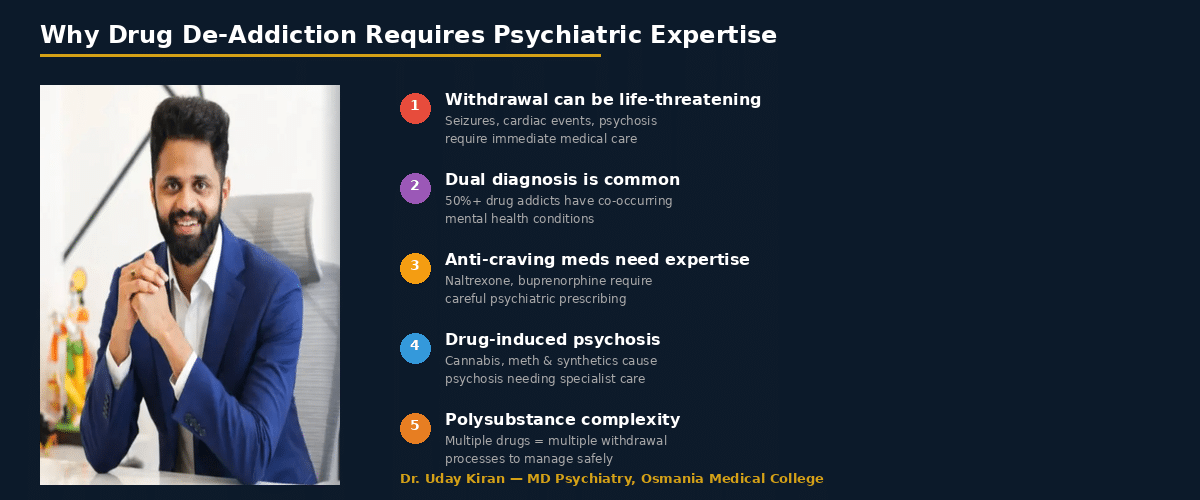
Cannabis (Ganja/Marijuana) Addiction
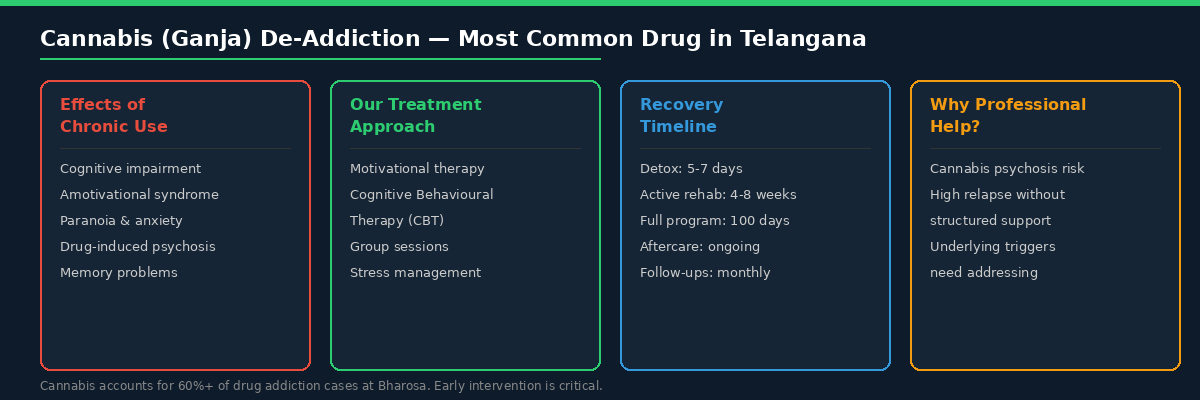
Cannabis is the most commonly abused drug in Telangana and across India. While many consider it harmless, chronic cannabis use can lead to severe psychological dependence, cognitive impairment, amotivational syndrome, paranoia, anxiety, and in some cases, drug-induced psychosis. Our cannabis de-addiction program addresses both the psychological dependence and the cognitive damage caused by long-term use.
Treatment includes: Individual therapy for motivational enhancement, cognitive behavioural therapy to address thought patterns that drive use, group therapy sessions, stress management techniques, and structured daily routines to replace drug-seeking behaviour with productive activities.
Opioid & Heroin Addiction
Opioid addiction — including heroin, morphine, codeine, tramadol, and other prescription opioids — is one of the most physically dangerous forms of drug dependence. Opioids create intense physical dependence, and withdrawal symptoms can be extremely painful and medically risky. Our opioid de-addiction program includes:
- Medically supervised detoxification with opioid substitution therapy (OST) where appropriate
- Anti-craving medication (naltrexone, buprenorphine) under psychiatric supervision
- Intensive individual therapy addressing the root causes of opioid use
- Trauma-informed care — many opioid users have underlying trauma that drives their substance use
- Long-term residential rehabilitation (90-100 days minimum recommended for opioid dependence)
- Structured aftercare with regular follow-ups and relapse prevention planning
Prescription Drug Addiction
Dependence on prescription medications — particularly benzodiazepines (alprazolam, diazepam), sleeping pills, painkillers, and cough syrups containing codeine — is an increasingly common problem in India. These addictions often develop gradually and can be difficult to recognise because the substances were initially prescribed by a doctor. Our treatment approach includes:
- Careful, medically supervised tapering to safely reduce dependence without dangerous withdrawal
- Alternative medication management to address the underlying condition the prescription was treating
- Cognitive behavioural therapy to develop non-pharmaceutical coping strategies
- Education about safe medication use and the risks of self-medication
Synthetic & Party Drug Addiction
The use of synthetic drugs — MDMA (ecstasy), cocaine, methamphetamine, LSD, ketamine, and newer designer drugs — is rising in Hyderabad's urban population, particularly among young adults. These substances carry extreme risks including neurotoxicity, cardiac events, psychosis, and sudden death. Our treatment for synthetic drug addiction includes:
- Emergency medical stabilisation for acute intoxication or overdose
- Comprehensive psychiatric assessment for drug-induced psychosis or mood disorders
- Specialised therapy addressing peer pressure, nightlife culture, and social triggers
- Young adult-focused group programs
- Family education about synthetic drug risks and recovery expectations
Polysubstance Dependence
Many individuals we treat are dependent on more than one substance simultaneously — for example, alcohol combined with cannabis, or opioids combined with benzodiazepines. Polysubstance dependence is more complex and dangerous than single-substance addiction, requiring careful medical management of multiple withdrawal processes and a highly personalised treatment plan. Bharosa's psychiatric team has extensive experience managing these complex cases safely.
Our Drug De-Addiction Treatment Process
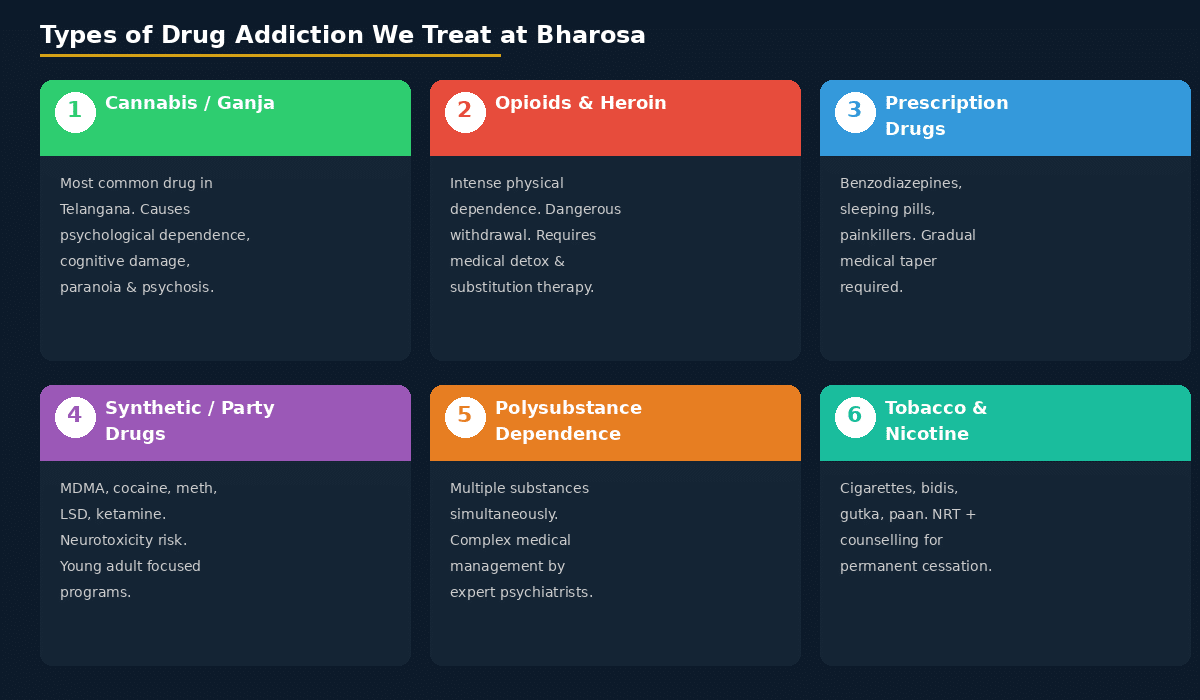
Phase 1: Assessment & Stabilisation (Day 1-7)
Every admission begins with a thorough psychiatric and medical assessment. We evaluate the type and severity of drug dependence, physical health status, co-occurring mental health conditions, social circumstances, and family dynamics. Based on this assessment, our psychiatrists create a personalised treatment plan. If the individual is in acute intoxication or severe withdrawal, they are stabilised in our 24/7 monitored care unit before beginning the formal program.
Phase 2: Medical Detoxification (Day 3-14)
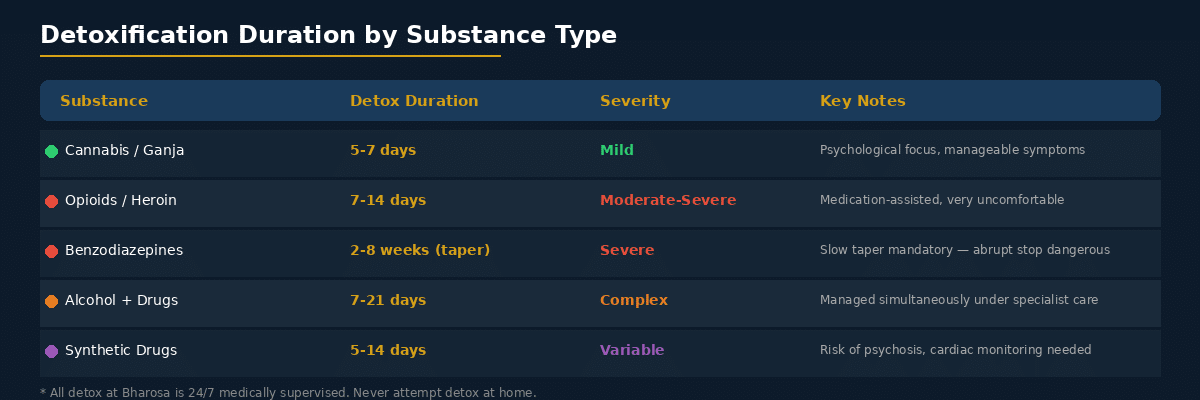
Drug detoxification is the process of safely clearing substances from the body while managing withdrawal symptoms. The duration and intensity of detox vary significantly depending on the substance:
- Cannabis: Relatively mild withdrawal; 5-7 days for primary symptoms
- Opioids/Heroin: Moderate to severe withdrawal; 7-14 days with medication support
- Benzodiazepines: Slow taper required over weeks; abrupt cessation can be dangerous
- Alcohol + Drug (combined): Complex; managed simultaneously under careful supervision
At Bharosa, all detox protocols are supervised by qualified doctors around the clock. We use evidence-based medications to manage symptoms like pain, nausea, insomnia, anxiety, and cravings — making the detox process as comfortable as possible.
Phase 3: Intensive Rehabilitation (Week 2-10)
Once detox is complete, the real work of rehabilitation begins. This phase includes:
- Daily individual therapy sessions with trained psychologists
- Group therapy sessions (6-8 peers in similar recovery stages)
- Cognitive Behavioural Therapy (CBT) to identify and change drug-seeking thought patterns
- Motivational Enhancement Therapy (MET) to strengthen internal motivation for change
- Dialectical Behaviour Therapy (DBT) for emotional regulation
- Relapse prevention skills training
- Life skills workshops — time management, financial planning, communication
- Yoga, meditation, and physical fitness activities
- Art and music therapy for emotional expression
Phase 4: Family Integration & Discharge (Week 10-14)
Recovery happens within a family context. During the final phase, we focus on:
- Intensive family counselling to rebuild trust and communication
- Psychoeducation for family members about drug dependence as a medical condition
- Creating a structured home environment plan that supports ongoing recovery
- Developing an emergency relapse prevention plan with clear steps
- Scheduling aftercare follow-up appointments
- Connecting the individual with local support groups if desired
Phase 5: Aftercare & Follow-Up (Ongoing)
At Bharosa, our relationship with every individual and family extends well beyond discharge. Our aftercare program includes:
- Scheduled follow-up visits with the treating psychiatrist (weekly, then monthly)
- Medication monitoring and adjustment as needed
- Access to our 24/7 helpline for crisis situations
- Optional support group participation
- Family check-in sessions
Why Drug De-Addiction Requires Psychiatric Expertise
Many drug de-addiction centres in Hyderabad are operated by social workers, counsellors, or motivational speakers without formal medical or psychiatric training. While their intentions may be good, drug addiction is a complex medical condition that affects brain chemistry, and treating it without psychiatric expertise can be ineffective or even dangerous.
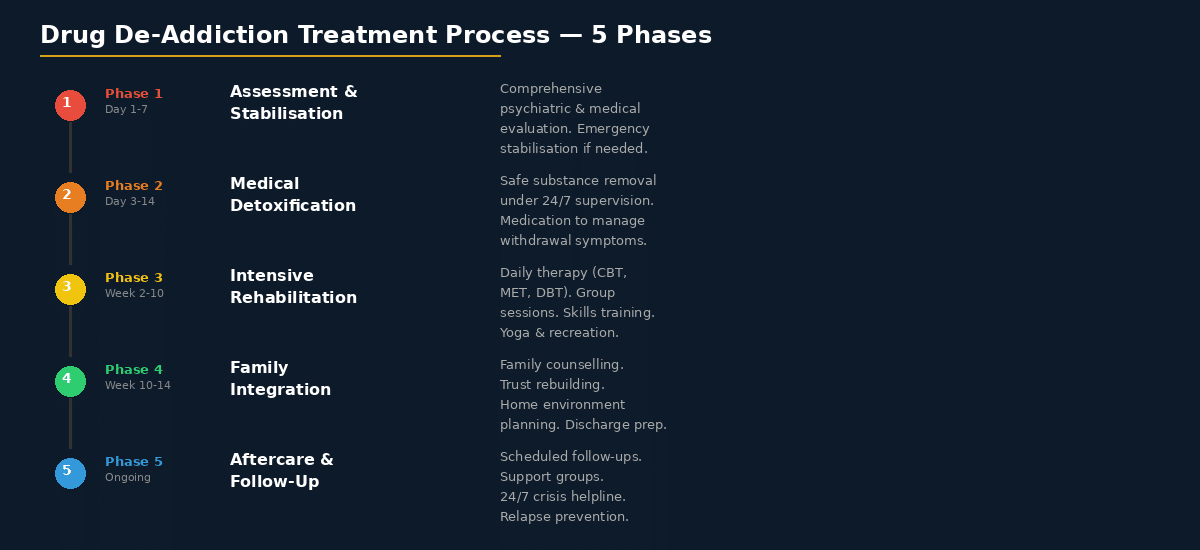
Here is why psychiatric expertise matters:
- Drug withdrawal can be medically dangerous — seizures, cardiac events, and psychosis require immediate medical intervention
- Many drug addicts have co-occurring psychiatric conditions (depression, bipolar, anxiety, PTSD) that drive their substance use — treating only the addiction without addressing the underlying condition leads to relapse
- Anti-craving and stabilisation medications require careful prescribing and monitoring by trained psychiatrists
- Drug-induced psychosis, which is common with cannabis, methamphetamine, and synthetic drugs, requires specialised psychiatric treatment
- Complex cases involving polysubstance dependence need careful medical coordination
At Bharosa, every treatment plan is designed and supervised by MD psychiatrists. This is non-negotiable — it is what separates a professional drug rehabilitation centre from an unqualified facility.
Cost of Drug De-Addiction Treatment in Hyderabad
- 30-Day Program (Shared Room): [Contact Us]
- 30-Day Program (Private AC Room): [Contact Us]
- 100-Day Rehabilitation Program: Custom pricing based on substance, severity, and room type
- Outpatient Consultation: [Contact Us]
The cost of professional drug de-addiction treatment is a fraction of what families spend on the ongoing consequences of untreated addiction — lost jobs, medical emergencies, legal problems, and broken relationships. Investing in proper treatment saves money and lives in the long term.
Free, confidential assessment: Call +91 95050 58886 | WhatsApp +91 95050 58886 | Email: contact@bharosahospitals.com
Frequently Asked Questions — Drug De-Addiction Hyderabad
(Add as FAQ Schema in RankMath)
Q1: What is the best drug de-addiction centre in Hyderabad?
Bharosa Neuro Psychiatry Hospital is one of the best drug de-addiction centres in Hyderabad. With MD psychiatrists, NABH accreditation, a 110-bed facility, and comprehensive programs for all types of drug addiction, Bharosa offers the most thorough and medically sound approach to drug rehabilitation in Telangana.
Q2: How long does drug de-addiction take?
The recommended minimum is 30 days, but for most drug addictions — especially opioids, heroin, and polysubstance dependence — our 100-Day Recovery Program produces significantly better long-term outcomes. The exact duration is determined by the treating psychiatrist based on the type of substance, severity of dependence, and individual progress.
Q3: Is drug de-addiction painful?
Withdrawal from certain drugs, especially opioids and benzodiazepines, can be uncomfortable. However, at Bharosa, we use evidence-based medications to manage withdrawal symptoms effectively, making the detox process as comfortable as possible. Our 24/7 medical team ensures that no individual suffers unnecessarily during detoxification.
Q4: Can drug addiction be completely cured?
Drug addiction is a chronic condition that can be effectively managed with proper treatment. Most individuals who complete a full rehabilitation program and follow structured aftercare guidelines are able to maintain long-term sobriety. However, ongoing support and vigilance are important, as the risk of relapse exists particularly in the first year after treatment.
Q5: My family member is using drugs but denies having a problem. What should I do?
Denial is one of the most common features of drug addiction. Our care coordinators are experienced in helping families navigate this difficult situation. We can provide guidance on how to approach the conversation, and if needed, arrange for professional intervention. Call +91 95050 58886 for confidential advice — even if your family member is not yet ready for treatment, we can help you prepare.
Q6: Do you treat drug-induced psychosis?
Yes. Drug-induced psychosis — particularly from cannabis, methamphetamine, and synthetic drugs — is one of our areas of specialisation. Our psychiatrists are experienced in managing acute psychotic episodes, stabilising the individual, and then addressing the underlying substance use that caused the episode.
Delaying treatment can extend suffering, but taking action now can bring relief and clarity.
Mental health struggles do not define you, and you don’t have to face them alone. If you notice any early signs of mental health disorders in yourself or a family member, take the first step today.