
What Happens Inside a 100 Days Rehab Program Hyderabad?
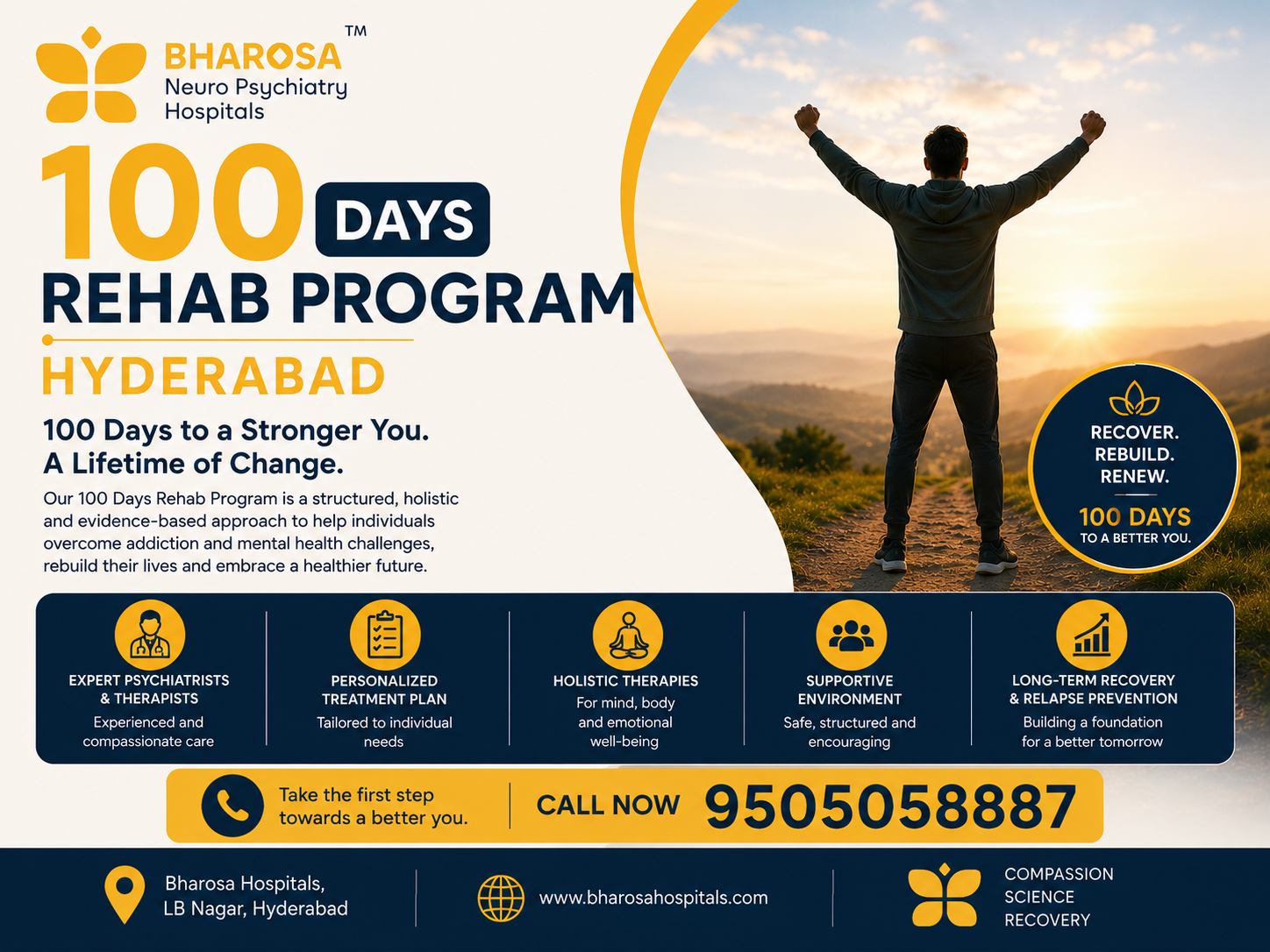
One of the most common reasons people delay seeking addiction treatment is the fear of the unknown — not knowing what life inside a rehabilitation programme actually looks like, or whether it will be as frightening, isolating, or dehumanising as popular imagination suggests. The reality of Bharosa Neuro Psychiatry Hospital's 100 Days Rehab Program Hyderabad is profoundly different from these fears — structured and purposeful, but also humane, personalised, and genuinely healing.
This blog provides a detailed, phase-by-phase account of what actually happens inside our 100 Days Rehab Program Hyderabad — from admission through discharge — so that patients and families can replace uncertainty and fear with accurate understanding and informed confidence.
Before Admission: Assessment and Personalised Planning
The 100 Days Rehab Program Hyderabad begins before the patient enters the building. A comprehensive pre-admission assessment — conducted by a qualified psychiatrist — evaluates the type and severity of substance use, physical health status, psychiatric history, family dynamics, occupational context, and any previous treatment attempts. From this assessment, a personalised treatment plan is developed before day one — ensuring that the programme is already tailored to the individual's specific needs from the moment they arrive.
Phase 1 (Days 1–14): Medically Supervised Detoxification
The first two weeks of the 100 Days Rehab Program Hyderabad are devoted to medically supervised detoxification — the safe, clinical elimination of substances from the body. Patients are admitted to a safe, calm residential environment where they are monitored continuously by nursing staff and reviewed daily by the treating psychiatrist. Withdrawal symptoms are managed with appropriate pharmacological support — benzodiazepines for alcohol and sedative withdrawal, opioid substitution protocols for opioid withdrawal, and anticonvulsants where indicated.
Detox at Bharosa Hospitals is not a frightening ordeal — it is a medically supported passage. Patients are never left alone during vulnerable moments, and the clinical team is available around the clock. Alongside the physical detox, initial psychological support begins — gentle counselling that introduces the patient to the therapeutic framework that will deepen in subsequent phases.
Phase 2 (Days 15–30): Stabilisation and Comprehensive Assessment
Once the acute detox phase is complete, the 100 Days Rehab Program Hyderabad enters its stabilisation phase. The physical discomfort of detox has passed, and patients typically begin to experience the first genuine improvement in clarity — a re-emergence of the capacity to think, feel, and engage that the substance had suppressed. This phase involves:
- Comprehensive psychiatric dual diagnosis evaluation — identifying any co-occurring mental health conditions
- Initiation or optimisation of psychiatric medications where indicated
- Introductory individual therapy — beginning to build the therapeutic alliance and explore the patient's story
- Orientation to the programme structure, therapeutic expectations, and daily routine
- Initial family contact and psychoeducation where appropriate
Phase 3 (Days 31–70): Intensive Therapy and Skills Development
The heart of the 100 Days Rehab Program Hyderabad is this 40-day intensive therapeutic phase — the period during which the deepest healing work occurs. The daily structure of this phase includes:
- Individual psychotherapy sessions (CBT, DBT, EMDR, or MET depending on the patient's needs)
- Group therapy — structured daily sessions providing peer learning, accountability, and mutual support
- Skills workshops — dedicated sessions on relapse prevention, emotional regulation, communication, and stress management
- Family therapy sessions — facilitated communication and relationship repair with involved family members
- Art therapy and music therapy — creative therapeutic modalities that access emotional dimensions beyond verbal expression
- Mindfulness and relaxation practice — daily structured mindfulness sessions building present-moment awareness and craving tolerance
- Physical activity — structured exercise programming supporting neurological recovery and mood regulation
- Nutritional support — guided dietary intervention addressing the physical depletion associated with substance use
This phase is the most intensive and the most transformative. It is during these weeks that patients begin to develop a genuinely new relationship with their emotions, their triggers, and their sense of who they are in sobriety.
Phase 4 (Days 71–100): Reintegration Preparation and Aftercare Planning
The final phase of the 100 Days Rehab Program Hyderabad prepares patients comprehensively for the transition from the protected residential environment back to daily life. This phase includes graduated increases in independence within the programme, structured community activities that rebuild social skills and confidence, vocational guidance and practical planning for return to work or education, detailed relapse prevention planning covering personal triggers, early warning signs, and response protocols, and the development of a personalised aftercare plan covering scheduled outpatient appointments, continued therapy options, and emergency support access.
Crucially, this phase also involves structured family sessions specifically focused on the homecoming — preparing both patient and family for the practical and emotional dimensions of reunion after a period of residential treatment.
After Discharge: Ongoing Support and Aftercare
Completing the 100 Days Rehab Program Hyderabad at Bharosa Hospitals is not the end of the care relationship — it is a transition to the aftercare phase. Regular outpatient follow-up appointments, continued individual or group therapy, open access to the clinical team for post-discharge concerns, and an always-available emergency contact line ensure that the gains of the 100-day programme are protected and built upon in the months that follow.
Frequently Asked Questions
Q: Can a patient use a mobile phone or communicate with family during the 100-day programme?
A: Communication arrangements during the programme are managed clinically — guided by what best supports the patient's therapeutic progress at each stage. During the detox phase, limited communication is typically recommended. As the programme progresses, family contact increases, including structured family therapy visits. The clinical team guides all communication arrangements transparently and with the patient's recovery as the primary consideration.
Q: What does a typical day look like inside the 100 Day Rehab Program Hyderabad?
A: A typical day in the intensive phase includes structured wake and sleep times, morning mindfulness or exercise, breakfast, individual or group therapy sessions in the morning, a skills workshop or art/music therapy session in the afternoon, free structured time for reflection or recreational activities, family communication as clinically appropriate, and an evening group or relaxation session. Every day has purpose, structure, and therapeutic intention.
Q: Is the residential accommodation at Bharosa Hospitals comfortable?
A: Bharosa Hospitals' residential facility is designed to be safe, calm, clean, and conducive to healing. Rooms are provided with all essential amenities. Nutritious meals are provided throughout the programme. The environment is structured and purposeful — not institutional or punitive.
Q: What if a patient develops a medical complication during the programme?
A: Bharosa Hospitals has qualified medical and nursing staff available 24/7. Any medical complication arising during the programme is managed by the on-site team, with hospital referral for acute medical needs where indicated. Patient safety is the absolute priority throughout the programme.
Q: Can a patient leave the 100-day programme before completion if they choose to?
A: Patients retain the right to discharge themselves at any time. However, Bharosa Hospitals' clinical team will work with the patient and family to address any concerns and strongly encourage programme completion, providing clear evidence of why the remaining time is clinically important. If early discharge cannot be prevented, a comprehensive stepped-down care plan is developed immediately.
Visit Bharosa Hospitals
Bharosa Neuro Psychiatry Hospital & Rehabilitation Center
Plot No. 114, Mythripuram, Karmanghat, LB Nagar, Hyderabad – 500079
Opp. TKR College, Main Road, LB Nagar / Karmanghat, Hyderabad
+91 95050 58887 | www.bharosahospitals.com