
How Structured Rehabilitation Builds a Strong Recovery Foundation | Bharosa Hospitals
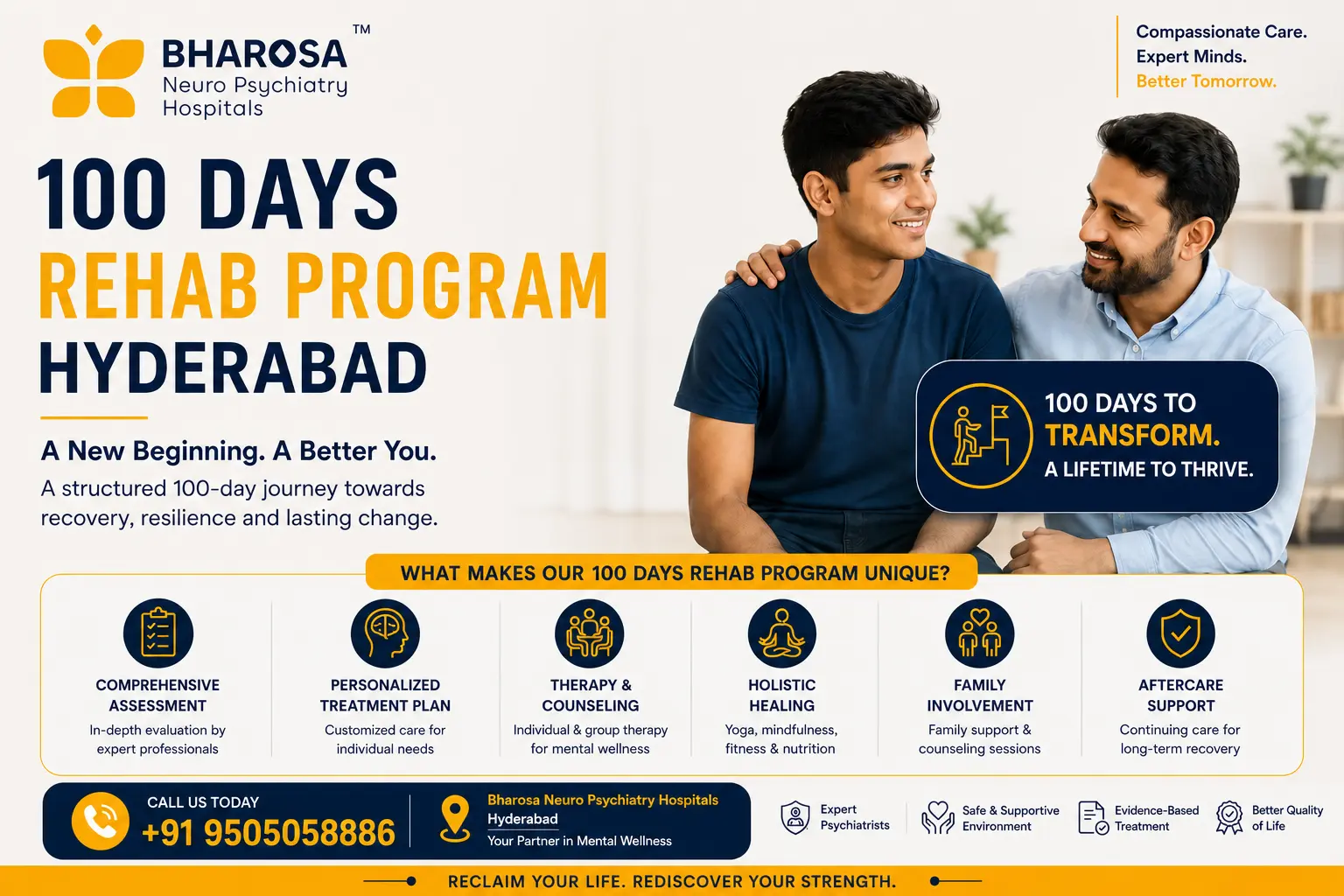
Recovery from addiction or a serious mental health condition is not simply a matter of stopping a behaviour or swallowing a pill. It is a profound, multi-layered process of biological healing, psychological rewiring, emotional growth, and social reconstruction. Without a strong structural foundation — a carefully designed programme that addresses each of these dimensions in the right order, with the right clinical support, and for a sufficient length of time — recovery remains fragile, and relapse becomes almost inevitable. Bharosa Neuro Psychiatry Hospital's 100 Day Rehab Program Hyderabad is built precisely to provide that foundation. In this blog, we explore what structured rehabilitation actually means, why structure matters so profoundly in recovery, and how Bharosa's programme delivers lasting results where shorter, unstructured approaches consistently fall short.
1. What Does 'Structured Rehabilitation' Actually Mean?
The word 'structured' is often used loosely in healthcare — but in the context of addiction and psychiatric rehabilitation, it has a very precise meaning. A structured rehabilitation programme is one in which every element of the patient's day, week, and overall treatment arc is intentionally designed around clinical evidence and therapeutic goals.
Structured rehabilitation is not just about keeping patients busy or maintaining order in a residential facility. It is about understanding that the brain, body, and behaviour all change through repetition, rhythm, and guided experience — and designing an environment that delivers exactly these conditions consistently across the treatment period.
The 100 Day Rehab Program Hyderabad at Bharosa Hospitals embodies this philosophy completely — from the morning schedule to the weekly therapy progression to the phased reintroduction of responsibility and autonomy as the patient's recovery deepens.
2. The Neuroscience Behind Why Structure Matters
To understand why a structured, extended programme produces dramatically better outcomes than short-term or unstructured interventions, it helps to understand what addiction and psychiatric illness do to the brain — and what the brain needs to recover.
The Damaged Brain Needs Time and Repetition
Addiction restructures the brain's reward, motivation, and decision-making systems — increasing the sensitivity of circuits that drive craving and compulsion, while reducing the effectiveness of the prefrontal cortex that normally exercises rational self-control. These changes do not reverse themselves in a few days of abstinence. Neuroplasticity — the brain's capacity to form new, healthier circuits — requires sustained periods of structured experience, typically 12 to 16 weeks of guided therapeutic work, to produce meaningful change.
Routines Reset the Body Clock
Substance dependence and psychiatric illness disrupt circadian rhythms, sleep architecture, appetite regulation, and hormonal balance. A structured daily routine — consistent wake times, scheduled meals, physical activity, therapy sessions, and rest periods — gradually resets these biological systems, restoring the physiological platform on which psychological recovery can be built.
Repetition Builds New Habits
One of the core insights behind the 100 Day Rehab Program Hyderabad at Bharosa is that new behaviours — healthy coping mechanisms, emotional regulation skills, communication patterns, and self-care practices — are not learned from a single counselling session. They are built through repetition, feedback, and practice over weeks and months. The 100-day duration provides precisely the time required for these new patterns to become deeply embedded — transforming them from effortful strategies into natural habits.
3. The Architecture of Bharosa's 100-Day Programme
The structured nature of Bharosa's programme is best understood through its three distinct phases — each with specific clinical goals, therapeutic modalities, and milestones that build sequentially on what came before.
Phase 1: Stabilisation and Detox
The programme opens with medically supervised detoxification under 24-hour clinical oversight. All withdrawal symptoms are managed with precision pharmacology — benzodiazepines for alcohol withdrawal, buprenorphine for opioid dependence, nutritional supplementation, and symptomatic relief agents. The psychiatry team conducts a comprehensive biopsychosocial assessment during this phase, identifying co-occurring mental health conditions that will require treatment alongside the addiction. Daily medical review by an MD psychiatrist ensures that the patient's physical stabilisation is closely monitored. This phase ends when the patient is medically stable and ready to engage with the therapeutic programme.
Phase 2: Intensive Therapeutic Rehabilitation
This is the heart of the structured programme — the most intensive and transformative phase. A carefully sequenced daily schedule integrates:
- Individual therapy (CBT, DBT, ACT, or EMDR based on the patient's clinical profile) — addressing the psychological roots of addiction and building core coping skills
- Group therapy — building peer support, reducing shame and isolation, and practising interpersonal skills in a safe, supervised environment
- Family therapy sessions — beginning the process of healing relationships, changing communication patterns, and preparing the family for their role in post-discharge support
- Psychoeducation — helping patients and families understand the neuroscience of addiction, the mechanics of recovery, and the triggers and warning signs they need to manage long-term
- Life skills training — restoring practical competencies in daily functioning, financial management, time organisation, and social navigation that addiction typically erodes
- Expressive therapies — Art Therapy and Music Therapy provide powerful non-verbal channels for emotional processing, creativity, and self-expression that complement clinical therapy
- Physical wellness — Yoga, structured exercise, and nutrition management support physical recovery, regulate mood, and rebuild physical self-confidence
Phase 3: Reintegration and Relapse Prevention
The final phase of the 100 Day Rehab Program Hyderabad at Bharosa bridges residential treatment and independent life. As patients demonstrate increasing psychological stability and self-management capacity, they are gradually given more autonomy and responsibility. Structured reintegration activities — vocational rehabilitation, supervised community exposure, social skills practice — prepare them for the real-world environments they will return to. Crucially, this phase involves intensive relapse prevention planning: identifying personal triggers, constructing concrete coping strategies for each, building a sober support network, and creating a detailed emergency response plan for moments of intense craving.
4. The Role of Structure in Preventing Relapse
The relationship between programme structure and relapse prevention is direct and measurable. Research consistently demonstrates that patients who complete structured programmes of 90 days or more have relapse rates up to 80% lower than those who complete shorter, less structured interventions in the critical first year of recovery. The reasons are straightforward:
- Longer programmes allow the brain sufficient time for neuroplastic recovery — reducing the intensity of cravings and restoring rational self-control
- Structured daily routines replace the chaotic, substance-centred daily patterns of active addiction with healthy, purposeful alternatives
- The extended therapeutic relationship gives patients time to develop genuine trust with their clinical team, enabling deeper therapeutic work on the root causes of addiction
- The family involvement component changes the home environment that the patient returns to — reducing enabling behaviours and improving communication
- Intensive aftercare planning provides a concrete safety net for the months following discharge, when the risk of relapse is statistically highest
5. Beyond the 100 Days: Structured Aftercare
A structured programme does not end at the hospital gates. Bharosa Hospitals designs a comprehensive, written aftercare plan for every patient that becomes the structure for their continued recovery in the community. This plan includes scheduled follow-up psychiatric consultations, continued outpatient therapy at defined intervals, maintenance medication protocols, peer support group participation, and crisis intervention contacts for moments of acute vulnerability.
The structure of the 100-day programme gradually transitions into the self-managed structure of sustainable recovery — with Bharosa's clinical team remaining a consistent presence through the critical post-discharge period.
"The discipline of structured rehabilitation gives the brain and mind what they need most during recovery: time, repetition, safety, and guided growth — in exactly that order." — Dr. Uday Kiran, CEO, Bharosa Neuro Psychiatry Hospital
Frequently Asked Questions
Q1. Is the 100-Day Rehab Program at Bharosa purely residential?
Yes. The 100-Day Programme is a fully residential programme in which patients live on campus throughout the treatment period. The residential structure is central to its effectiveness — removing patients from their usual triggers and providing continuous therapeutic engagement in a clinically supervised environment.
Q2. What happens if a patient needs to leave before completing the 100 days?
The Bharosa clinical team works closely with patients and families to address concerns and support continuation of treatment. If early discharge becomes unavoidable, the team will develop an accelerated aftercare plan to maintain as much of the recovery framework as possible and will discuss the increased risks associated with incomplete treatment.
Q3. Can family members visit during the 100-Day Programme?
Yes. Family visits are structured within the programme's guidelines and are actively encouraged as a therapeutic component of recovery. Family therapy sessions are conducted at appropriate intervals throughout the 100 days.
Q4. Does the programme treat both addiction and mental health conditions?
Absolutely. Bharosa's programme specialises in dual diagnosis — the co-occurrence of addiction and mental health conditions such as depression, anxiety, PTSD, or bipolar disorder. Both conditions are treated simultaneously by the integrated psychiatry and psychology team.
Q5. How do I arrange an admission to Bharosa's 100-Day Programme?
Call +91 95050 58886 (available 24/7) or visit www.bharosahospitals.com to book an initial psychiatric assessment. The clinical team will evaluate your loved one and confirm whether the 100-Day Programme is the most appropriate level of care.
Hospital Address & Contact
Bharosa Neuro Psychiatry Hospital & Rehabilitation Center
Plot No. 114, Mythripuram, Karmanghat, Opposite TKR College Common (TKR Kamaan), Main Road, LB Nagar / Karmanghat, Hyderabad – 500079, Telangana
+91 95050 58886 (Available 24/7)