
Schizophrenia Treatment in Hyderabad — Bharosa Neuro Psychiatry Hospital
Schizophrenia is one of the most severe and complex psychiatric conditions, affecting approximately 1% of the global population. It is a chronic disorder that fundamentally alters how a person thinks, feels, and perceives reality — causing hallucinations, delusions, disorganised thinking, and profound social withdrawal. For families, a diagnosis of schizophrenia can feel overwhelming and frightening. But with proper, sustained psychiatric care, individuals with schizophrenia can achieve significant improvement, stability, and a meaningful quality of life.
Bharosa Neuro Psychiatry Hospital is one of the leading centres for schizophrenia treatment in Hyderabad. Our 110-bed NABH-accredited residential facility is specifically designed for long-term psychiatric rehabilitation, offering the structured, supervised, and compassionate environment that individuals with schizophrenia need. With a team of 10+ MD psychiatrists specialising in psychotic disorders, we provide comprehensive care that goes far beyond medication — addressing every dimension of recovery.
A family member showing signs of psychosis? Call +91 95050 58886 immediately. 24/7 emergency admissions available.
What Is Schizophrenia?
Schizophrenia is a chronic brain disorder that affects less than 1% of the population but has a profound impact on the individual and their family. It typically emerges in late adolescence or early adulthood (ages 16-30) and is characterised by episodes of psychosis — a state in which the person loses touch with reality.
Schizophrenia is NOT the same as split personality or dissociative identity disorder. This is one of the most common misconceptions. Schizophrenia is a disorder of thought, perception, and cognition — not multiple personalities.
The exact cause of schizophrenia is not fully understood, but it involves a complex interplay of genetics (strong family heritability), brain chemistry (dopamine and glutamate imbalances), brain structure differences, and environmental triggers (prenatal stress, childhood adversity, substance use — particularly cannabis during adolescence).
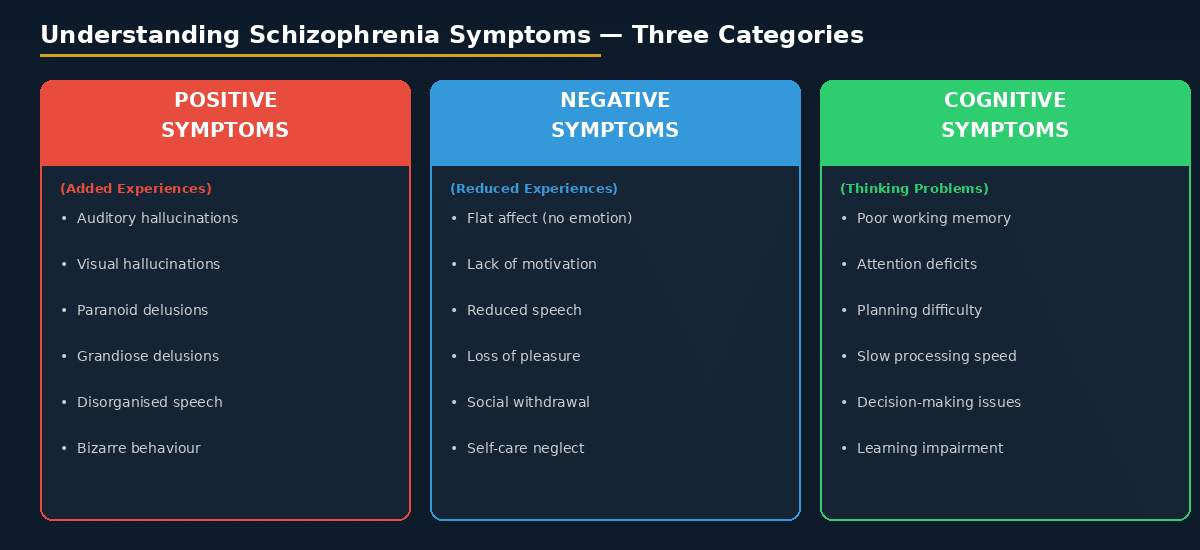
Symptoms of Schizophrenia
Positive Symptoms (Added Experiences)
- Hallucinations — hearing voices is the most common; may also include seeing, smelling, or feeling things that are not there
- Delusions — fixed false beliefs such as being followed, controlled by external forces, having special powers, or receiving messages through TV or radio
- Disorganised speech — incoherent or illogical speech patterns, jumping between unrelated topics
- Disorganised or catatonic behaviour — unpredictable agitation, bizarre postures, complete immobility
Negative Symptoms (Reduced Experiences)
- Flat affect — reduced emotional expression, monotone voice, blank facial expression
- Avolition — lack of motivation to initiate or sustain activities, even basic self-care
- Alogia — reduced speech output, brief and empty responses
- Anhedonia — inability to experience pleasure in previously enjoyed activities
- Social withdrawal — progressively retreating from family, friends, and society
Cognitive Symptoms
- Impaired working memory — difficulty holding and using information
- Attention deficits — inability to focus or concentrate
- Executive dysfunction — difficulty planning, organising, and making decisions
- Reduced processing speed — slower thinking and response times
Negative and cognitive symptoms are often the most debilitating in the long term, as they severely impair the individual's ability to function independently, maintain relationships, and hold employment.
Schizophrenia and Substance Abuse — A Dangerous Combination
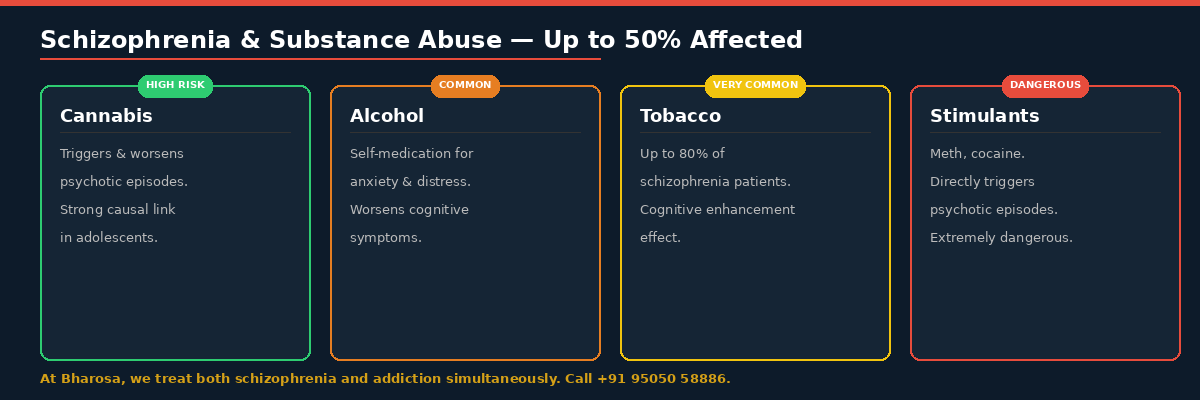
Substance abuse is extremely common among individuals with schizophrenia. Research shows that up to 50% of people with schizophrenia develop a substance use disorder during their lifetime. Common patterns include:
- Cannabis use — strongly associated with both triggering and worsening schizophrenia; cannabis use during adolescence significantly increases the risk of developing the disorder
- Alcohol abuse — used to self-medicate anxiety, depression, and the distressing symptoms of the illness
- Tobacco/nicotine dependence — extremely common (up to 80%) among people with schizophrenia, likely related to the cognitive-enhancing effects of nicotine
- Stimulant use — methamphetamine, cocaine — can trigger psychotic episodes and dramatically worsen the illness
At Bharosa, we specialise in treating schizophrenia and addiction simultaneously through our dual diagnosis program. Treating only one condition while ignoring the other leads to poor outcomes and repeated hospitalisations.
Our Schizophrenia Treatment Approach
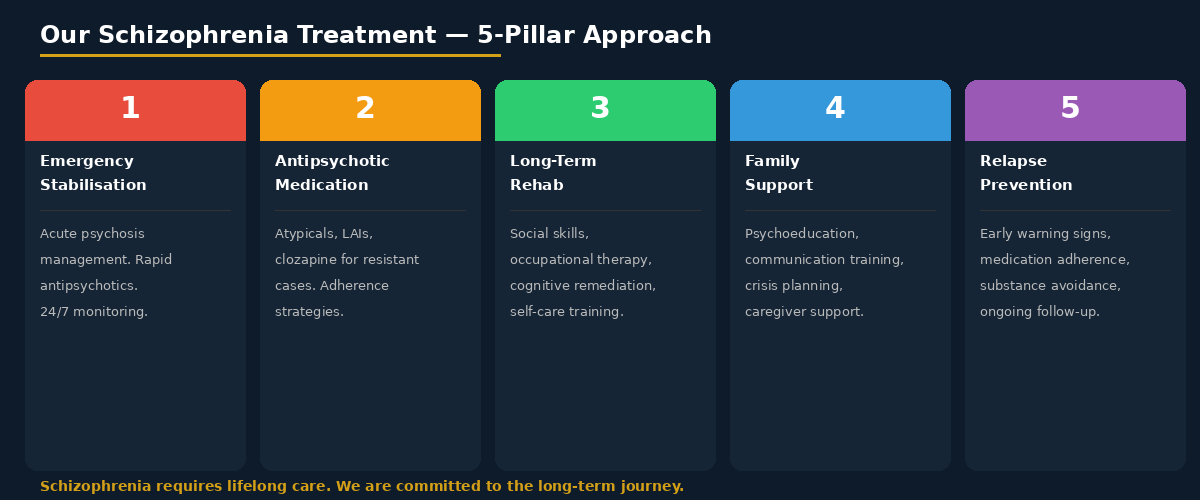
1. Emergency Stabilisation
Many individuals with schizophrenia are brought to our facility during acute psychotic episodes — when they may be agitated, confused, or experiencing frightening hallucinations and delusions. Our emergency team provides immediate stabilisation with rapid-acting antipsychotic medication, sedation if necessary for safety, 24/7 nursing observation in our secure ward, and a calm, supportive environment to reduce agitation.
2. Antipsychotic Medication Management
Medication is the foundation of schizophrenia treatment. Our psychiatrists prescribe and carefully monitor:
- Second-generation (atypical) antipsychotics — risperidone, olanzapine, quetiapine, aripiprazole, paliperidone — preferred due to better side effect profiles
- First-generation antipsychotics — haloperidol, chlorpromazine — used when atypicals are not effective
- Long-acting injectable antipsychotics (LAIs) — monthly or bi-monthly injections that ensure medication adherence, one of the biggest challenges in schizophrenia
- Clozapine — the gold standard for treatment-resistant schizophrenia, requiring regular blood monitoring
Medication adherence is the single most important factor in preventing relapse. Our team uses long-acting injectables, family education, and structured monitoring to maximise adherence.
3. Long-Term Residential Rehabilitation
Schizophrenia often requires extended residential care — not just for acute stabilisation, but for comprehensive rehabilitation. Our long-term programs provide:
- Structured daily routine — wake time, meals, therapy, activities, and rest at consistent times
- Social skills training — rebuilding the ability to interact, communicate, and relate to others
- Occupational therapy — developing practical skills for daily living and potential employment
- Cognitive remediation — exercises and activities to improve attention, memory, and executive function
- Self-care training — grooming, hygiene, nutrition, and health management
- Recreational activities — art, music, games, gardening, and yoga to promote well-being and engagement
4. Family Psychoeducation and Support
Families of individuals with schizophrenia carry an enormous burden. Our comprehensive family support program includes:
- Education about schizophrenia — what it is, what causes it, how treatment works, and what to expect
- Communication training — how to talk to someone with schizophrenia without triggering distress
- Crisis management planning — what to do when symptoms worsen, who to call, when to seek emergency help
- Caregiver mental health support — addressing burnout, grief, and emotional exhaustion in family caregivers
- Regular family meetings — updates on progress, treatment adjustments, and collaborative planning
5. Relapse Prevention
Relapse is common in schizophrenia, but it can be minimised with proper planning:
- Early warning sign identification — teaching patients and families to recognise the subtle signs that precede a full episode
- Medication adherence strategies — long-acting injectables, pill organisers, family monitoring, regular psychiatric follow-ups
- Stress reduction — identifying and minimising environmental stressors that can trigger episodes
- Substance avoidance — particularly cannabis and stimulants, which can trigger psychosis
- Ongoing outpatient care — regular psychiatric consultations even when the individual is stable
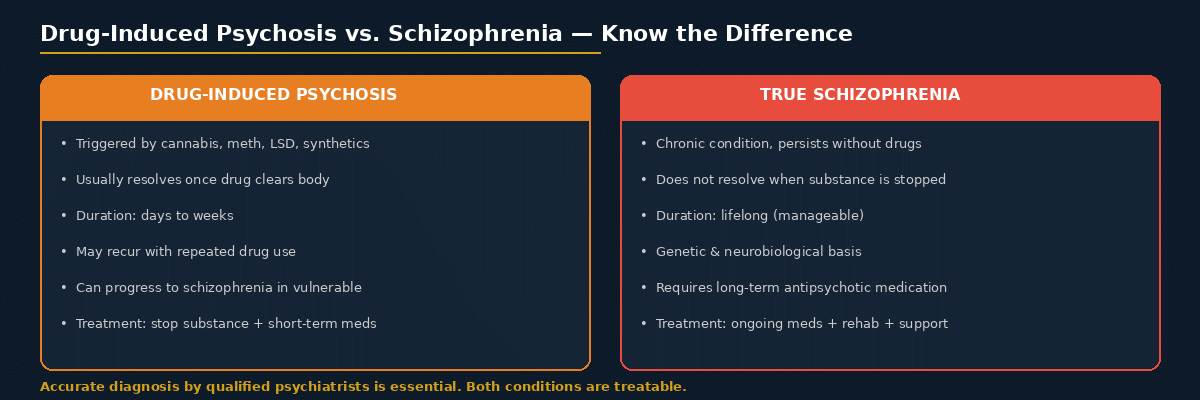
Drug-Induced Psychosis vs. Schizophrenia
An important distinction that our psychiatrists frequently make is between drug-induced psychosis and true schizophrenia. Cannabis, methamphetamine, LSD, and synthetic drugs can all cause psychotic episodes that closely resemble schizophrenia. However:
- Drug-induced psychosis typically resolves once the substance is cleared from the body (days to weeks)
- Schizophrenia is a chronic condition that persists regardless of substance use
- Some individuals who experience drug-induced psychosis go on to develop full schizophrenia — particularly those with genetic predisposition
Accurate diagnosis is critical because treatment approaches differ significantly. At Bharosa, our experienced psychiatrists conduct thorough assessments to distinguish between these conditions and provide the appropriate treatment.
Living With Schizophrenia — Long-Term Outlook
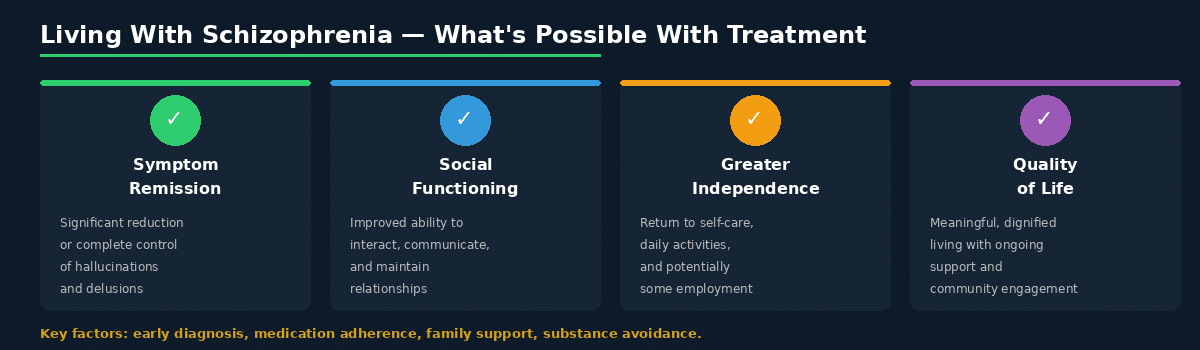
With proper, sustained treatment, many individuals with schizophrenia can achieve:
- Significant reduction or complete remission of positive symptoms (hallucinations, delusions)
- Improved social functioning and relationships
- Greater independence in daily living
- Return to some form of productive activity (work, study, volunteering)
- A meaningful, dignified quality of life
The key factors for a positive outcome are early diagnosis, consistent medication adherence, long-term psychiatric follow-up, family support, and avoidance of substance use. Bharosa provides all of these under one comprehensive treatment umbrella.
Frequently Asked Questions — Schizophrenia Treatment Hyderabad
Q1: Can schizophrenia be cured?
Schizophrenia is a chronic condition that cannot be cured, but it can be effectively managed with medication, rehabilitation, and ongoing psychiatric care. Many individuals achieve significant improvement and lead stable lives with proper treatment.
Q2: How long does schizophrenia treatment take?
Schizophrenia requires lifelong management. Acute psychotic episodes may need 4-12 weeks of inpatient care. Long-term residential rehabilitation can last 3-12 months depending on severity. Ongoing outpatient follow-up is essential for life.
Q3: Can cannabis cause schizophrenia?
Cannabis use, especially during adolescence, significantly increases the risk of developing schizophrenia in genetically predisposed individuals. Cannabis can also trigger acute psychotic episodes and worsen existing schizophrenia. We strongly advise complete avoidance of cannabis.
Q4: What should I do if my family member stops taking medication?
Medication non-adherence is the most common cause of relapse in schizophrenia. Contact your treating psychiatrist immediately. Long-acting injectable antipsychotics may be recommended to ensure consistent medication delivery. Our team can help manage this situation.
Q5: Is schizophrenia dangerous?
The vast majority of people with schizophrenia are not dangerous. In fact, they are more likely to be victims of violence than perpetrators. However, untreated psychotic episodes can sometimes lead to unpredictable behaviour, which is why professional treatment is essential.
Q6: What is the difference between schizophrenia and bipolar disorder?
Bipolar disorder primarily involves mood episodes (mania and depression), while schizophrenia primarily involves psychotic symptoms (hallucinations, delusions, disorganised thinking). However, there can be overlap — bipolar with psychotic features and schizoaffective disorder share characteristics of both. Accurate diagnosis by a qualified psychiatrist is essential.

Delaying treatment can extend suffering, but taking action now can bring relief and clarity.
Mental health struggles do not define you, and you don’t have to face them alone. If you notice any early signs of mental health disorders in yourself or a family member, take the first step today.