
Best Detoxification Centre in Hyderabad — Bharosa Neuro Psychiatry Hospital
Detoxification — commonly called detox — is the critical first step in recovering from alcohol or drug dependence. It is the medically supervised process of safely removing addictive substances from the body while managing the withdrawal symptoms that occur when someone stops using a substance they have become physically dependent on.
Attempting detox without medical supervision can be extremely dangerous. Alcohol withdrawal can cause life-threatening seizures and delirium tremens. Opioid withdrawal, while rarely fatal, is intensely painful. Benzodiazepine withdrawal can trigger seizures and psychosis. This is why detoxification should always be conducted at a qualified medical facility with 24/7 supervision.
Bharosa Neuro Psychiatry Hospital operates one of the most comprehensive detoxification centres in Hyderabad. Our detox programs are conducted under round-the-clock medical supervision by qualified doctors and nurses, with evidence-based medication protocols that make the process as safe and comfortable as possible. Detox at Bharosa is never an isolated procedure — it is the gateway to our full rehabilitation programs that address the root causes of addiction.
What Happens During Detoxification?
When someone who is physically dependent on alcohol or drugs stops using, the body goes into withdrawal. The brain and nervous system, which have adapted to the constant presence of the substance, must now readjust to functioning without it. This readjustment process produces withdrawal symptoms that can range from mild discomfort to life-threatening medical emergencies.
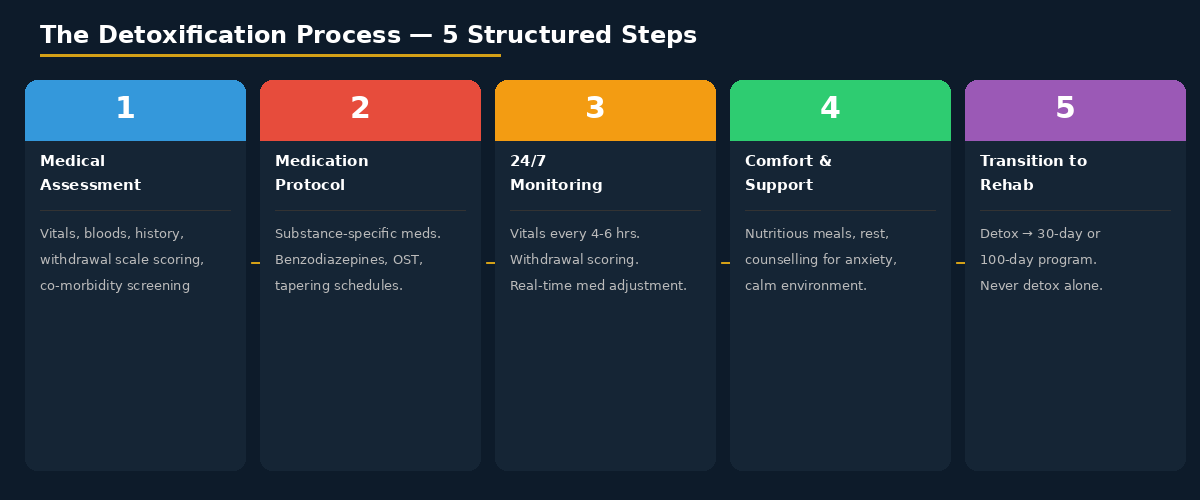
At Bharosa, the detoxification process follows a structured protocol:
Step 1: Medical Assessment
Upon arrival, our medical team conducts a comprehensive evaluation including vital signs monitoring (blood pressure, heart rate, temperature), blood tests (liver function, blood count, electrolytes), substance use history (type, quantity, frequency, last use), physical examination for complications, mental health screening for co-occurring conditions, and assessment using standardised withdrawal scales (CIWA for alcohol, COWS for opioids).
Step 2: Stabilisation & Medication Protocol
Based on the assessment, our doctors initiate an appropriate medication protocol:
- For alcohol detox: Benzodiazepines (diazepam, lorazepam) using symptom-triggered dosing, plus thiamine and multivitamins to prevent Wernicke's encephalopathy
- For opioid detox: Opioid substitution therapy (buprenorphine) or symptomatic management with clonidine, NSAIDs, anti-nausea and anti-diarrhoeal medications
- For benzodiazepine detox: Gradual tapering schedule using long-acting benzodiazepines, never abrupt cessation
- For polysubstance detox: Individualised protocol addressing each substance simultaneously under close monitoring
- For cannabis detox: Primarily supportive care with sleep aids and anxiolytics if needed; psychological support is the main focus
Step 3: 24/7 Monitoring
Throughout the detox period, our nursing staff monitors the individual around the clock. Vital signs are checked every 4-6 hours (more frequently in severe cases), withdrawal severity is assessed using standardised scales at regular intervals, medication is adjusted in real-time based on symptom progression, and emergency medical intervention is immediately available if complications arise (seizures, delirium, cardiac events).
Step 4: Comfort & Supportive Care
We understand that detox is physically and emotionally challenging. Our team provides nutritious meals and hydration support, comfortable private or shared rooms with clean bedding, counselling support for anxiety and emotional distress during withdrawal, quiet and calm environment to promote rest and healing, and family updates on progress (with patient consent).
Step 5: Transition to Rehabilitation
Detox alone is never sufficient for lasting recovery. It only addresses the physical dependence, not the psychological, behavioural, and social factors that drive addiction. Once detox is complete, our team transitions the individual into our comprehensive rehabilitation programs — the 30-day intensive or 100-day recovery program — where the real work of sustainable recovery begins.
Alcohol Detoxification
Alcohol is the most commonly detoxified substance at Bharosa. Alcohol withdrawal can be medically serious and must always be supervised.
Alcohol Withdrawal Timeline
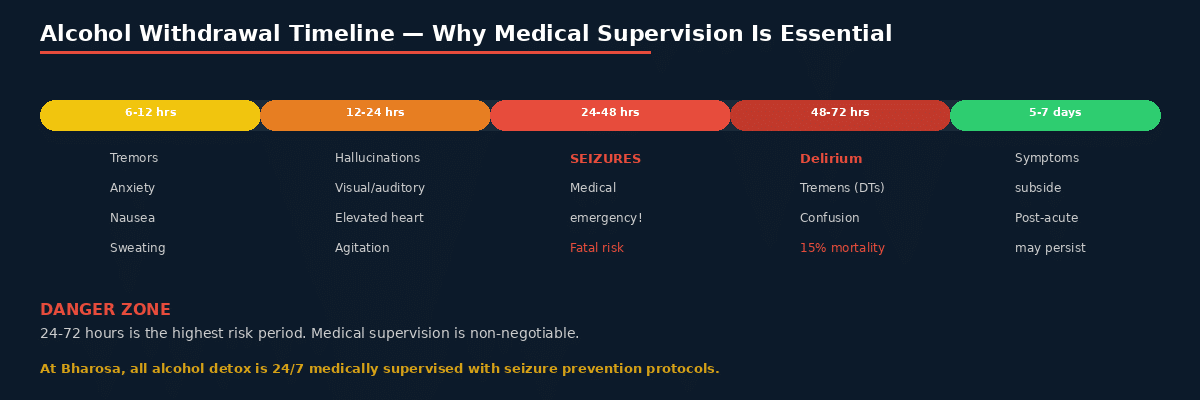
- 6-12 hours after last drink: Tremors, anxiety, nausea, sweating, elevated heart rate
- 12-24 hours: Hallucinations may begin (visual, auditory, or tactile)
- 24-48 hours: Risk of withdrawal seizures — this is a medical emergency
- 48-72 hours: Peak withdrawal; risk of Delirium Tremens (DTs) in severe cases — confusion, agitation, fever, hallucinations, cardiovascular instability
- 5-7 days: Most acute symptoms subside; post-acute symptoms (anxiety, sleep disturbance, mood instability) may persist for weeks
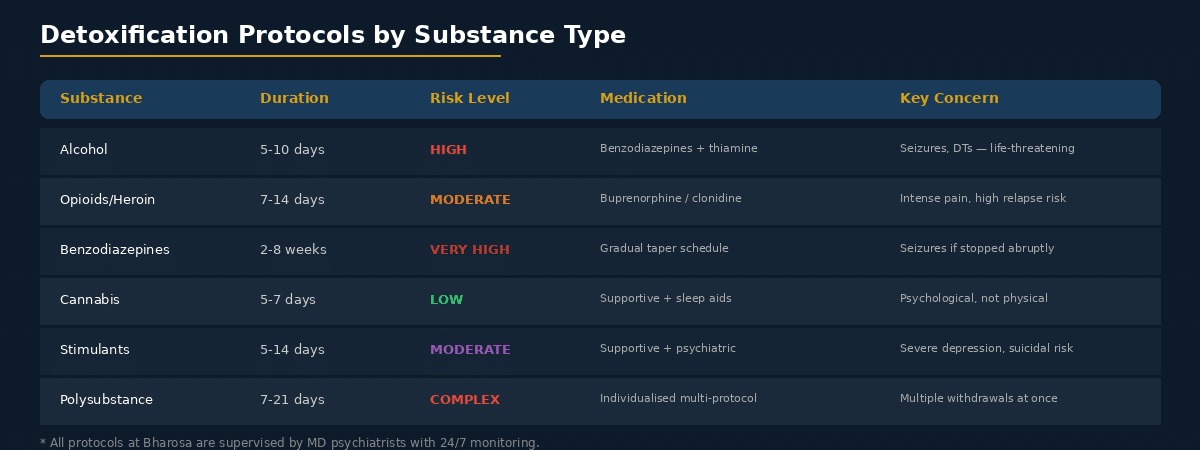
At Bharosa, alcohol detox is typically managed over 5-10 days with a benzodiazepine-based protocol. Individuals with severe dependence, prior seizure history, or significant medical comorbidities receive the highest level of monitoring and care.
Read more: Alcohol De-Addiction Centre in Hyderabad
Drug Detoxification
Opioid & Heroin Detox
Opioid withdrawal is intensely uncomfortable but rarely life-threatening when properly managed. Symptoms include severe muscle pain, abdominal cramps, diarrhoea, vomiting, goosebumps, severe anxiety, and insomnia. Our protocol uses buprenorphine-based substitution therapy or symptomatic management depending on the individual case. Detox duration is typically 7-14 days.
Benzodiazepine Detox
Benzodiazepine withdrawal is one of the most medically dangerous forms of detox. Abrupt cessation can cause seizures, psychosis, and death. At Bharosa, we use a carefully calculated tapering schedule — gradually reducing the dose over weeks to months — to ensure safe withdrawal. This process requires expert psychiatric supervision and cannot be safely done at home.
Cannabis Detox
Cannabis withdrawal is generally milder than alcohol or opioid withdrawal but can still be significant for chronic heavy users. Symptoms include irritability, anxiety, sleep disturbance, decreased appetite, restlessness, and mood swings. Detox is primarily supportive, with the main focus on psychological intervention and establishing substance-free routines.
Stimulant Detox (Cocaine, Methamphetamine)
Stimulant withdrawal does not involve the same physical danger as alcohol or benzodiazepine withdrawal, but the psychological impact is severe. Symptoms include intense fatigue, depression, increased appetite, vivid nightmares, slowed thinking, and strong cravings. There is a significant risk of suicidal ideation during stimulant withdrawal. Our team provides close psychiatric monitoring and supportive care throughout.
Why Medical Detox? The Dangers of Quitting Cold Turkey
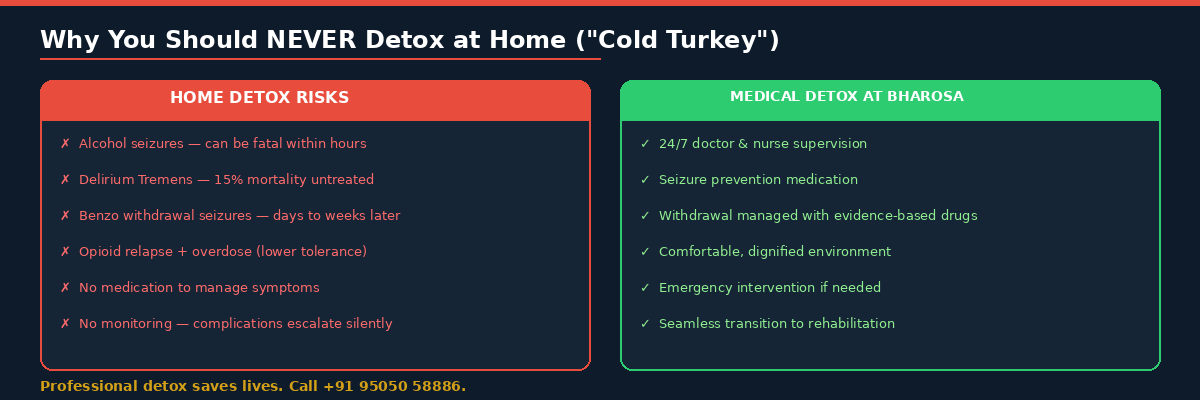
Many people attempt to quit alcohol or drugs on their own — often called "going cold turkey." This is dangerous for several reasons:
- Alcohol withdrawal seizures can occur within 24-48 hours of stopping and can be fatal without medical intervention
- Delirium Tremens (DTs) has a mortality rate of up to 15% if untreated
- Benzodiazepine withdrawal seizures can occur days to weeks after stopping
- Opioid withdrawal, while rarely fatal, is so intensely painful that most people relapse within hours — often overdosing because their tolerance has decreased
- Unsupervised detox has no medication support to manage symptoms, making the process unnecessarily painful and dangerous
- Without medical monitoring, complications can escalate before anyone realises the severity
Professional medical detox at Bharosa eliminates these risks. Our team ensures that withdrawal is managed safely, comfortably, and with dignity — setting the stage for successful long-term rehabilitation.
Never attempt detox alone. Call +91 95050 58886 for safe, medically supervised detoxification.
What Makes Bharosa's Detox Centre Different?
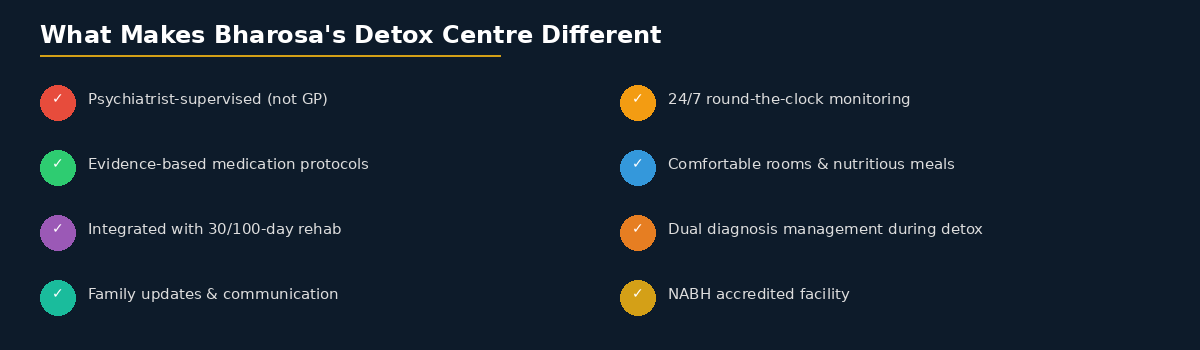
- Psychiatrist-supervised — all detox protocols designed and overseen by MD psychiatrists, not just general physicians
- 24/7 medical monitoring — round-the-clock nursing care with immediate access to emergency medical intervention
- Evidence-based protocols — using internationally recognised medication protocols for each substance type
- Comfortable environment — private and shared rooms, nutritious meals, clean and calm surroundings
- Integrated with rehabilitation — detox is never standalone; it seamlessly transitions into our 30-day or 100-day rehab programs
- Dual diagnosis capability — we manage co-occurring mental health conditions during detox, not just the physical withdrawal
- Family communication — regular updates to family members on progress and next steps
- NABH accredited — highest national quality and safety standards
Frequently Asked Questions — Detoxification Centre Hyderabad
Q1: How long does detox take?
Detox duration varies by substance. Alcohol detox typically takes 5-10 days. Opioid detox takes 7-14 days. Benzodiazepine detox requires a gradual taper over several weeks. Cannabis detox is 5-7 days for primary symptoms. Your doctor will provide a specific timeline based on your situation.
Q2: Is detox painful?
With proper medical management, detox at Bharosa is significantly more comfortable than attempting to quit on your own. Our medications effectively manage the most distressing withdrawal symptoms. While some discomfort is normal as the body adjusts, our goal is to make the process as bearable as possible.
Q3: Can I detox at home?
We strongly advise against home detox for alcohol, opioids, and benzodiazepines due to the risk of seizures, delirium, and other medical emergencies. Medical detox at a qualified facility is always safer and more effective. For milder dependencies, our outpatient team can assess whether supervised home detox may be appropriate.
Q4: Is detox alone enough to recover from addiction?
No. Detox addresses only the physical dependence — it does not treat the psychological, emotional, and behavioural roots of addiction. Without follow-up rehabilitation (therapy, counselling, skills training, family support), relapse rates after detox alone are extremely high (over 80%). That is why Bharosa always follows detox with structured rehabilitation.
Q5: What should I bring for a detox admission?
Bring comfortable clothing, basic toiletries, any current medications with prescriptions, identification documents, and emergency contact information. Our team will provide everything else you need during your stay. All personal belongings are securely stored.
Q6: Can family visit during detox?
During the initial 48-72 hours of detox, we typically limit visits to allow the individual to stabilise in a calm environment. After stabilisation, family visits are encouraged and scheduled during designated visiting hours. Our team keeps families informed of progress throughout.

Delaying treatment can extend suffering, but taking action now can bring relief and clarity.
Mental health struggles do not define you, and you don’t have to face them alone. If you notice any early signs of mental health disorders in yourself or a family member, take the first step today.