

Crisis Intervention & Suicide Prevention
Bharosa Neuro Psychiatry Hospitals
24/7 Crisis Intervention & Suicide Support
If you are reading this and feeling like there is no way out, please know this: You do not want to end your life; you want to end the pain. There is a difference.
At Bharosa Neuropsychiatry Hospitals, we treat suicidal thoughts not as a character flaw, but as a critical medical emergency. Just as you would rush to the ER for a heart attack, you must seek help for a mental health crisis. Our Emergency Response Team is available 24/7, 365 days a year to keep you safe until the storm passes.

Recognizing a Psychiatric Emergency
A mental health crisis can escalate rapidly. Immediate hospitalization or intervention is required if you or a loved one is experiencing:
- Active Suicidal Ideation: Having a specific plan or intent to end one's life.
- Self-Harm: Cutting, burning, or injuring oneself to cope with emotional pain.
- Acute Psychosis: Hearing voices commanding self-harm or losing touch with reality.
- Severe Mania: Engaging in extremely risky or violent behavior.
- Total Dysfunction: Refusing to eat, drink, or move (Catatonia).
Why You Feel This Way
When the brain is overwhelmed by depression or trauma, it develops "Tunnel Vision." You become chemically unable to see options, hope, or the future.
- It is biological: Often driven by a severe drop in neurotransmitters (Serotonin/Dopamine).
- It is temporary: Suicide is a permanent solution to a temporary chemical imbalance.
- It is treatable: Once we stabilize your neurochemistry, the "tunnel" widens, and hope returns.
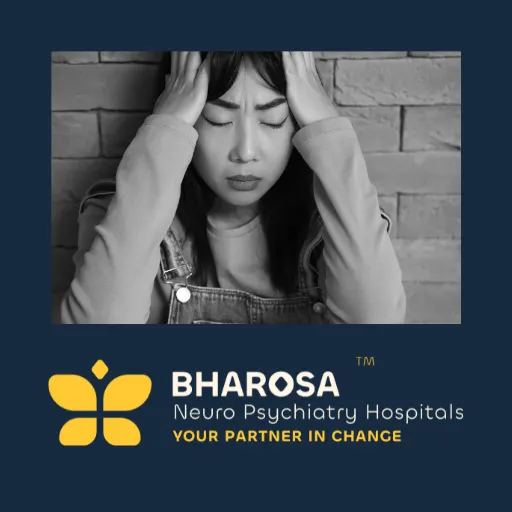
Our Emergency Protocol: Safe, Calm, Private.
We provide a sanctuary where you are protected from yourself while you heal.
1. Immediate Triage & Stabilization
There are no waiting lists for emergencies. Our psychiatrists assess the risk level immediately. If the patient is agitated or in severe distress, we provide rapid medication to calm the nervous system and induce rest.
2. Suicide-Safe Infrastructure
Our In-Patient Facility is designed with strict safety protocols:
- 24/7 Nursing observation.
- Removal of sharp objects, cords, or potential hazards.
- Secure windows and restricted access.
3. The "Cooling Down" Period
The first 24-48 hours are critical. We allow the patient to sleep and recover from the exhaustion of the crisis, supported by high-nutrition meals and supportive nursing care.
4. Family Support
A suicide attempt traumatizes the whole family. We guide the family on how to support the patient without judgment and create a safety plan for discharge.
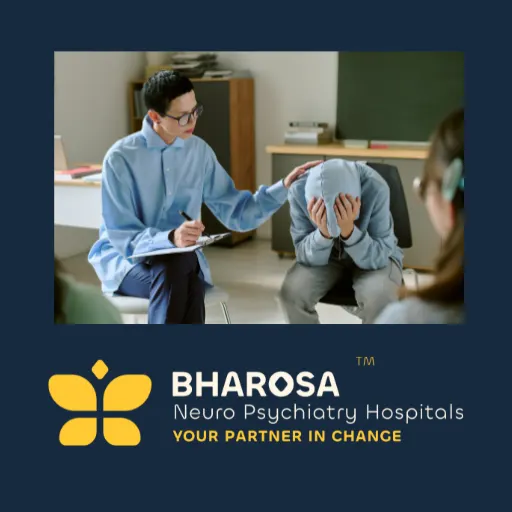
Legal & Ethical Reassurance
In India, under the Mental Healthcare Act, 2017, attempted suicide is effectively decriminalized. It is viewed as a result of severe stress, and the law guarantees the right to healthcare.
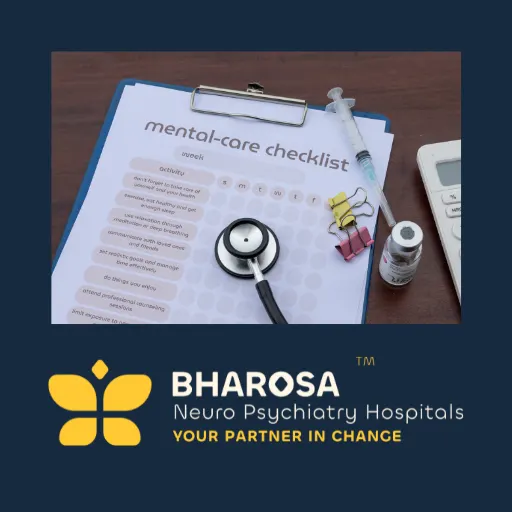
World-Class Facilities for Recovery
Recovery requires a dignified environment. Bharosa Neuropsychiatry Hospitals offers:
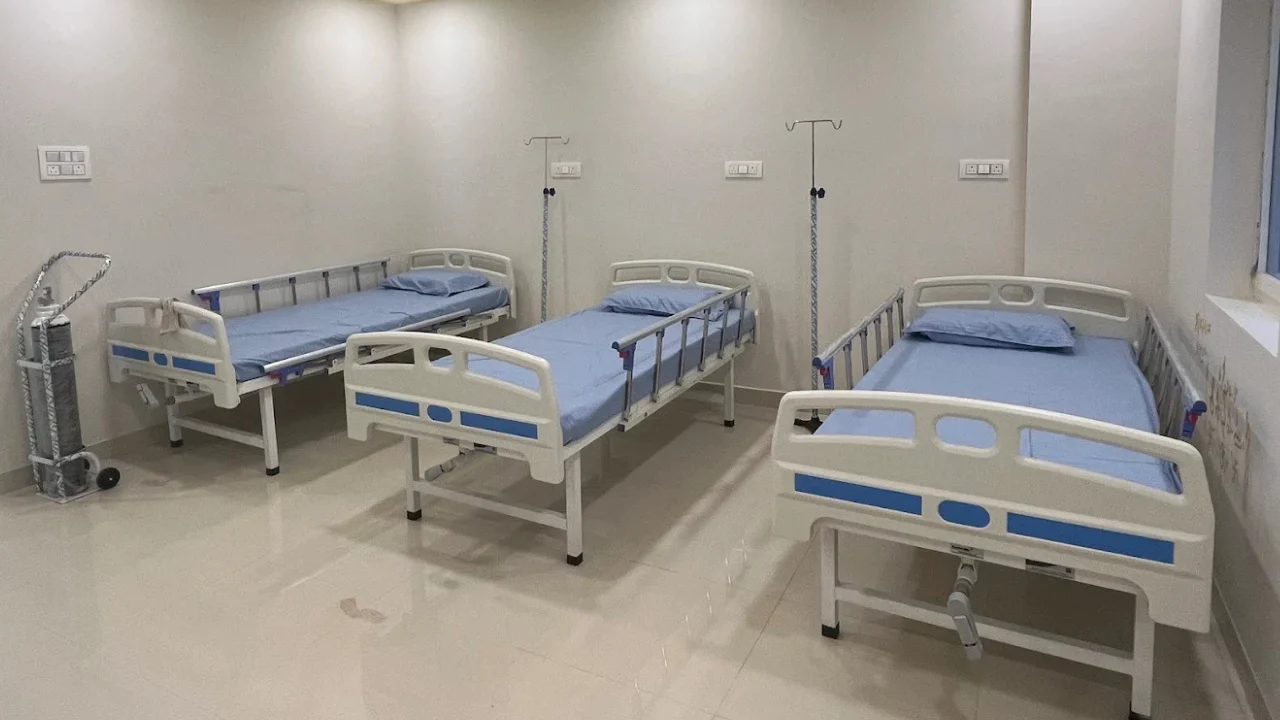
Secure & Safe Wards: Preventing access to substances.
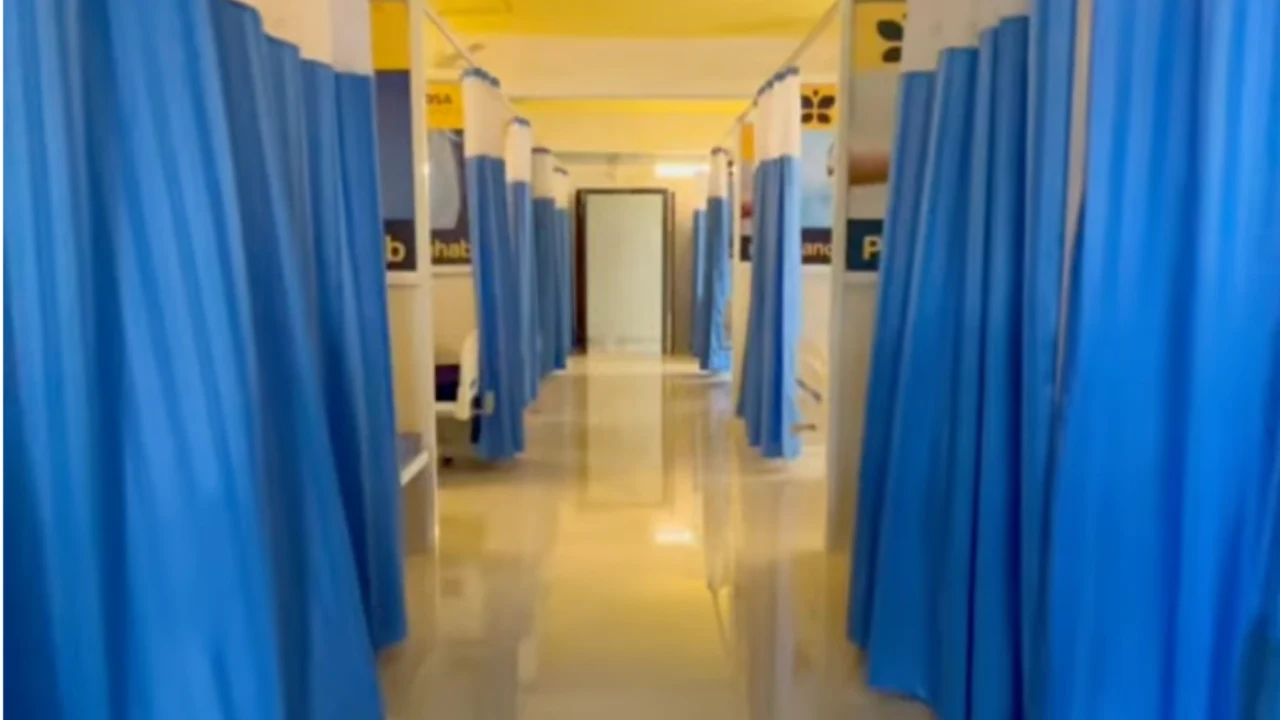
Private & Shared Rooms: Clean, hygienic, and comfortable living spaces.
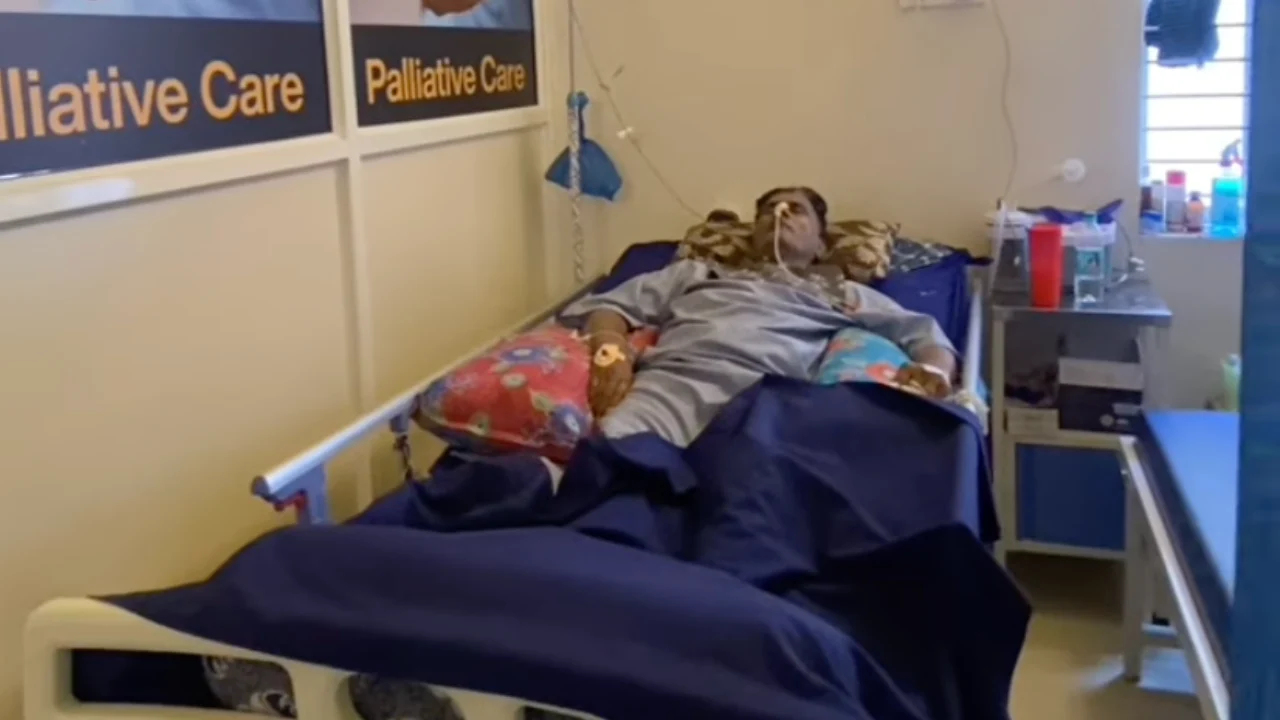
Recreational Zones: Indoor games and green spaces to rediscover joy without intoxication.
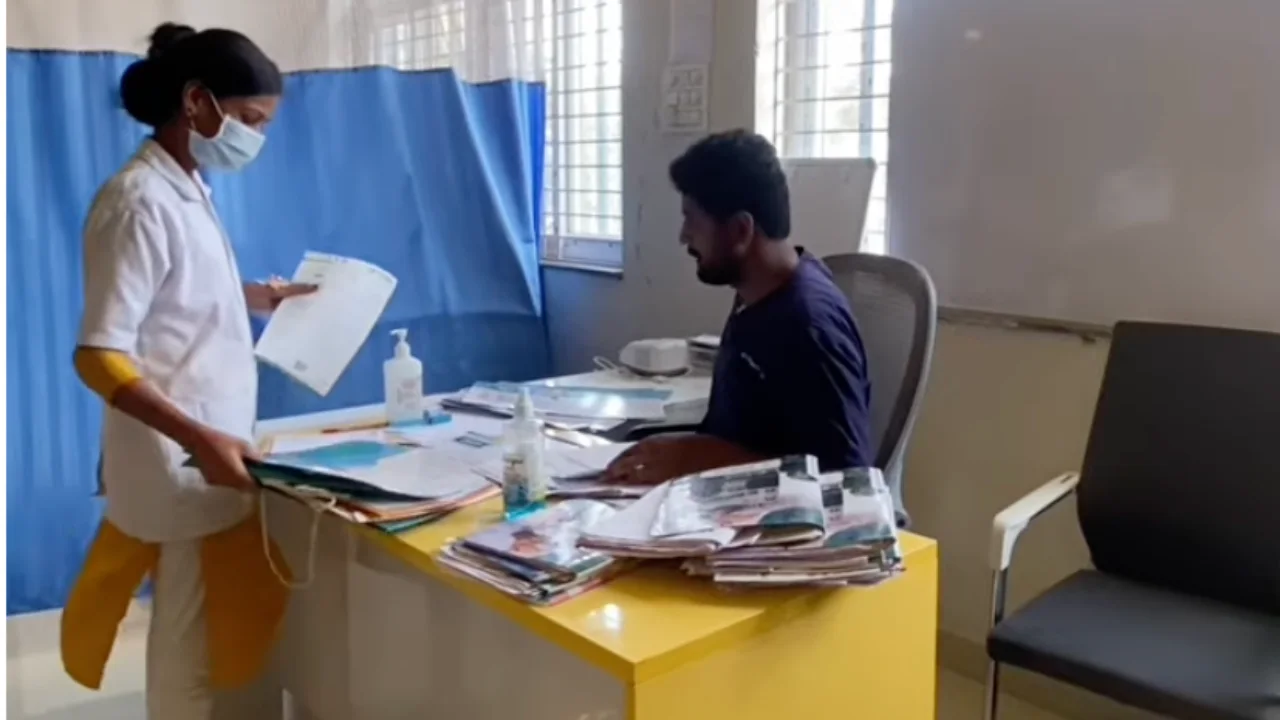
24/7 Emergency Medical Unit: On-site doctors for any physical health complications.
Frequently Asked Questions
If a patient is an immediate danger to themselves or others (e.g., threatening suicide or violence), the Mental Healthcare Act allows for Supported Admission by family members to save their life. Our team can guide you through this legal process.
Do not leave them alone. Keep them talking and get them to the hospital immediately. If they refuse to move, call our ambulance service or the police for assistance.
No. In-patient crisis care is usually short-term (stabilization). Once the immediate danger has passed, we transition you to voluntary therapy or our rehabilitation program.

Please, Just Make the Call.